 By
By AI PCs Take Center Stage in 2026
The computer industry is entering another major transition as artificial intelligence becomes a central feature of modern laptops and desktops. Instead of AI being something users access only through websites or cloud applications, manufacturers are increasingly building computers that can process AI tasks directly on the device.
One of the latest developments is Google’s new Googlebook, a premium laptop platform designed around Google’s Gemini AI services and closer integration between Android phones and computers. Google opened pre-orders for Googlebook laptops on September 21, with prices starting at $899. Devices are being produced by manufacturers including Acer, Asus, Dell, HP and Lenovo.
Googlebook Brings AI and Android Closer Together
Googlebook is designed to provide a more connected computing experience for Android users. The platform combines ChromeOS with Android capabilities, allowing users to access Android applications while continuing to use traditional desktop, web and Linux tools.
Gemini AI is also an important part of the experience. Google is positioning the laptops around features such as writing assistance, organization, questions about information displayed on the screen and continuity between Android phones and computers.
The new approach reflects a broader change in how computer manufacturers are thinking about laptops. A modern computer is increasingly expected to understand what users are doing and provide assistance within everyday workflows.
Local AI Is Becoming More Important
Another major trend in computers is local AI processing. Traditional AI services often send information to remote data centers, where powerful servers process requests. New AI PCs can perform some AI operations directly using dedicated hardware such as neural processing units, or NPUs.
Local processing can offer advantages for certain workloads because information does not always need to travel to a remote server. It can also provide faster responses for supported applications and reduce dependence on an internet connection.
NVIDIA recently highlighted the growing availability of AI agents on Windows PCs. Its partnership with Perplexity brings the company’s Portable Computer AI experience to Windows PCs equipped with sufficiently powerful NVIDIA RTX GPUs.
Hardware Is Evolving for AI Workloads
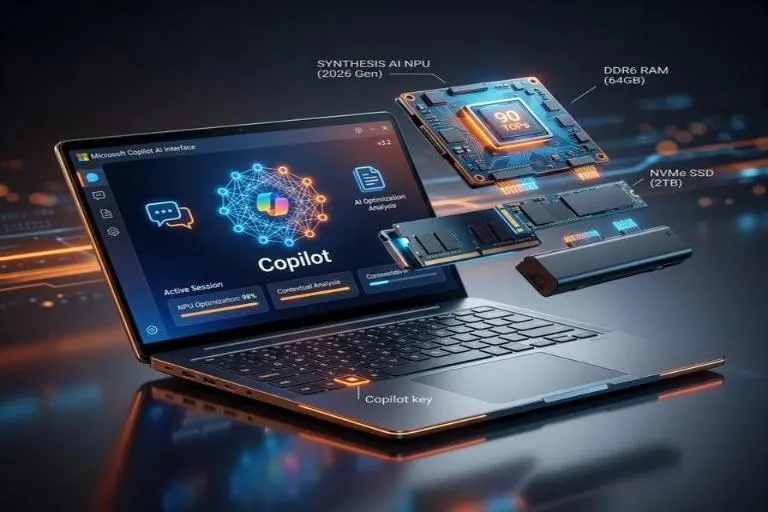
Modern AI PCs are not defined by the processor alone. CPU, GPU, NPU, memory and software all contribute to AI performance.
Manufacturers are increasingly adding dedicated NPUs designed specifically for AI calculations. At the same time, powerful GPUs remain important for demanding applications such as video production, 3D rendering, gaming and advanced AI models.
This hardware development is also appearing in compact computers. ASUS recently announced the Ascent QN10, a mini PC based on Qualcomm’s Snapdragon X2 Elite platform with an 80-TOPS NPU.
These developments show that AI computing is expanding beyond traditional high-end workstations and into smaller everyday computers.
Apple, Microsoft and Other Companies Are Also Moving Toward Local AI
Apple’s latest Mac mini and Mac Studio launch provides another example of this direction. The company is promoting its newest desktops for demanding AI workloads that can run locally.
Apple has demonstrated a trillion-parameter AI model running across four Mac Studio systems, highlighting how high-memory desktop computers can be used for large AI workloads without relying entirely on cloud infrastructure.
Meanwhile, Windows PC manufacturers are continuing to introduce AI-focused laptops and desktops using processors from Intel, AMD, Qualcomm and other chip companies.
What This Means for Computer Users
For everyday users, AI PCs could gradually change common computer activities. Writing documents, organizing files, searching information, editing photos, creating presentations and interacting with applications could increasingly involve built-in AI assistance.
For developers and professionals, local AI hardware could provide another option for running models, testing applications and processing sensitive information.
However, not every AI feature requires a powerful AI PC. Many cloud-based AI services will continue to operate through ordinary computers, meaning users will still need to consider their actual workloads before choosing hardware.
The Future of Computers
The computer market is moving toward a model where AI becomes a standard component rather than an optional feature. Googlebook, new Windows AI PCs, Apple’s latest Macs and specialized mini PCs all demonstrate different approaches to the same broader trend.
As processors become more efficient and AI software becomes more capable, the definition of a personal computer is changing. The next generation of computers will not simply be measured by CPU speed or battery life; AI processing, privacy, connectivity and intelligent software will increasingly become important parts of the experience.
For September 23, 2026, AI PCs are therefore one of the most significant stories in computer technology, with manufacturers competing to define what the next generation of personal computing will look like.