 By
By AI PCs Take Center Stage in 2026: How Computers Are Becoming Smarter
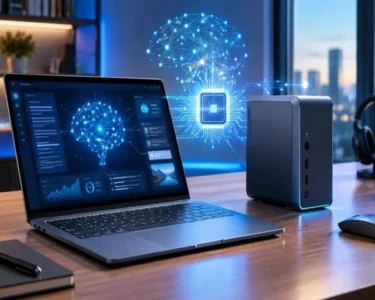
Artificial intelligence is no longer limited to cloud servers and smartphone applications. In 2026, AI is becoming an increasingly important part of personal computers, creating a new generation of machines commonly known as AI PCs. These computers combine traditional CPUs and GPUs with dedicated Neural Processing Units, or NPUs, designed specifically to handle artificial-intelligence workloads.
The trend is particularly visible this September, with manufacturers showcasing new AI-focused computers and Windows experiences. At IFA 2026, Microsoft highlighted a broad range of new Windows PCs designed for everyday users, creators, developers, gamers and AI-focused workloads.
What Is an AI PC?
An AI PC is essentially a computer designed with dedicated hardware for AI processing. Alongside the CPU and GPU, an NPU can handle specific AI operations efficiently.
This allows certain tasks to run directly on the computer instead of relying entirely on cloud servers. Examples include real-time transcription, background-noise reduction, image processing, video effects and other AI-assisted functions.
This shift is important because local processing can reduce latency and may provide additional privacy benefits for some workloads. A recent analysis of AI laptops available in India found that on-device functions such as transcription and background effects are increasingly being handled directly by the computer.
New Hardware Is Driving the Change
Competition between chip manufacturers is helping accelerate the AI-PC market. Intel, AMD, Qualcomm and NVIDIA are all developing hardware aimed at bringing more AI processing capability to personal computers.
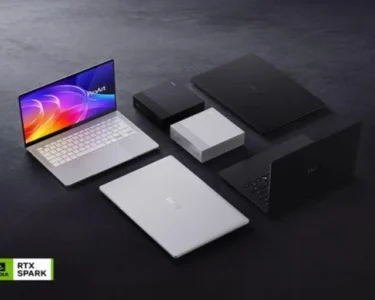
Microsoft’s latest Windows ecosystem announcements at IFA included systems powered by new processors and platforms designed for local AI workloads. Acer, HP and Lenovo were among the manufacturers showcasing PCs aimed at AI applications, while NVIDIA RTX Spark-based systems are being positioned for demanding local AI and development workloads.
This means buyers are beginning to encounter a new specification alongside familiar measurements such as CPU cores, RAM and storage: AI processing capability.
Microsoft Pushes Developer-Focused AI Computing
Microsoft has also announced Project Zenith, a developer-oriented Windows 11 experience designed for high-performance systems. Microsoft says the configuration targets developer-class devices with at least 64GB of unified memory and 250GB/s of memory bandwidth.
The initial systems are based on AMD Ryzen AI Halo, with additional hardware from Microsoft’s partners expected later. Project Zenith includes a preconfigured Windows environment and development tools intended to help developers get started more quickly.
This development demonstrates that AI PCs are not only being designed for consumers. Developers are becoming an important part of the market because they increasingly need hardware capable of running AI models and development tools locally.
AI PCs Could Change Everyday Work
For everyday users, the biggest difference may not be visible inside the computer. Instead, AI capabilities can appear through software features.
A modern AI laptop can potentially assist with meeting transcription, document organization, image enhancement, translation, content creation and other repetitive tasks. Some workloads can be processed locally, allowing the computer to respond without constantly communicating with a cloud service.
Windows is also continuing to add AI-related functionality. Microsoft’s September Windows update includes updates to AI components that apply to compatible Copilot+ PCs.
As these features mature, AI could become a normal part of applications rather than something users access separately.
Battery Life and Efficiency Matter Too
AI PC development is not simply about making computers more powerful. Efficiency is another major goal.
Dedicated NPUs can process certain AI workloads without requiring the CPU or GPU to perform every operation. This approach can help manufacturers balance performance and power consumption, which is particularly important for thin laptops.
Long battery life is already a major consideration when choosing a laptop. Combining efficient processors with dedicated AI hardware could allow future systems to provide more intelligent features without dramatically increasing power consumption.
The Rise of Local AI
One of the most interesting aspects of the AI-PC trend is the movement toward local AI.
Cloud AI will remain important for large models and computationally intensive workloads. However, smaller AI models can increasingly run directly on PCs. This gives users another option for processing information and can be useful when internet connectivity is limited.
For businesses and developers, local processing can also be relevant when working with sensitive information. However, the privacy benefits depend on the particular software, configuration and data-handling practices, so users should still check how an application processes information.
What the Future of Computers Looks Like
The traditional PC market has historically focused on faster processors, better graphics and larger storage. AI is adding another dimension to that competition.
In the coming years, computers are likely to become increasingly capable of understanding voice commands, processing images, assisting with documents and running AI applications locally.
The September 2026 PC landscape already shows this transition. From lightweight laptops and premium notebooks to developer workstations and AI-focused systems, manufacturers are building computers around the idea that AI will become a normal part of personal computing.
The biggest change may ultimately be invisible: instead of thinking about whether a computer has AI, users may simply expect their computer to understand what they need and assist with everyday tasks automatically.