

 By
AI-Powered Computers in 2026: How Artificial Intelligence Is Transforming the Future of PCs
The computer industry is experiencing an exciting transformation in 2026, with artificial intelligence (AI) becoming one of the biggest technology trends. From personal laptops and desktop computers to powerful professional workstations, manufacturers are introducing smarter devices designed to make everyday computing faster, easier and more productive.
AI-powered computers, commonly known as AI PCs, are changing how people work, study, create content and enjoy entertainment. Companies such as Microsoft, Intel, AMD, NVIDIA, Dell, HP and Lenovo are investing in new hardware and software technologies to bring artificial intelligence directly to personal computers.
What Are AI-Powered Computers?
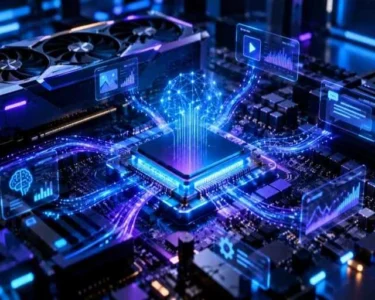
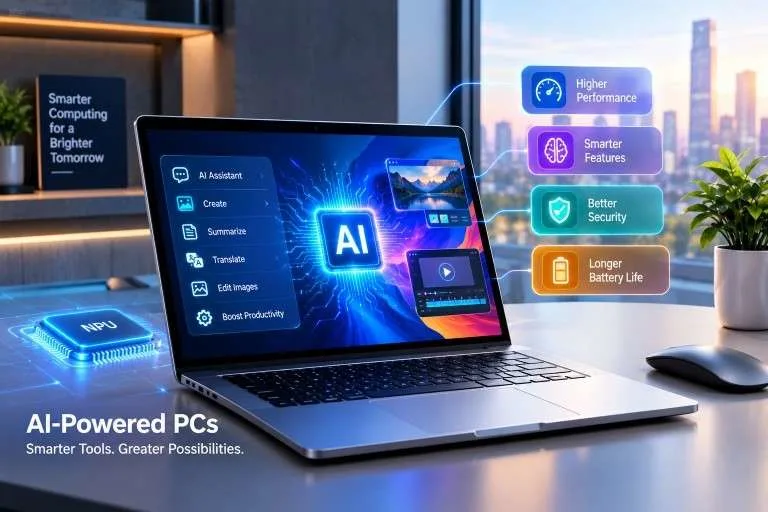
AI-powered computers are devices designed with specialised hardware and software that can perform artificial intelligence tasks more efficiently. Many modern AI PCs include a Neural Processing Unit (NPU), which is specifically designed to handle certain AI workloads.
Unlike traditional computers that depend heavily on their CPU and GPU for processing, AI PCs can distribute workloads between different processing units. This allows compatible applications to perform tasks such as image enhancement, voice recognition, background removal and intelligent assistance more efficiently.
Another important advantage is local AI processing. Instead of sending every request to an online server, supported AI applications can perform certain tasks directly on the computer.
How AI Is Changing Everyday Computing
Artificial intelligence is making computers more useful for everyday activities. Students can use AI tools to organise notes, summarise study materials and improve their learning experience.
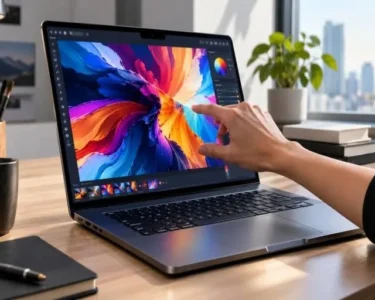
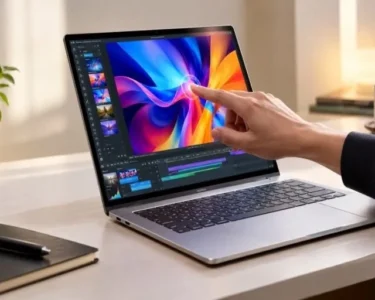
Office professionals can benefit from automated document preparation, meeting summaries, voice-to-text conversion and intelligent productivity applications. Content creators can use AI-powered software to edit photographs, generate creative ideas and improve video production workflows.
AI assistants are also becoming more capable of understanding user instructions and helping with multiple tasks. These improvements can reduce repetitive work and allow users to spend more time on important activities.
The Rise of Powerful AI Processors
Processor technology is another major development in the computer industry. Companies are introducing advanced chips designed to deliver better performance while supporting demanding AI applications.
NVIDIA’s RTX Spark platform, for example, is bringing powerful AI computing capabilities to Windows PCs. Its technology combines advanced graphics processing with high-performance computing capabilities, targeting developers, creators and users interested in running AI applications locally.
Microsoft is also expanding its AI capabilities across Windows computers, creating new opportunities for intelligent applications and AI agents.
These developments demonstrate that computer performance is no longer measured only by processor speed. AI processing capabilities, memory, graphics performance and energy efficiency are becoming equally important.
Benefits of AI PCs for Students, Businesses and Gamers
AI-powered computers offer several advantages for different types of users.
For students, AI features can help with research, writing assistance, learning and organising academic work. For businesses, intelligent automation can improve productivity, simplify repetitive processes and support data analysis.
Gamers can benefit from AI-assisted graphics technologies, image upscaling and improved visual performance in supported games. Creative professionals can also use AI applications for video editing, image enhancement and design projects.
These capabilities make AI PCs useful across multiple industries rather than limiting them to specialised technical applications.
Challenges Facing the Computer Industry
Despite the growing popularity of AI PCs, the industry faces some challenges. Advanced processors, larger memory configurations and specialised hardware can increase manufacturing costs.
Recent industry developments have also highlighted concerns about memory-chip shortages and their impact on computer prices and demand. Intel has warned about near-term weakness in the PC market, showing that the growth of AI technology does not automatically mean stronger demand for every computer category.
Privacy is another important consideration. Users should understand which AI features process information locally and which depend on cloud services. Businesses must also ensure that sensitive information is protected when using AI-powered applications.
What Is the Future of Computers?
The future of computing will likely involve deeper integration between artificial intelligence, powerful processors and intelligent software. Computers may become better at understanding user requirements, automating routine tasks and adapting to individual working styles.
We can also expect improvements in battery efficiency, graphics performance, voice interaction and AI-assisted security. As software developers create more applications designed for AI hardware, these capabilities may become increasingly useful in everyday computing.