

 By
AI-Powered Computers in 2026: How the New Generation of PCs Is Changing the Future
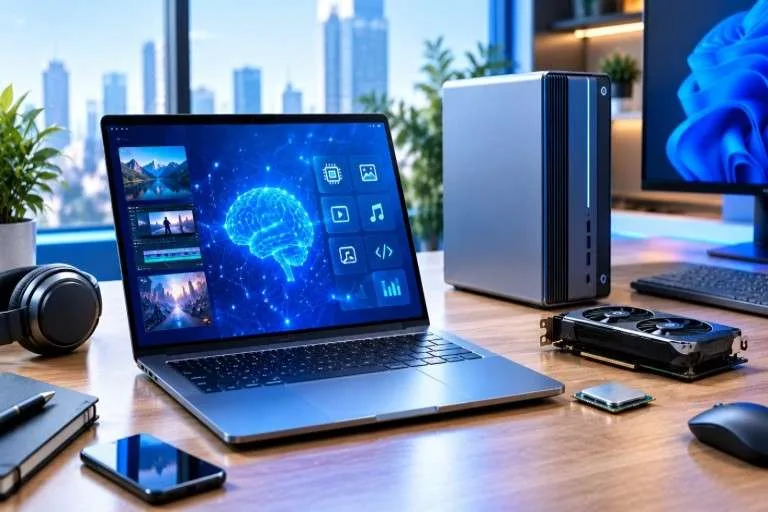
The computer industry is experiencing a major transformation in 2026 as artificial intelligence becomes an essential part of personal computing. Modern computers are no longer used only for browsing the internet, creating documents, or playing games. They are increasingly designed to help users automate tasks, generate content, analyze information, and run advanced AI applications.
One of the latest developments is NVIDIA’s RTX Spark-powered Windows PC lineup, announced as available on October 16, 2026. These systems combine advanced graphics technology with AI computing capabilities, bringing powerful AI tools to laptops and compact desktop computers.
1. What Are AI-Powered Computers?
AI-powered computers are devices designed to run artificial intelligence applications more efficiently. They may use a central processing unit (CPU), graphics processing unit (GPU), or neural processing unit (NPU) to handle different types of workloads.
These computers can support tasks such as summarizing documents, generating images, assisting with programming, editing videos, and organizing information. Some AI features work through cloud services, while others can run directly on the computer.
Local AI processing is particularly interesting because it can reduce dependence on internet connectivity and help keep certain data on the device. However, privacy depends on the application, its permissions, and how it handles information.
2. NVIDIA RTX Spark Brings Powerful AI to PCs
A major computer technology development this month is NVIDIA RTX Spark. The new platform combines NVIDIA Blackwell graphics technology with a Grace CPU in a unified computing architecture.
According to NVIDIA, supported systems offer up to 128GB of unified memory and up to one petaflop of FP4 AI performance. These capabilities are intended to support demanding AI models, creative applications, software development, and gaming.
Manufacturers including ASUS, Dell, HP, Lenovo, Microsoft, and MSI are participating in the RTX Spark laptop rollout.
For developers and creators, the technology could make it easier to experiment with AI models and complete demanding workloads on a personal computer. Nevertheless, performance and availability vary by configuration and region.
3. Smarter Productivity for Everyday Users
AI computers can make everyday work more convenient. AI assistants can help summarize lengthy documents, draft emails, organize notes, and provide support when researching unfamiliar topics.
Students may use these tools to understand difficult concepts and organize study materials. Office professionals can use them to prepare reports, analyze information, and reduce repetitive work.
AI tools are assistants rather than replacements for careful judgment. Users should review generated information for accuracy, particularly when preparing important documents or making business decisions.
4. Better Gaming and Creative Experiences
Gaming and creative work are also benefiting from advances in computer hardware.
Modern GPUs can use AI-assisted graphics technologies to improve image rendering and performance in supported games. Video editors and designers can benefit from accelerated effects, image enhancement, and other AI-assisted features.
For content creators, these improvements may reduce the time required for certain editing tasks. Gamers, meanwhile, can enjoy advanced visual effects when their hardware and software support them.
However, buying an AI-focused computer does not automatically guarantee better gaming performance. Graphics hardware, cooling, memory, and the specific game remain important factors.
5. Local AI and Privacy
One important trend is the growing ability to run AI applications directly on personal computers. Microsoft’s vision for Windows combines local processing with cloud computing, allowing tasks to use the most appropriate resources.
Local processing can improve responsiveness and reduce the need to upload some information to external services. It may also allow selected AI functions to work without a constant internet connection.
Users should still check application privacy policies, security settings, and data permissions before using AI tools with sensitive files.
6. Are AI Computers Worth Buying in 2026?
The answer depends on individual needs and budget.
Students and everyday users may be perfectly satisfied with a conventional laptop that offers reliable performance, good battery life, and sufficient memory. Developers, professional creators, and AI enthusiasts may benefit more from specialized hardware.
Before purchasing, compare the processor, graphics capabilities, RAM, storage, battery life, warranty, and software compatibility. Also consider whether the AI features you want are included or require additional subscriptions.
Premium AI systems can be expensive, so buyers should focus on practical benefits instead of purchasing a device simply because it has the latest technology.
7. The Future of Personal Computing
AI-powered computers are likely to become increasingly capable as hardware and software continue to evolve. Future systems may offer more personalized assistance, improved automation, and stronger integration between applications.
The challenge will be making these capabilities affordable, secure, energy-efficient, and useful for ordinary users.