

 By
By AI-Powered Computers in 2026: Microsoft and NVIDIA Are Transforming the Future of PCs
Introduction
The computer industry is entering an exciting new phase as artificial intelligence becomes a central part of personal computing. On October 9, 2026, AI-powered computers are attracting attention following Microsoft’s recent announcements with NVIDIA about a new generation of Windows PCs designed to handle demanding AI tasks.
These developments highlight a major shift in computer technology. Modern PCs are no longer designed only for browsing, office work, gaming, and entertainment. They are increasingly being developed to run AI models, assist with programming, accelerate creative projects, and automate everyday tasks.
For students, professionals, developers, and technology enthusiasts, these innovations could change how computers are used in the coming years.
1. Microsoft and NVIDIA Introduce a New Generation of AI PCs
One of the biggest computer technology stories this week is Microsoft’s collaboration with NVIDIA to bring powerful AI capabilities to Windows computers.
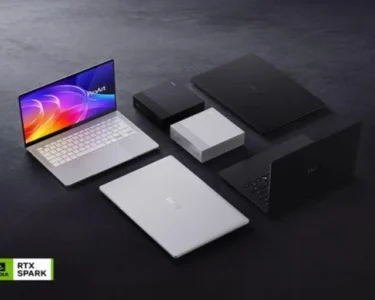
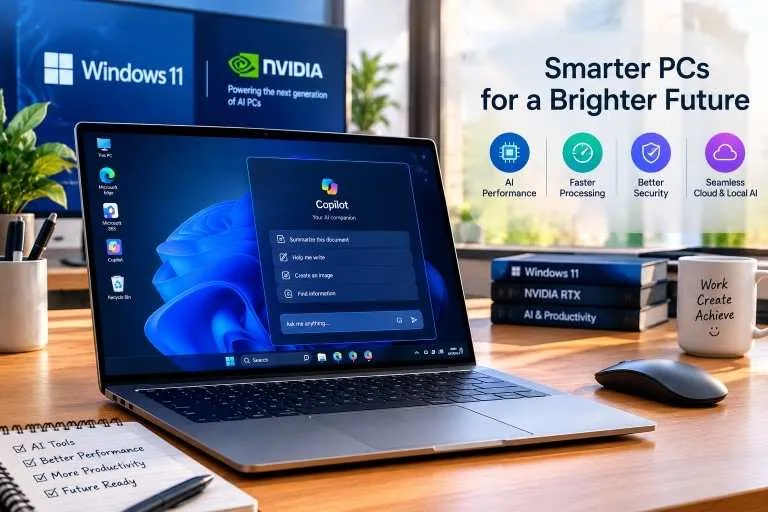
On October 7, Microsoft announced new AI-focused Windows PCs powered by NVIDIA’s RTX Spark technology. The lineup includes the Surface Laptop Ultra and new systems from manufacturers such as Dell, HP, Lenovo, ASUS, and MSI.
These computers target developers, creative professionals, and businesses that need more computing power for advanced AI workloads.
Microsoft’s strategy focuses on combining local processing with cloud-based intelligence. This approach allows computers to handle suitable AI tasks directly on the device while using online services when additional computing resources are needed.
The result could be a more flexible computing experience for people who work with demanding applications.
2. Local AI Processing Could Change Everyday Computing
Traditionally, many AI applications send requests to remote servers for processing. Local AI computing allows compatible computers to perform certain operations using their own hardware.
This can offer several advantages, including potentially faster responses, reduced dependence on internet connectivity for supported tasks, and greater control over sensitive information.
For example, developers could experiment with AI models directly on their computers instead of relying entirely on cloud platforms. Designers could explore AI-assisted creative tools, while professionals might use intelligent applications to analyze documents and organize information.
Microsoft has highlighted the ability of its new Surface Laptop Ultra to run AI models with more than 120 billion parameters locally, supported by configurations offering up to 128GB of unified memory.
These capabilities are aimed primarily at demanding professional workloads rather than ordinary everyday computing.
3. Windows Is Becoming More AI-Focused
Artificial intelligence is also changing the Windows software experience.
Microsoft is developing its vision of hybrid intelligence, combining local computing capabilities with cloud-based AI services. This could allow Windows applications to provide more intelligent assistance while adapting to the requirements of different tasks.
AI assistants may help users summarize documents, write content, analyze information, and support software development. More advanced AI agents could eventually perform sequences of tasks across compatible applications with appropriate user permissions.
However, these features must be useful, reliable, and easy to control. Users should be able to understand what an AI assistant is doing and decide which files, applications, or personal information it can access.
Microsoft’s approach suggests that future Windows computers could become more interactive and capable than traditional PCs.
4. Computer Security Remains a Major Priority
As computers become more capable of performing tasks autonomously, security becomes increasingly important.
AI agents may need access to documents, applications, and other system resources to complete their work. Without suitable safeguards, this access could introduce privacy risks or allow unintended actions.
Microsoft has introduced Microsoft Execution Containers, a security approach designed to isolate AI agents and restrict unauthorized access to data.
Such protections are important because AI systems can make mistakes or respond unpredictably to instructions. Businesses and individual users need clear permission controls, secure software, and reliable ways to monitor automated activities.
Local AI processing can provide privacy benefits, but it does not automatically guarantee security. Users should still review application permissions and understand whether their information is transmitted to online services.
5. Are AI Computers Worth Buying in 2026?
Although AI PCs are attracting considerable attention, not everyone needs an expensive AI workstation.
Students and everyday users may be better served by an affordable laptop with sufficient memory, good battery life, and reliable performance. People who mainly browse the internet, attend online classes, and use office applications may not benefit significantly from premium AI hardware.
Developers, researchers, and creative professionals, on the other hand, may benefit from computers with powerful graphics hardware and larger memory capacities.
Buyers should also consider pricing. Microsoft’s new high-performance AI computers occupy the premium market, making them less accessible to budget-conscious consumers.
In India, shoppers should compare local prices, warranty coverage, software compatibility, and service availability before upgrading.