 By
By As businesses continue to embrace digital transformation, software applications have become the backbone of modern operations. From online banking and e-commerce platforms to healthcare systems and enterprise applications, organizations depend on software to deliver services, manage data, and support daily business activities. However, as applications become more advanced, cybercriminals are finding new ways to exploit software vulnerabilities. This makes Application Security one of the most important cybersecurity priorities in 2026.
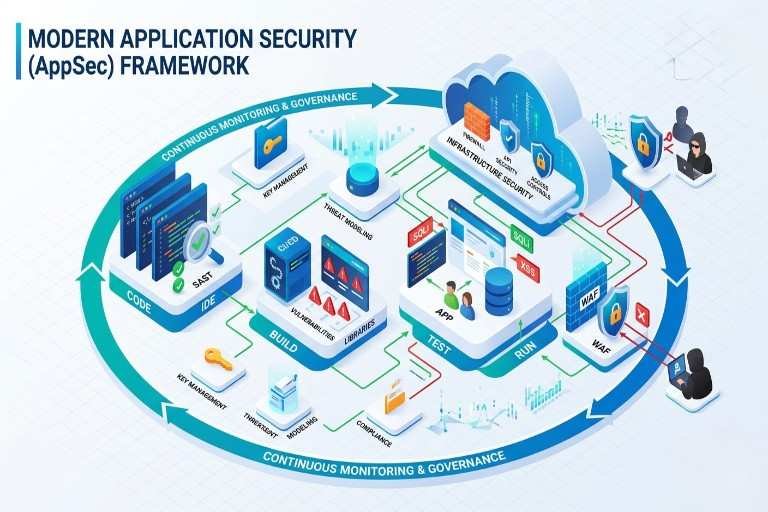
Application Security, often called AppSec, is the process of protecting software applications from cyber threats, vulnerabilities, and unauthorized access throughout their entire lifecycle. Rather than treating security as the final stage of development, modern organizations integrate security into every phase of the Software Development Life Cycle (SDLC) to build resilient and trustworthy applications.
Why Application Security Matters
Applications process large amounts of sensitive information, including customer records, financial transactions, healthcare data, and business intelligence. A single vulnerability can provide attackers with access to confidential information or critical systems.
Common application security risks include:
- Data breaches.
- SQL injection attacks.
- Cross-Site Scripting (XSS).
- Broken authentication.
- Insecure APIs.
- Malware injection.
- Misconfigured application settings.
Successful attacks can lead to financial losses, regulatory penalties, operational downtime, and damage to customer trust. As cyber threats continue to evolve, organizations must adopt proactive application security strategies.
Secure Coding Practices: Building Security from the Start
One of the most effective ways to improve application security is to prevent vulnerabilities during software development. Secure coding practices help developers write code that is resistant to common cyberattacks.
Key secure coding principles include:
- Validating and sanitizing user input.
- Using parameterized queries to prevent SQL injection.
- Encrypting sensitive data.
- Implementing secure authentication and authorization.
- Avoiding hardcoded passwords and API keys.
- Applying secure error handling and logging.
Organizations are increasingly providing secure coding training to developers so that security becomes a shared responsibility across development teams.
Building security into applications from the beginning reduces vulnerabilities and lowers the cost of fixing issues later.
Penetration Testing: Finding Weaknesses Before Attackers Do
Even well-developed applications may contain hidden security flaws. Penetration testing, also known as ethical hacking, helps organizations identify vulnerabilities before cybercriminals exploit them.
During a penetration test, cybersecurity professionals simulate real-world attacks to evaluate an application’s security posture.
Benefits of penetration testing include:
- Identifying security weaknesses.
- Validating existing security controls.
- Testing authentication mechanisms.
- Detecting configuration errors.
- Improving incident response readiness.
Regular penetration testing allows organizations to discover vulnerabilities early and strengthen their applications before deployment.
Code Scanning and Vulnerability Management
Automated security testing has become an essential part of modern software development. Code scanning tools continuously analyze applications to identify vulnerabilities before they reach production.
Static Application Security Testing (SAST)
SAST tools analyze source code, libraries, and application configurations without executing the software. This helps developers identify coding errors and security flaws during development.
Dynamic Application Security Testing (DAST)
DAST tools test running applications by simulating attacks to discover vulnerabilities that may only appear during execution.
Software Composition Analysis (SCA)
Most modern applications rely on open-source libraries and third-party components. SCA tools identify vulnerabilities within these dependencies and recommend updates or replacements.
Once vulnerabilities are discovered, organizations should prioritize remediation based on risk and business impact.
DevSecOps: Integrating Security into Development
One of the biggest application security trends in 2026 is the adoption of DevSecOps. This approach integrates security directly into development, testing, and deployment processes.
Instead of performing security checks only before release, DevSecOps automates security throughout Continuous Integration and Continuous Deployment (CI/CD) pipelines.
Benefits of DevSecOps include:
- Faster vulnerability detection.
- Automated security testing.
- Improved collaboration between developers and security teams.
- Faster and more secure software releases.
By embedding security into every stage of development, organizations can reduce risks without slowing innovation.
Emerging Application Security Trends in 2026
Several technologies are shaping the future of application security.
AI-Powered Security Testing
Artificial intelligence helps identify vulnerabilities faster, prioritize risks, and automate remediation processes.
API Security
As applications increasingly communicate through APIs, protecting API endpoints has become essential for preventing unauthorized access and data breaches.
Zero Trust Application Access
Organizations are implementing Zero Trust principles that continuously verify users, devices, and applications before granting access.
Software Supply Chain Security
Businesses are placing greater emphasis on securing third-party software components to reduce supply chain risks.
Best Practices for Strengthening Application Security
Organizations can improve application security by:
- Following secure coding standards.
- Performing regular penetration testing.
- Using automated code scanning tools.
- Monitoring applications continuously.
- Updating software and dependencies promptly.
- Securing APIs and authentication systems.
- Integrating security into CI/CD pipelines.
- Conducting regular security awareness training.
A layered approach helps reduce vulnerabilities and strengthens overall software resilience.