


 By
By Network Security in 2026: Protecting Modern Networks from Evolving Cyber Threats
As businesses continue to embrace digital transformation, secure network communication has become more critical than ever. Organizations rely on interconnected systems to support cloud computing, remote work, online services, and Internet of Things (IoT) devices. While this connectivity improves productivity and collaboration, it also increases exposure to cyber threats. In 2026, Network Security remains one of the most essential pillars of cybersecurity, protecting both internal and external communications from unauthorized access, malware, and cyberattacks.
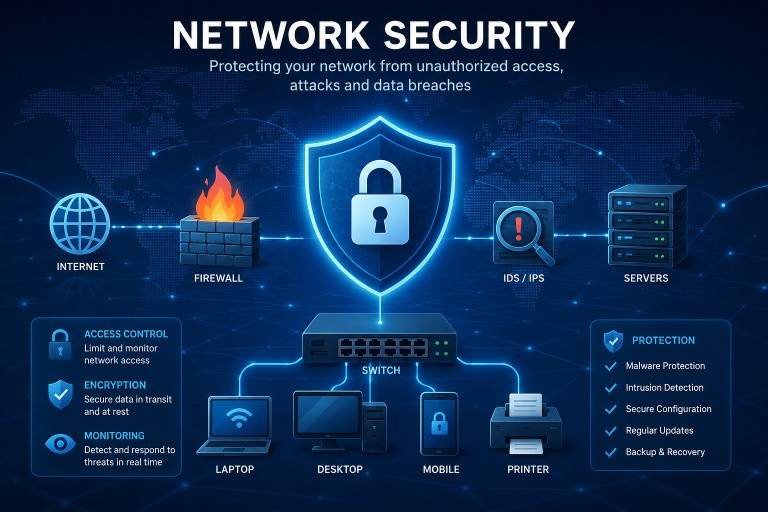
Network Security refers to the technologies, policies, and best practices used to secure computer networks, devices, and data transmissions. Its primary objective is to maintain the confidentiality, integrity, and availability of information while ensuring uninterrupted business operations. A strong network security strategy combines multiple layers of defense, making it difficult for attackers to exploit vulnerabilities.
Why Network Security Matters
Modern organizations operate across hybrid environments that include on-premises infrastructure, cloud platforms, remote employees, and mobile devices. This expanded digital ecosystem creates more entry points for cybercriminals.
Common network-based attacks include ransomware, phishing, Distributed Denial-of-Service (DDoS) attacks, malware, insider threats, and unauthorized access. A successful network breach can result in stolen customer data, financial losses, operational downtime, and reputational damage.
Implementing comprehensive network security measures enables organizations to detect, prevent, and respond to cyber threats before they impact critical business operations.
Firewalls: The First Line of Defense
Firewalls remain one of the most important components of network security. They monitor incoming and outgoing network traffic, allowing or blocking communications based on predefined security policies.
Modern Next-Generation Firewalls (NGFWs) provide advanced capabilities such as:
- Deep packet inspection
- Application-aware filtering
- Malware detection
- Intrusion prevention
- SSL/TLS traffic inspection
- Threat intelligence integration
Regularly reviewing firewall rules and removing outdated configurations helps minimize security risks while maintaining efficient network performance.
Intrusion Detection and Prevention Systems (IDS/IPS)
Firewalls alone cannot detect every sophisticated cyberattack. Intrusion Detection Systems (IDS) and Intrusion Prevention Systems (IPS) continuously monitor network traffic for suspicious behavior.
An IDS identifies abnormal network activities and alerts security administrators, while an IPS automatically blocks malicious traffic before it reaches critical systems.
Today’s IDS/IPS solutions increasingly use Artificial Intelligence (AI) and machine learning to identify zero-day attacks, reduce false positives, and improve threat detection accuracy through continuous behavioral analysis.
Network Segmentation for Enhanced Protection
Network segmentation divides large networks into smaller, isolated segments, limiting the movement of attackers if one section becomes compromised.
Organizations commonly separate:
- Employee workstations
- Financial systems
- Data centers
- Cloud workloads
- Guest Wi-Fi networks
- IoT devices
- Development environments
Micro-segmentation provides even greater protection by enforcing security policies at the application or workload level, making it especially valuable in cloud-native and hybrid infrastructures.
Secure Wi-Fi and Virtual Private Networks (VPNs)
Wireless connectivity has become essential for modern workplaces, but unsecured Wi-Fi networks remain a common target for cybercriminals.
Organizations should strengthen wireless security by:
- Using WPA3 encryption
- Disabling outdated wireless protocols
- Separating guest and corporate Wi-Fi networks
- Changing default router credentials
- Monitoring wireless devices continuously
For remote employees, Virtual Private Networks (VPNs) create encrypted communication channels that protect sensitive information transmitted over public internet connections. Combining VPN access with Multi-Factor Authentication (MFA) further enhances remote security.
Zero Trust Networking
One of the leading cybersecurity trends in 2026 is the widespread adoption of the Zero Trust security model. Instead of automatically trusting users or devices inside the corporate network, Zero Trust requires continuous verification for every access request.
Core Zero Trust principles include:
- Verify every user and device
- Apply least-privilege access
- Continuously monitor network activity
- Authenticate every connection
- Restrict lateral movement
This approach significantly reduces the risk of credential theft, insider threats, and unauthorized access.
AI-Powered Network Monitoring
Artificial Intelligence has transformed network security by enabling intelligent threat detection and automated incident response. AI-powered monitoring platforms analyze millions of network events in real time to identify suspicious activities that traditional security tools might overlook.
Machine learning continuously improves detection accuracy by recognizing normal network behavior and identifying anomalies. Automated response capabilities can isolate compromised devices, block malicious traffic, and alert security teams within seconds, helping organizations minimize the impact of cyberattacks.