

 By
By Physical Security in 2026: Protecting People, Assets, and Facilities in a Changing World
In an age where cybersecurity often dominates security discussions, physical security remains a critical pillar of organizational protection. While digital systems safeguard data and networks, physical security focuses on protecting people, buildings, equipment, and valuable assets from theft, unauthorized access, vandalism, and environmental hazards. As businesses adopt smarter technologies and face evolving security threats, physical security has become more advanced and essential than ever in 2026.
Physical Security refers to the measures, technologies, and procedures used to prevent unauthorized physical access to facilities, infrastructure, and resources. It includes traditional security methods such as locks, fences, and security guards, as well as modern solutions like biometric authentication, intelligent surveillance systems, and automated access control.
Why Physical Security Matters
Organizations invest heavily in digital security, but a physical breach can often bypass even the most sophisticated cybersecurity controls. Unauthorized access to offices, data centers, warehouses, healthcare facilities, or manufacturing plants can result in severe consequences.
Potential risks include:
- Theft of equipment and assets.
- Unauthorized access to sensitive information.
- Damage to infrastructure.
- Workplace safety incidents.
- Business disruption and downtime.
- Financial and reputational losses.
Physical security helps organizations create a safe environment for employees, customers, and visitors while protecting critical business operations.
Locks and Access Control Systems
Locks remain one of the oldest and most effective forms of physical security. However, modern access control systems have evolved far beyond traditional keys.
Today’s organizations commonly use:
- Electronic access cards.
- Smart locks.
- PIN-based entry systems.
- Mobile access credentials.
- Biometric authentication systems.
These solutions provide greater control over who can access specific areas within a facility. Administrators can assign permissions, track entry logs, and quickly revoke access when necessary.
By limiting access to authorized personnel only, organizations can significantly reduce security risks and improve accountability.
CCTV Cameras and Intelligent Surveillance
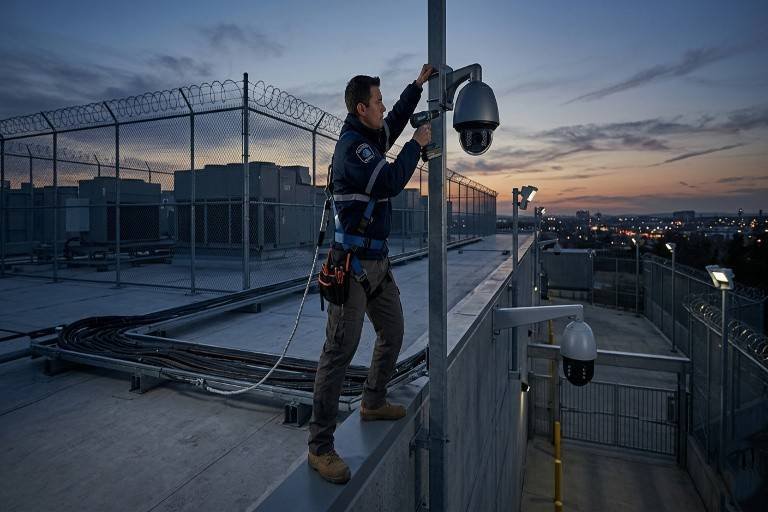
Closed-Circuit Television (CCTV) systems continue to play a vital role in physical security. Modern surveillance technologies offer far more than simple video recording.
Advanced CCTV systems now include:
- Real-time monitoring.
- Motion detection.
- Facial recognition capabilities.
- Automated alerts.
- Cloud-based video storage.
- AI-powered threat analysis.
Artificial intelligence can analyze video feeds continuously, identify suspicious activities, and notify security teams immediately when unusual behavior is detected.
These capabilities help organizations prevent incidents, investigate security events, and maintain greater visibility across their facilities.
The Role of Security Guards
While technology has transformed physical security, trained security personnel remain a crucial component of any comprehensive security strategy.
Security guards provide:
- Visible deterrence against criminal activity.
- Visitor management and screening.
- Emergency response coordination.
- Security patrols.
- Incident reporting and investigation support.
Human judgment and rapid decision-making capabilities complement technological solutions, creating a stronger and more adaptable security posture.
The combination of security personnel and intelligent technologies offers the best protection against evolving threats.
Fire Alarms and Emergency Safety Systems
Physical security is not limited to preventing unauthorized access. Organizations must also protect people and property from environmental threats such as fires, natural disasters, and emergencies.
Modern fire safety systems include:
- Smoke detectors.
- Fire alarms.
- Automatic sprinkler systems.
- Emergency evacuation notifications.
- Fire suppression technologies.
Regular testing and maintenance ensure these systems function effectively when needed most.
Organizations should also conduct emergency response training and evacuation drills to prepare employees for unexpected situations.
Fences and Perimeter Security
Perimeter security acts as the first layer of defense against intrusions. Security fencing and barriers help prevent unauthorized individuals from reaching critical facilities and assets.
Common perimeter security measures include:
- Security fences.
- Controlled entry gates.
- Motion sensors.
- Security lighting.
- Intrusion detection systems.
When integrated with surveillance cameras and access control systems, perimeter security provides comprehensive protection and early threat detection capabilities.
Biometrics: The Future of Secure Access
Biometric technology has become increasingly popular in 2026 due to its convenience and effectiveness.
Common biometric solutions include:
- Fingerprint recognition.
- Facial recognition.
- Iris scanning.
- Palm vein authentication.
Unlike passwords or access cards, biometric credentials are unique to each individual, making them significantly more difficult to duplicate or steal.
As organizations seek stronger security and seamless user experiences, biometric access control continues to gain widespread adoption.
Emerging Physical Security Trends in 2026
Several trends are shaping the future of physical security:
AI-Driven Security Monitoring
Artificial intelligence helps identify threats faster, reduce false alarms, and improve incident response efficiency.
Cloud-Based Security Management
Organizations are managing surveillance and access systems remotely through cloud platforms that provide centralized visibility.
Smart Building Security
Integrated security systems now connect surveillance, access control, environmental monitoring, and emergency response capabilities.
Physical and Cybersecurity Convergence
Businesses increasingly recognize that physical and digital security must work together to protect interconnected environments.