


 By
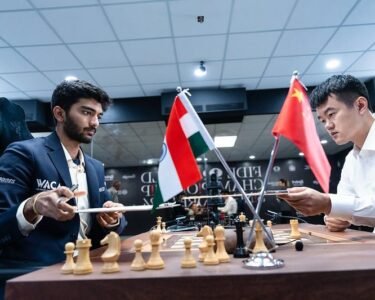
By Indian Grandmaster R Praggnanandhaa has created history by becoming the first Indian player to win the Grand Chess Tour Finals, producing one of the most impressive comebacks in recent elite chess. On August 27 in St. Louis, Praggnanandhaa defeated American Grandmaster Fabiano Caruana 15–13 in the final. The victory also earned him a $200,000 first prize.
The result is particularly remarkable because Praggnanandhaa entered the final day six points behind Caruana. Caruana had taken control of the match after winning the first classical game, while the second classical encounter ended in a long 95-move draw. The overall score stood at 9–3 in Caruana’s favour before the rapid games began.
Praggnanandhaa then produced the turning point of the match. He won both rapid games, immediately transforming the contest and moving ahead 11–9. With the pressure now on Caruana, Praggnanandhaa maintained his advantage through the four blitz games. The blitz portion ended evenly, allowing the Indian star to secure the overall 15–13 victory.
The achievement adds another major milestone to Praggnanandhaa’s rapidly developing career. At 21, he has established himself among the strongest players in the world, and this victory follows another major success at Norway Chess earlier this summer. His ability to recover from a significant deficit and perform under extreme time pressure demonstrates both his tactical strength and psychological resilience.
The Grand Chess Tour final was not the only major story from St. Louis. Wesley So finished third, defeating Vincent Keymer 18–12. So also recently won the prestigious Sinquefield Cup for the second consecutive year, making him another major figure in the latest American chess events.
India’s Chess Momentum Continues
Praggnanandhaa’s victory comes at an exciting time for Indian chess. The country is preparing for the 2026 FIDE Chess Olympiad in Samarkand, Uzbekistan, where India enters as defending champion in both the Open and Women’s sections. The selected Open team includes Arjun Erigaisi, Praggnanandhaa, Nihal Sarin, reigning world champion D Gukesh and Vidit Gujrathi.
However, India’s Olympiad selection has also generated debate. National champions Pa. Iniyan and P V Nandhidhaa were not selected for the teams, with the selection process relying heavily on recent rating averages and eligibility requirements. The issue has prompted discussion about whether winning the national championship should carry greater weight in national-team selection.
Meanwhile, the next major global event is already generating excitement. Reigning world champion D Gukesh is scheduled to face Javokhir Sindarov in the 2026 World Championship match in Geneva, with the match set for November 25–December 15. Both players will be only 20 years old when the match begins, creating the youngest World Championship match in chess history.
The chess calendar is also busy at the grassroots level. Several FIDE-rated tournaments are taking place in India from August 28, including events in Chennai, Hassan and Kannur. These competitions provide opportunities for developing players to gain competitive experience and improve their official ratings.
Another interesting development is FIDE’s ongoing effort to expand access to official ratings. FIDE and World Chess announced a pilot initiative that could allow online rapid and blitz players to earn their first official over-the-board FIDE rating under controlled conditions. If finalized, the programme could open the rating system to many players who currently have limited access to rated tournaments.
Overall, August 28, 2026 is another significant day for chess, with Praggnanandhaa’s historic Grand Chess Tour victory leading the headlines. His comeback against Caruana demonstrates the importance of resilience, calculation and confidence when the pressure is highest. With the Olympiad approaching and the Gukesh–Sindarov World Championship match later this year, the international chess scene is entering an exciting period.
For Indian chess fans especially, the message is clear: the country’s new generation continues to challenge the world’s elite—and Praggnanandhaa’s latest achievement is another powerful sign of India’s growing influence on the global chess stage.
Follow Us On Instagram