 By
By 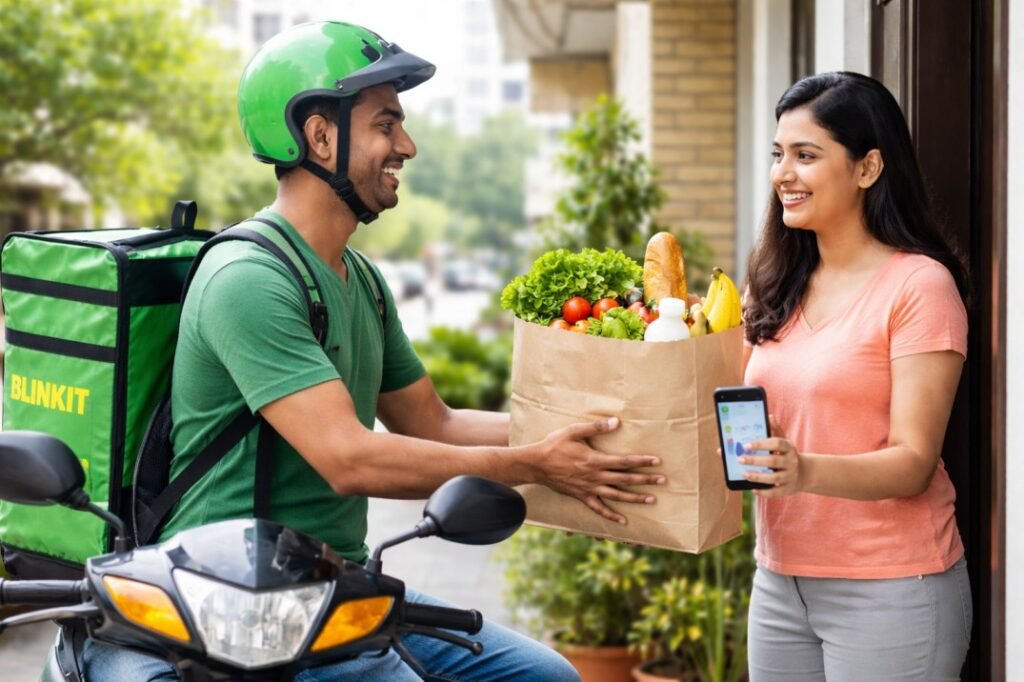
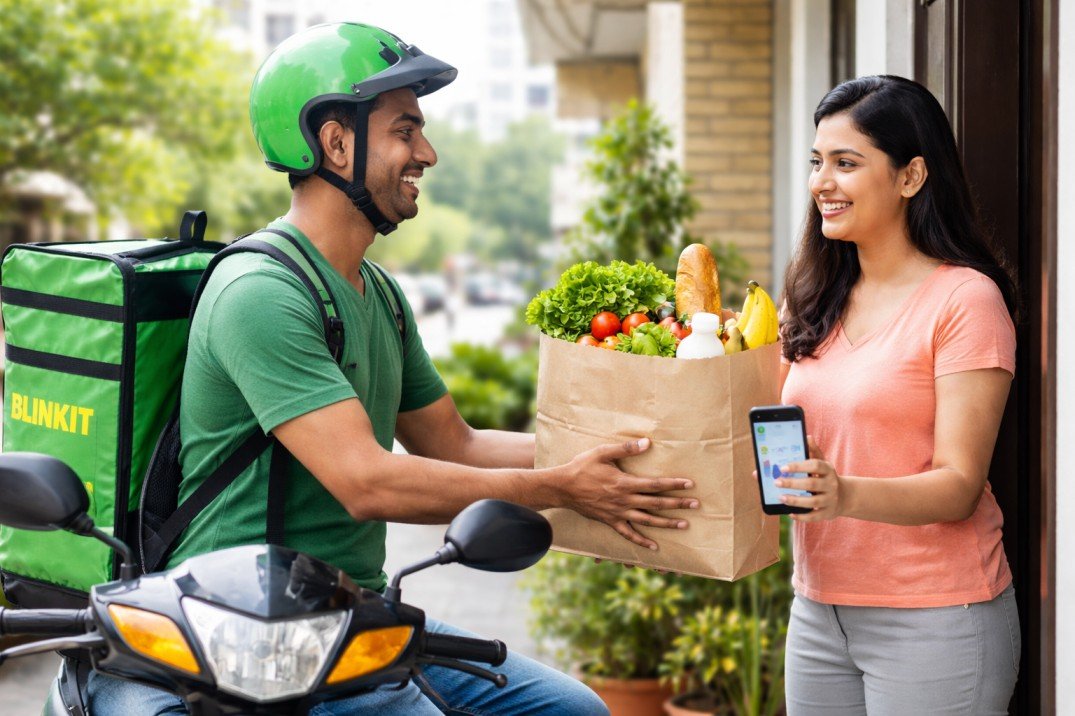
India’s retail industry is witnessing a major transformation with the rise of quick commerce, a business model that promises delivery of groceries and essentials within 10 to 15 minutes. This trend has gained massive popularity in metro cities and is quickly expanding across the country.
Quick commerce is becoming one of the fastest-growing business sectors in India, attracting investments, startups, and global attention.
What is Quick Commerce?
Quick commerce, often called Q-commerce, is a faster version of e-commerce that focuses on delivering products within minutes rather than days.
Unlike traditional online shopping platforms where delivery takes one or two days, quick commerce companies operate through small local warehouses known as dark stores. These stores are strategically placed in neighborhoods to ensure super-fast delivery.
Popular Indian quick commerce companies include Blinkit, Zepto, and Swiggy Instamart, which are competing aggressively to provide faster services and wider product selections.
Why Quick Commerce is Growing Fast in India
Several factors are driving the growth of quick commerce in India.
1. Changing Consumer Lifestyle
Urban consumers today prefer convenience and speed. With busy work schedules, people want groceries, snacks, and household essentials delivered instantly.
Quick commerce solves this problem by offering delivery within minutes.
2. Smartphone and Internet Growth
India has over 750 million internet users, and smartphone penetration continues to increase. This has made mobile shopping easier and more accessible.
Quick commerce apps provide a seamless experience where customers can place orders within seconds.
3. Investment from Big Companies
Large companies and investors are heavily funding quick commerce startups. Venture capital firms see huge potential in this sector.
Because of this funding, companies are able to expand their warehouses, improve logistics, and grow their delivery networks.
4. Hyperlocal Delivery Model
Quick commerce uses a hyperlocal model where warehouses are located close to customers. This allows delivery partners to reach homes within 10 minutes.
This efficient system is one of the biggest innovations in modern retail.
How Quick Commerce is Changing Retail
Quick commerce is not just another delivery service — it is reshaping the entire retail ecosystem.
Traditional grocery stores are now competing with digital platforms that offer instant convenience.
Many local brands and small businesses are also partnering with quick commerce platforms to sell their products online. This helps them reach more customers without investing in large retail stores.
As a result, quick commerce is creating new opportunities for entrepreneurs, logistics companies, and delivery partners
Challenges in Quick Commerce
Despite its rapid growth, quick commerce also faces several challenges.
The biggest challenge is maintaining profitability. Delivering products in 10 minutes requires high operational costs, including warehouses, delivery staff, and technology infrastructure.
Companies are still experimenting with different strategies to balance speed and profitability.
Another challenge is supply chain management, especially during peak hours when order demand increases significantly.
Future of Quick Commerce in India
Experts believe that quick commerce will continue to grow rapidly in the coming years. As technology improves and logistics become more efficient, delivery times may become even faster.
Many analysts predict that tier-2 cities in India will soon see the expansion of quick commerce services.
With increasing consumer demand for convenience, quick commerce has the potential to become a permanent part of India’s retail ecosystem.
In the future, this business model may expand beyond groceries to include electronics, medicines, and even fashion products.