

 By
By The Telangana assembly referred the Hate Speech and Hate Crimes Bill to a select committee after objections and calls for amendments from various parties.
The Telangana legislative assembly on Monday referred the Telangana Hate Speech and Hate Crimes (Prevention) Bill, 2026, to a select committee after members from across party lines raised objections, sought clarifications and suggested amendments to several provisions of the proposed law.
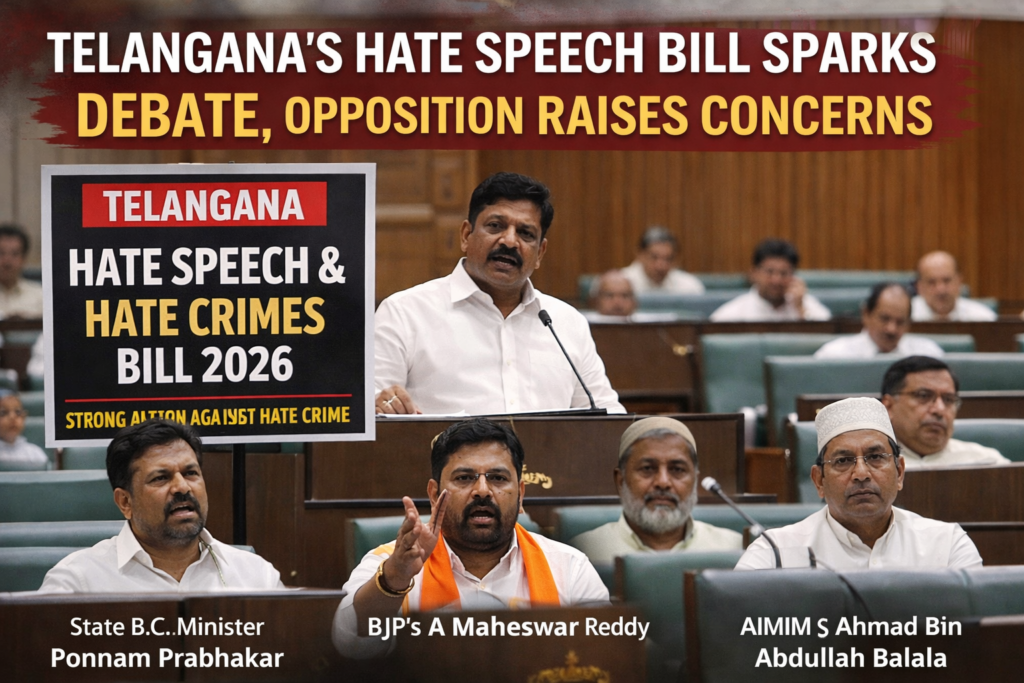
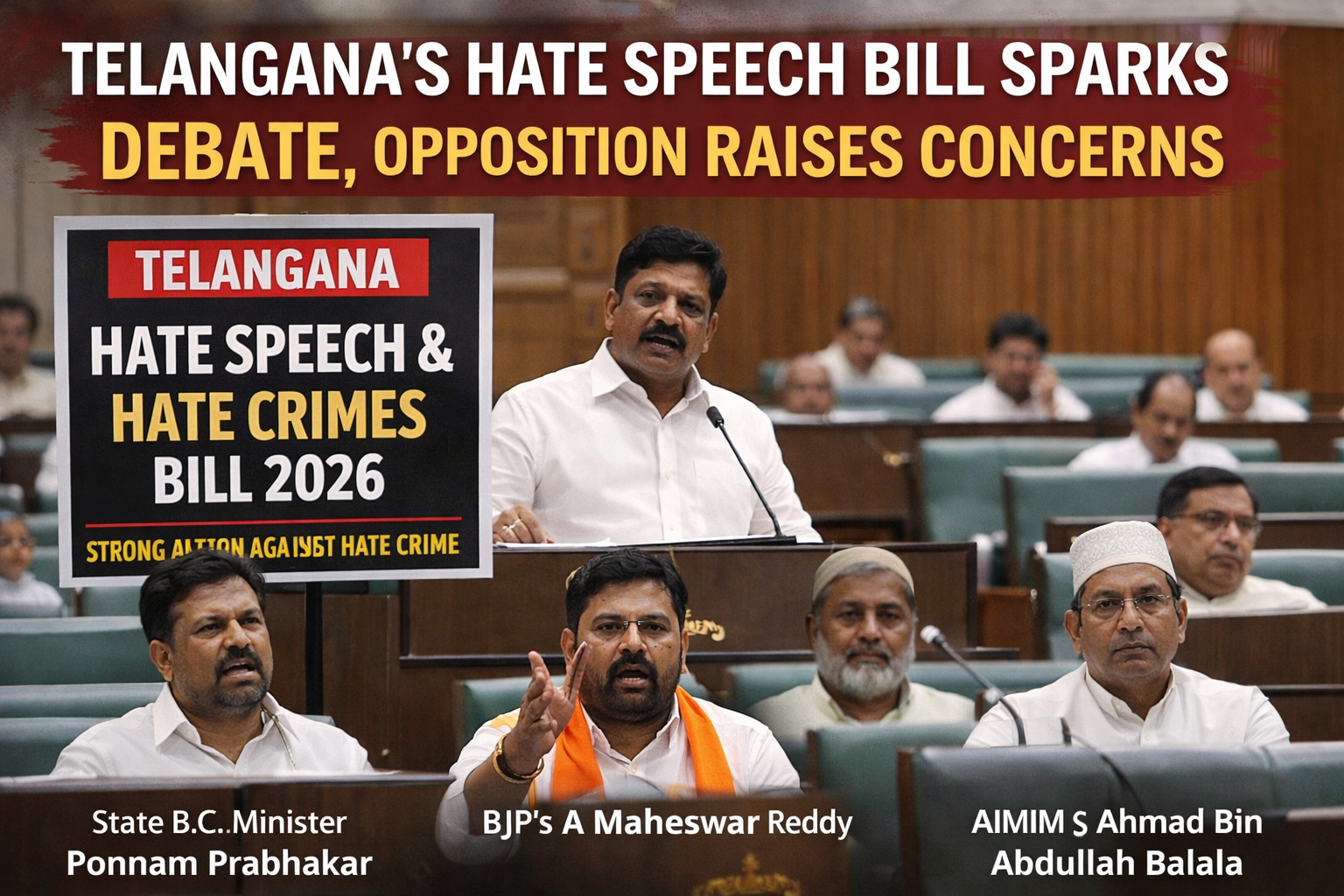
The bill, which seeks to curb the growing incidence of hate speech and hate crimes in the state, was introduced in the assembly by state backward classes minister Ponnam Prabhakar on behalf of chief minister A Revanth Reddy. The bill seeks to impose stringent punishment, including imprisonment of up to 10 years and a fine of ₹1 lakh, while classifying such offences as cognisable and non-bailable.
The minister said the bill was being introduced to address the increasing misuse of digital and social media platforms for spreading hatred, provoking enmity and disturbing public order. “Since the existing legal framework is inadequate to deal with the changing nature, spread and impact of hate speech and hate crimes, the government wants to enact a comprehensive law,” Prabhakar said.
During the discussion on the bill on Monday, several opposition members expressed their apprehensions over the possible misuse of such a law.
Bharatiya Janata Party (BJP) floor leader in the assembly A Maheswar Reddy strongly opposed the legislation, contending that it could become a tool to curb dissent and suppress criticism of the government. He said the Bill lacked clear definitions of both “hate speech” and “hate crimes” and warned that vague language could lead to misuse.
“It poses a serious threat to civil liberties and amounts to a death warrant for freedom of speech,” Reddy said and alleged that it could be used to prevent people from questioning government failures. He demanded that the Bill be referred to a select Committee for amendments and wider scrutiny.
The Bill currently defines hate speech as “any expression which is made, published or circulated… in public view, with an intention to cause injury, disharmony or feelings of enmity or hatred or ill-will against person alive or dead, class or group of persons or community, to meet any prejudicial interest.”
Bias on grounds of religion, race, caste, community, tribe, sex, sexual orientation, place of birth, residence, language and disability are considered to amount to “prejudicial interest”.
All India Majlis-e-Ittehadul Muslimeen (AIMIM) MLA Ahmed Bin Balala extended support to the broader objective of the Bill but said certain aspects required refinement. “Propagation of religion should not automatically be interpreted or criminalised as hate speech. There is a need for careful drafting to avoid unintended consequences,” he said, and favoured sending the bill to a select Committee so that it could undergo broader consultations and incorporate safeguards against misinterpretation.
Communist Party of India MLA Kunamneni Sambasiva Rao went a step further and demanded the withdrawal of the bill, objecting particularly to the provision that could make an entire political party, organisation or institution liable for the actions or statements of one individual.
Questioning the fairness of such a clause, he argued that it was unreasonable to hold a whole organisation accountable for remarks made by a single leader or member, and sought reconsideration of that aspect of the proposed law.
Congress MLAs defended the need for a strong law to check rising hate content and social media abuse.
Khairatabad MLA Danam Nagender pointed to the increasing misuse of online platforms, saying objectionable and provocative comments are often made under the pretext of exercising freedom of speech.