


 By
By Introduction
Computers have become an essential part of modern life, transforming how people work, communicate, learn, and entertain themselves. Over time, computers have evolved into many different forms, each designed to serve a specific purpose. From powerful machines used for scientific research to small systems embedded inside everyday devices, computers are categorized based on their size, performance, and usage. Understanding the various categories of computers helps individuals and organizations choose the right technology according to their needs. This article explains the main types of computers, including desktop computers, laptops, tablets, servers, supercomputers, and embedded systems, along with their features and real-world applications.
Desktop Computers
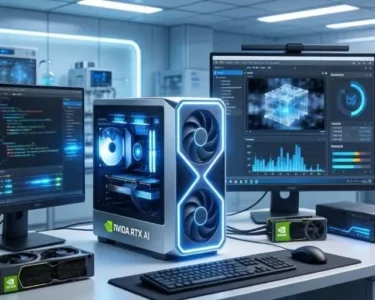
Desktop computers are traditional personal computers designed to stay in one fixed location, usually on a desk or workstation. They consist of separate hardware components such as a monitor, central processing unit (CPU), keyboard, and mouse. Desktop computers are widely known for their strong performance and ability to handle demanding tasks. Professionals working in software development, graphic design, video editing, and gaming often prefer desktops because they can easily upgrade hardware parts like RAM, storage drives, and graphics cards. Another advantage of desktops is their long lifespan and cost-effective performance compared to portable devices. However, desktops are not easy to move from one place to another, which makes them less suitable for users who need mobility.
Laptop Computers
Laptop computers are portable devices that combine all major computer components into a single compact unit. They include a built-in display, keyboard, touchpad, battery, webcam, and speakers, allowing users to work from almost anywhere. Laptops have become extremely popular among students, professionals, and freelancers because they support flexible work environments. Modern laptops offer powerful processors, fast storage, and high-quality displays while remaining lightweight and energy efficient. They are commonly used for programming, office work, online classes, video meetings, and multimedia tasks. Although laptops provide convenience and portability, they usually have limited upgrade options compared to desktop computers, and repairs can sometimes be more expensive due to their compact design.
Tablet Computers
Tablet computers are touchscreen-based devices that provide a simple and user-friendly computing experience. They are lighter than laptops and focus mainly on touch interaction rather than traditional keyboard and mouse input. Tablets are commonly used for entertainment, reading, online learning, browsing, and creative activities such as digital drawing or note-taking with a stylus pen. Because of their long battery life and compact design, tablets are easy to carry and convenient for quick tasks. Many educational institutions use tablets for e-learning and digital content consumption. However, tablets may not be suitable for heavy software development or advanced computing tasks because of their limited processing power and mobile operating systems.
Server Computers
Server computers are specialized machines designed to manage network resources and provide services to multiple users at the same time. Unlike personal computers, servers are built for continuous operation, reliability, and large-scale data management. They are commonly used in businesses, data centers, and cloud computing environments to host websites, manage databases, store files, and run online applications. Servers usually have powerful processors, large memory capacity, and advanced storage systems that allow them to handle multiple requests simultaneously. Organizations depend on servers to maintain secure communication, data sharing, and system management across networks. Because of their role in supporting digital infrastructure, servers are considered the backbone of modern internet services.
Supercomputers
Supercomputers are the most powerful type of computers available today. They are designed to perform extremely complex calculations at very high speeds, often using thousands of processors working together in parallel. Scientists and researchers use supercomputers for advanced simulations such as climate modeling, space exploration, artificial intelligence research, and medical studies. These machines are capable of processing massive amounts of data within a short period, making them essential for solving problems that regular computers cannot handle. Supercomputers require special environments with advanced cooling systems because they generate significant heat and consume large amounts of power. Although they are not used by everyday consumers, their research outcomes have a major impact on technological and scientific progress.
Embedded Computers
Embedded computers are small computing systems integrated into other electronic devices to perform specific tasks. Unlike general-purpose computers, embedded systems are designed to operate automatically with minimal user interaction. They can be found in smart televisions, cars, washing machines, medical equipment, and home automation devices. These systems are optimized for efficiency, low power consumption, and reliability. With the growth of the Internet of Things (IoT), embedded computers have become more important than ever, enabling devices to communicate and share data over the internet. Despite their small size, embedded systems play a critical role in modern technology by adding intelligence and automation to everyday products.
Conclusion
Computers are available in many different categories, each designed to meet specific requirements and user needs. Desktop computers provide high performance and customization options, while laptops offer portability and flexibility for daily tasks. Tablets focus on simplicity and touchscreen interaction, making them ideal for media consumption and learning. Server computers support networks and online services by managing large amounts of data and users. Supercomputers drive scientific discovery through powerful processing capabilities, and embedded computers bring smart technology into everyday devices. As technology continues to evolve, these categories will keep improving, offering faster performance, better efficiency, and more innovative solutions for the future.
Do you follow instagram