 By
By Few players in modern tennis break conventional patterns the way Daniil Medvedev does. His strokes look unconventional. His court positioning often seems too deep. His movement appears awkward.
And yet — he wins.
Medvedev has built his career by disrupting rhythm, absorbing pace, and frustrating opponents who expect textbook tennis. He doesn’t dominate with beauty. He dominates with disruption.
The Playing Style: Controlled Chaos from the Baseline
Medvedev stands unusually deep behind the baseline when returning serve. Many critics once called it defensive or passive.
It’s neither.
By standing deep, he gains extra reaction time. He redirects power efficiently and extends rallies until opponents overhit. Against big servers, this strategy neutralizes pace rather than fighting it.
His backhand is flat, precise, and reliable. His forehand, though less aesthetically pleasing, generates depth and angles that push opponents wide.
He doesn’t overpower. He outlasts and outthinks.
Hard Court Dominance
Medvedev’s best results consistently come on hard courts. The predictable bounce allows him to execute his deep return strategy and grind down aggressive players.
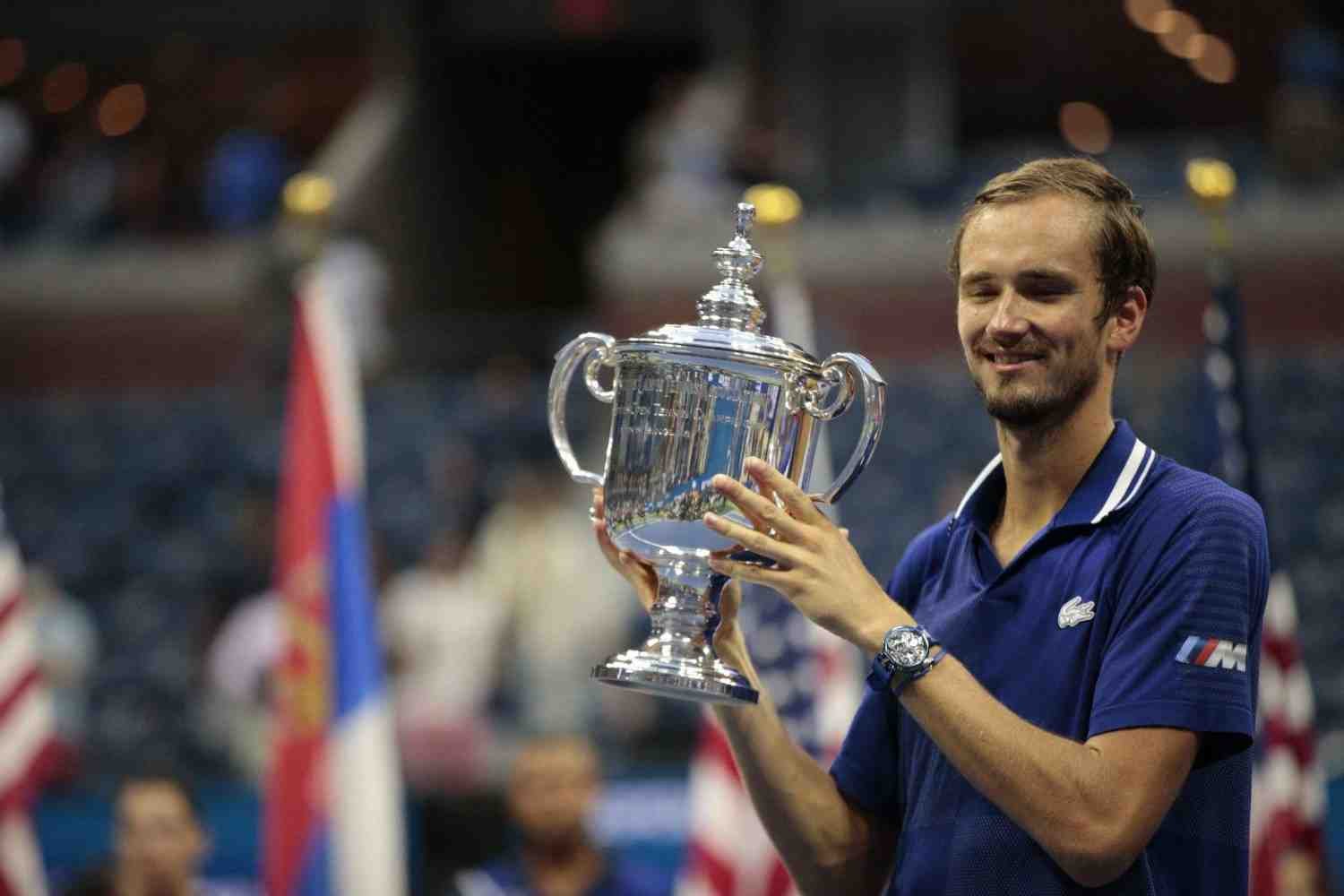
His breakthrough Grand Slam victory on hard courts cemented his status as a legitimate elite contender. That win wasn’t a fluke. It was built on:
- Tactical discipline
- Physical endurance
- Emotional control
- Elite defensive coverage
He has since remained a consistent presence in the latter stages of major tournaments.
Mental Edge
Medvedev thrives on psychological warfare.
He doesn’t panic when trailing. He doesn’t rush points under pressure. In fact, he often appears calmer when matches become chaotic.
His ability to extend rallies forces opponents to question their shot selection. Frustration builds on the other side of the net.
That mental edge wins tight matches.
However, emotional interactions with crowds or officials have occasionally sparked controversy. While his personality adds intensity, managing emotions consistently remains important for long-term stability.
Tactical Intelligence
Medvedev’s game revolves around pattern recognition.
He studies tendencies. He adapts mid-match. He shifts return positions strategically. Against serve-and-volley players, he adjusts depth. Against heavy forehand hitters, he redirects crosscourt until openings appear.
Few players switch defensive and offensive modes as seamlessly.
But here’s the limitation:
When facing opponents who mix pace and use heavy topspin, especially on clay, Medvedev’s flat strokes can struggle.
Surface dependency remains part of his profile.
Physical Conditioning
Medvedev’s endurance is underrated.
Despite his lean frame, he sustains long baseline exchanges without fading. His sliding defense on hard courts resembles clay-court movement, allowing him to retrieve balls others would miss.
Five-set matches don’t intimidate him. Extended rallies don’t break him.
That physical base supports his grinding strategy.
Areas for Improvement
Even elite players have gaps.
For Medvedev, those include:
- Net play consistency under pressure.
- Performance on slower clay surfaces.
- Occasional dips in first-serve percentage during high-stress moments.
If he strengthens his transition game and improves adaptability on clay, his Grand Slam opportunities multiply.
Position in the Modern ATP Era
Men’s tennis is transitioning generations. Power hitters, aggressive baseline attackers, and athletic all-court players dominate headlines.
Medvedev stands apart stylistically.
He doesn’t follow trends. He forces opponents to adjust to him.
That uniqueness gives him an advantage — but also requires constant tactical evolution. As younger players study his patterns, he must stay unpredictable.
The Legacy Question
Medvedev already owns a major title and multiple Masters victories. That places him firmly among the elite of his era.
The next step is accumulation.
One Slam proves capability. Multiple Slams define legacy.
Consistency across surfaces, sustained Top 5 ranking, and deeper clay-court improvement will determine how his career is remembered.
Final Assessment
Daniil Medvedev is not built on aesthetics.
He is built on disruption, endurance, and strategic depth.
His unconventional technique confuses opponents. His mental resilience frustrates them. His tactical awareness outmaneuvers them.
He may never be the most visually polished player on tour.
But he remains one of the most difficult to defeat.
In modern tennis, style is optional.
Winning is not.