 By
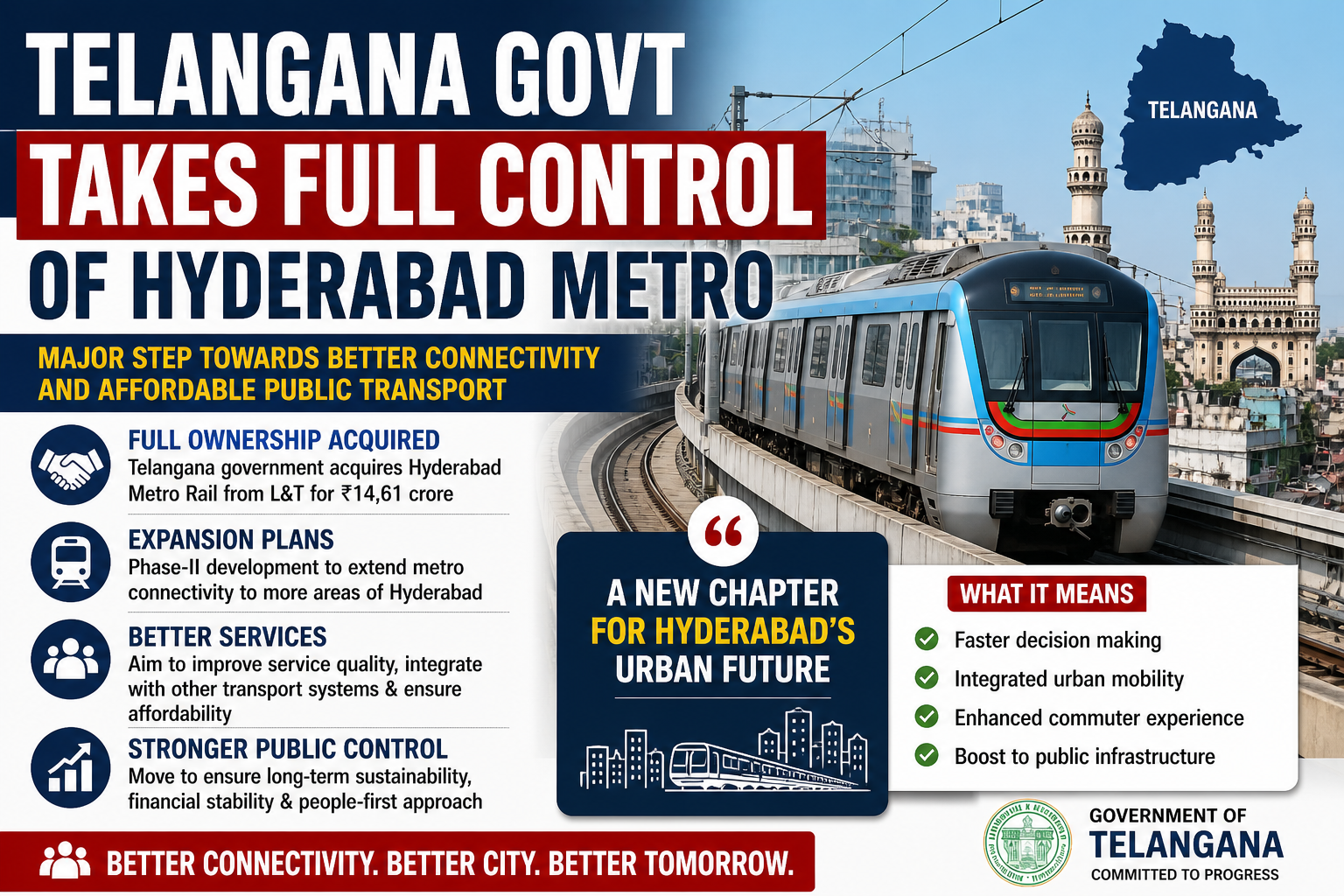
By In a major urban infrastructure move, the government of Telangana has taken full control of the Hyderabad Metro Rail, marking a significant shift in the management of one of India’s largest metro rail projects. The takeover from Larsen & Toubro (L&T) signals the state’s intent to strengthen public control over critical transport infrastructure and accelerate expansion plans.
The Hyderabad Metro, which has been a key component of the city’s public transport system, was initially developed under a public-private partnership (PPP) model. While the project successfully improved urban mobility, there have been ongoing discussions about financial sustainability, operational control, and long-term expansion. By acquiring full ownership, the state government aims to streamline decision-making and align the metro’s growth with broader urban planning goals.
One of the primary objectives behind this move is to facilitate the expansion of metro connectivity across Hyderabad. The government has already indicated plans for Phase-II development, which is expected to extend metro lines to underserved areas, improve last-mile connectivity, and reduce traffic congestion. With full control, the state can now fast-track approvals, mobilize resources more efficiently, and integrate the metro with other transport systems such as buses and suburban rail.
Financial considerations also played a key role in the decision. The PPP model, while effective in the initial stages, faced challenges due to fluctuating ridership, especially during disruptions like the COVID-19 pandemic. Revenue uncertainties and debt obligations made it difficult for the private operator to sustain operations without additional support. By stepping in, the government aims to stabilize the system financially and ensure uninterrupted services for commuters.
From a governance perspective, the takeover reflects a broader trend of governments reassessing PPP arrangements in essential infrastructure sectors. While private participation can bring efficiency and investment, public control is often seen as necessary to ensure affordability, accessibility, and long-term sustainability. In the case of the Hyderabad Metro, the state’s involvement is expected to prioritize public interest over purely commercial considerations.
The move also has political implications. Urban infrastructure projects are often central to a government’s development narrative, and taking control of a high-visibility project like the metro allows the administration to directly showcase its commitment to improving public services. It provides an opportunity to implement new policies, enhance service quality, and deliver tangible benefits to citizens.
At the same time, the government will face the challenge of managing a complex and capital-intensive system. Operating a metro network requires significant technical expertise, financial discipline, and continuous investment. Ensuring efficiency, maintaining safety standards, and expanding services without placing excessive financial burden on the state will be critical factors in determining the success of this transition.
Experts believe that if managed effectively, the takeover could lead to better coordination between different modes of transport and more inclusive urban development. Integrated ticketing systems, improved feeder services, and transit-oriented development could enhance the overall commuter experience and encourage greater use of public transport.
However, there are also concerns about potential risks, including increased fiscal pressure on the state and the need for strong institutional capacity to handle operations. The government will need to strike a balance between expanding services and maintaining financial viability, possibly exploring innovative funding models and partnerships for future growth.
In conclusion, the Telangana government’s decision to take full control of the Hyderabad Metro Rail marks a significant milestone in the state’s infrastructure journey. It reflects a strategic shift toward greater public ownership and control, with the aim of improving urban mobility, ensuring financial stability, and accelerating expansion. As the state moves forward with its plans, the success of this initiative will depend on effective management, sustained investment, and a clear focus on delivering efficient and accessible transport services to the people of Hyderabad.