 By
By Introduction
Health experts are raising fresh concerns about the growing impact of excessive screen exposure on young adults and working professionals. With smartphones, laptops, tablets, gaming devices, and televisions becoming part of everyday life, doctors say prolonged exposure to blue light may be silently affecting sleep quality, eye health, mental wellness, and overall physical health.
According to health specialists, many people now spend more than 8–12 hours daily looking at screens for work, entertainment, social media, and communication. While digital devices have made life easier, excessive usage is creating new health problems that experts believe could worsen in the coming years.
Doctors have recently reported an increase in patients complaining about headaches, eye strain, poor sleep, anxiety, and reduced productivity due to long screen hours.
What Is Blue Light?
Blue light is a type of high-energy visible light emitted from digital screens such as smartphones, laptops, tablets, LED lights, and televisions.
Natural blue light from sunlight helps regulate sleep cycles and improves alertness during the day. However, artificial blue light exposure during nighttime can disturb the body’s natural rhythm.
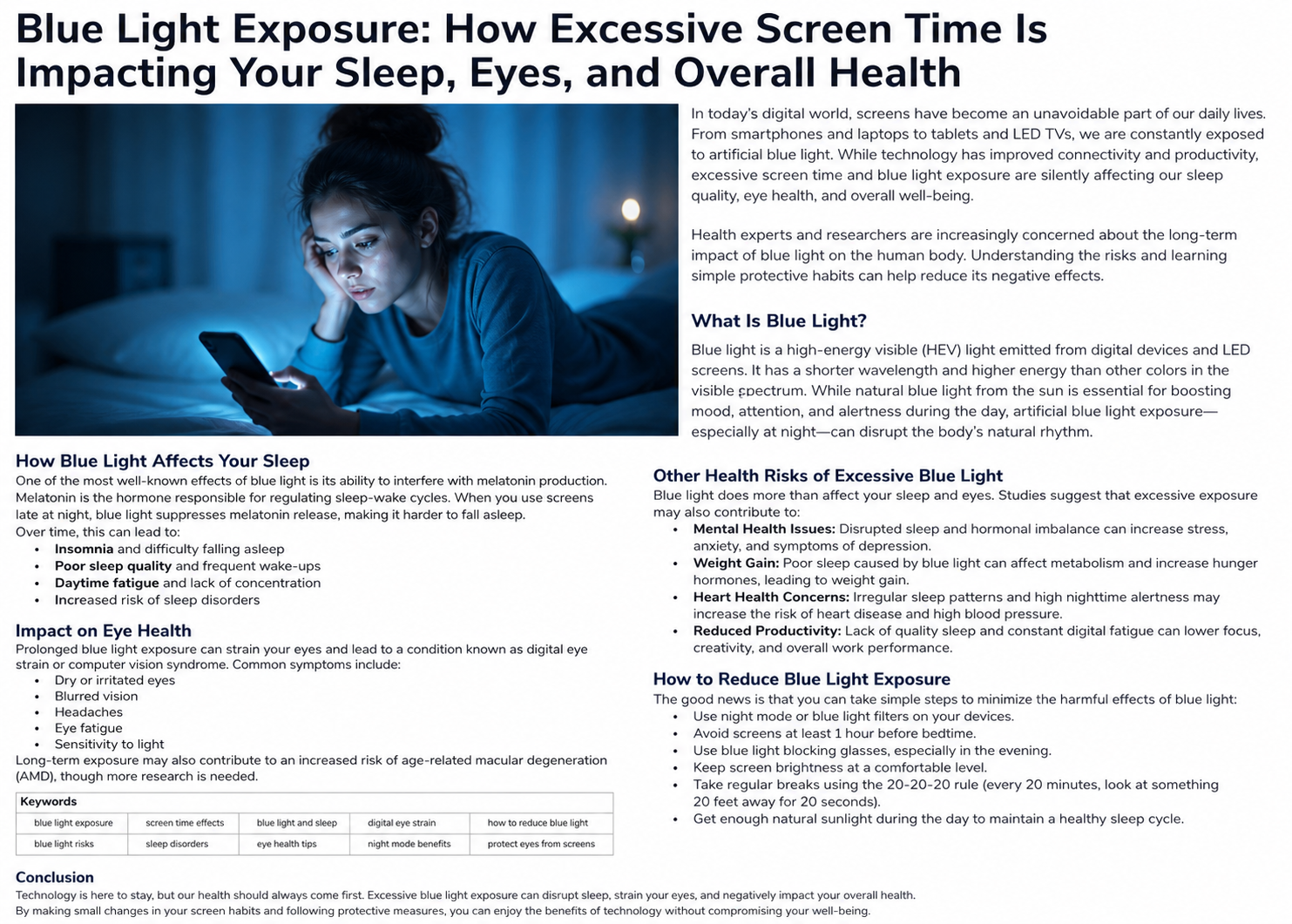
Medical professionals explain that using mobile phones late at night can suppress melatonin production, a hormone responsible for helping people fall asleep naturally.
How Excessive Screen Time Affects Sleep
Sleep specialists say excessive phone usage before bedtime is becoming one of the biggest causes of insomnia among young adults.
People who spend hours scrolling through social media or watching videos before sleeping often struggle with:
- Difficulty falling asleep
- Frequent waking during the night
- Poor sleep quality
- Morning fatigue
- Lack of concentration
Experts warn that poor sleep can eventually increase the risk of obesity, diabetes, heart disease, and weakened immunity.
Eye Health Problems Are Increasing
Eye doctors are also seeing a rise in digital eye strain cases.
Common symptoms include:
- Dry eyes
- Blurry vision
- Eye irritation
- Headaches
- Neck pain
- Sensitivity to light
The condition is often caused by staring at screens for long periods without taking breaks.
Doctors recommend following the 20-20-20 rule:
Every 20 minutes, look at something 20 feet away for 20 seconds.
Mental Health Concerns Linked to Screen Addiction
Psychologists say excessive screen time can also impact mental health.
Constant notifications, social media pressure, gaming addiction, and endless scrolling may lead to:
- Stress
- Anxiety
- Depression symptoms
- Reduced focus
- Social isolation
Many young adults are experiencing “digital burnout,” where constant online activity leaves them mentally exhausted.
Simple Ways to Reduce Blue Light Exposure
Health experts recommend these steps:
Use Night Mode
Enable blue light filters on your smartphone or laptop.
Avoid Screens Before Bed
Stop using devices at least one hour before sleeping.
Take Frequent Breaks
Give your eyes regular breaks during work.
Reduce Screen Brightness
Keep screen brightness at comfortable levels.
Spend Time Outdoors
Natural sunlight helps maintain healthy sleep patterns.
Why This Health Warning Matters
As technology continues to dominate modern lifestyles, experts believe screen-related health problems may become one of the biggest wellness challenges globally.
Doctors are urging people to create healthier digital habits before long-term damage occurs.
Making small lifestyle changes today could protect your sleep, eyesight, and mental health in the future.
Conclusion
Technology is essential in daily life, but health should remain a priority. Excessive blue light exposure may seem harmless, but doctors warn that ignoring these symptoms could lead to long-term health complications.
Balancing digital usage with healthy habits is becoming more important than ever.