


 By
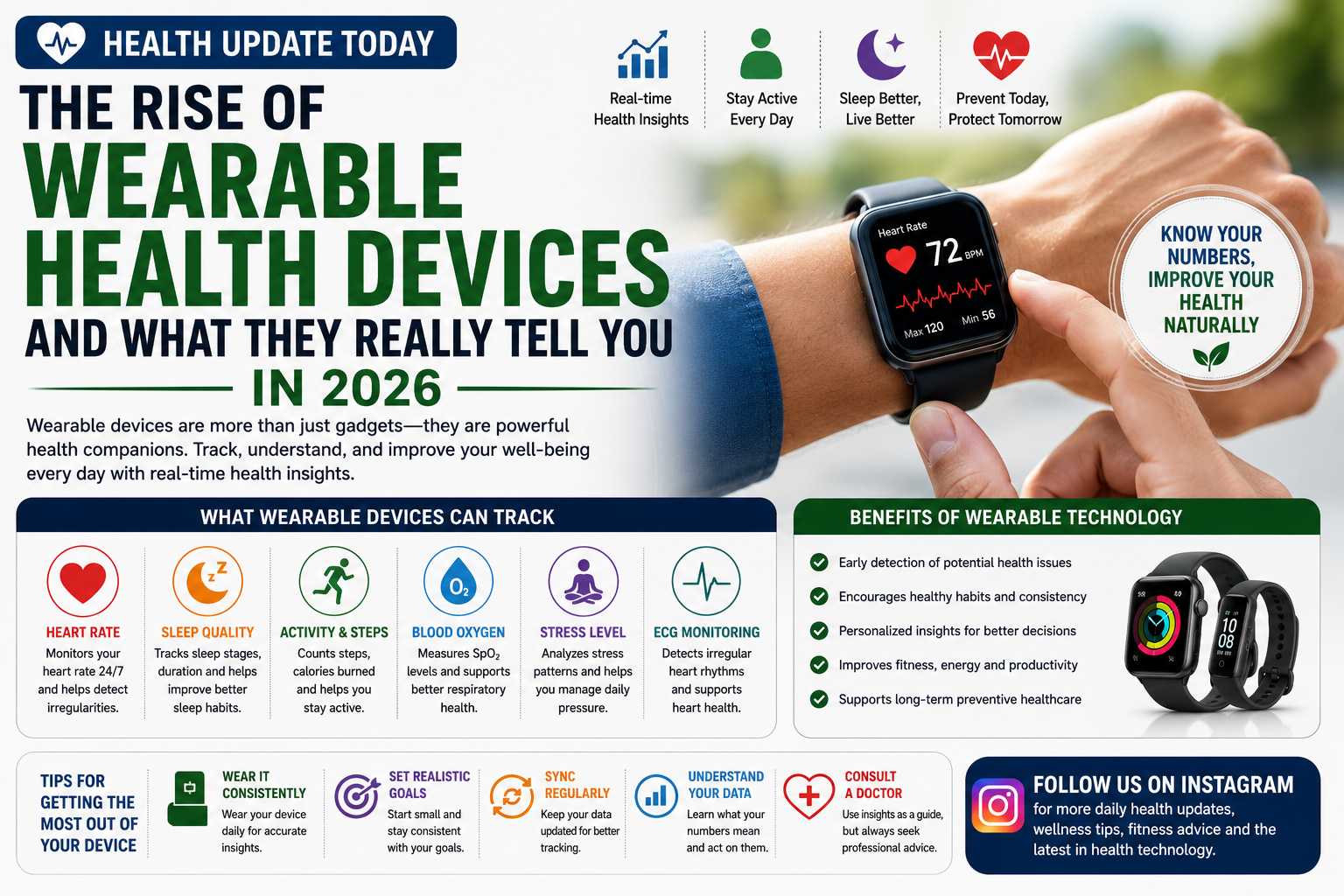
By Healthcare technology is evolving faster than ever, and one of the biggest wellness trends of 2026 is the growing popularity of wearable health devices. From smartwatches and fitness bands to advanced health trackers, millions of people are now using wearable technology to monitor their daily health. These devices are no longer just counting steps—they are helping people understand their heart health, sleep quality, activity levels, stress patterns, and overall well-being.
Health experts believe that wearable health technology is transforming the way people approach preventive healthcare. Instead of waiting until symptoms appear, individuals can now monitor important health indicators in real time and make healthier lifestyle decisions before problems become serious. As awareness about digital health monitoring continues to grow, wearable devices are becoming an essential part of everyday life.
One of the most popular features of wearable health devices is heart rate monitoring. Smartwatches can continuously measure heart rate throughout the day and during exercise. Sudden increases or unusually low heart rates may encourage users to seek medical advice earlier than they otherwise would. Although these devices are not designed to replace professional medical diagnosis, they can provide valuable information about overall heart health.
Another major benefit is sleep tracking. Quality sleep has become one of the most important health priorities in 2026, and wearable devices now provide detailed insights into sleeping patterns. Many devices measure sleep duration, sleep stages, nighttime awakenings, and overall sleep quality. This information helps users understand how lifestyle habits such as stress, caffeine intake, and screen time affect their rest. Healthcare professionals say that improving sleep quality is one of the simplest ways to support both physical and mental health.
Fitness tracking remains one of the biggest reasons people purchase wearable devices. Daily step counts, calorie expenditure, exercise duration, and distance traveled motivate users to remain active. Many healthcare providers recommend aiming for 7,000 to 10,000 steps per day, and wearable technology makes it easier to monitor progress. By encouraging consistent movement, these devices support healthy lifestyle habits and help reduce the risks associated with prolonged sitting.
Modern wearable devices are also beginning to measure blood oxygen levels (SpO₂), which can provide useful information about respiratory health and overall fitness. While occasional readings should not be used for self-diagnosis, tracking oxygen saturation may help users notice unusual changes that deserve medical attention. Combined with heart rate monitoring, these features offer a broader picture of overall wellness.
Stress monitoring has become another popular function in wearable health devices. Using heart rate variability and other physiological signals, many smartwatches estimate stress levels throughout the day. High stress scores may encourage individuals to take short breaks, practice deep breathing, meditate, or spend time outdoors. Experts believe that managing daily stress is essential for maintaining good mental health and long-term well-being.
One of the most exciting developments in wearable technology is its role in preventive healthcare. Instead of focusing only on treating illness, wearable devices encourage people to develop healthier routines. Daily reminders to move, drink water, sleep on time, or complete exercise goals help users build consistent habits that improve long-term health. Small lifestyle improvements tracked over weeks and months can make a significant difference in reducing the risk of chronic diseases.
Some advanced wearables now include electrocardiogram (ECG) features that may detect irregular heart rhythms. Others offer fall detection, emergency SOS alerts, and medication reminders, making them especially useful for older adults. These innovations provide greater peace of mind for both users and their families while supporting independent living.
Despite their advantages, healthcare professionals remind users that wearable devices have limitations. Data collected by smartwatches should be viewed as supportive information rather than a replacement for professional medical evaluation. Factors such as improper device placement, skin temperature, movement, and software updates may affect measurement accuracy. Individuals experiencing persistent symptoms should always consult qualified healthcare providers.
Privacy has also become an important consideration as digital health technology continues to expand. Wearable devices collect large amounts of personal health information, including heart rate, sleep patterns, physical activity, and location data. Experts encourage users to review privacy settings, use secure passwords, and understand how their health information is stored and shared.
Healthcare organizations believe wearable technology will continue evolving rapidly over the coming years. Future devices may provide even more detailed insights into blood pressure trends, glucose monitoring, hydration levels, and early disease detection. Artificial intelligence is expected to make these devices smarter by providing personalized health recommendations based on long-term data analysis.
Ultimately, the greatest value of wearable health devices lies in increasing awareness. They encourage individuals to become more involved in their own health by tracking daily habits, identifying lifestyle patterns, and motivating positive behavioral changes. When combined with regular medical checkups, balanced nutrition, physical activity, and quality sleep, wearable technology can become a powerful tool for improving overall wellness.
As healthcare shifts toward prevention rather than treatment, wearable health devices are helping people take control of their well-being like never before. They remind us that small daily choices—whether taking more steps, sleeping better, reducing stress, or staying active—can have a lasting impact on long-term health.
Follow Us On Instagram for more daily health updates, health technology news, wellness tips, fitness advice, and the latest information on preventive healthcare.
Follow Us On Instagram