


 By
By As workplaces continue to evolve in 2026, companies are focusing not only on employee productivity but also on creating healthier work environments. While issues like poor posture, prolonged sitting, and digital eye strain have received significant attention in recent years, noise pollution in the workplace is now emerging as another major health concern. Health experts warn that constant exposure to excessive workplace noise can negatively affect concentration, mental well-being, productivity, and even long-term physical health.
Modern offices are busier than ever. Open office layouts, continuous phone calls, virtual meetings, office equipment, construction activities, traffic sounds, and background conversations create constant noise throughout the workday. Although these sounds may seem harmless individually, prolonged exposure can gradually increase stress levels and reduce overall employee wellness.
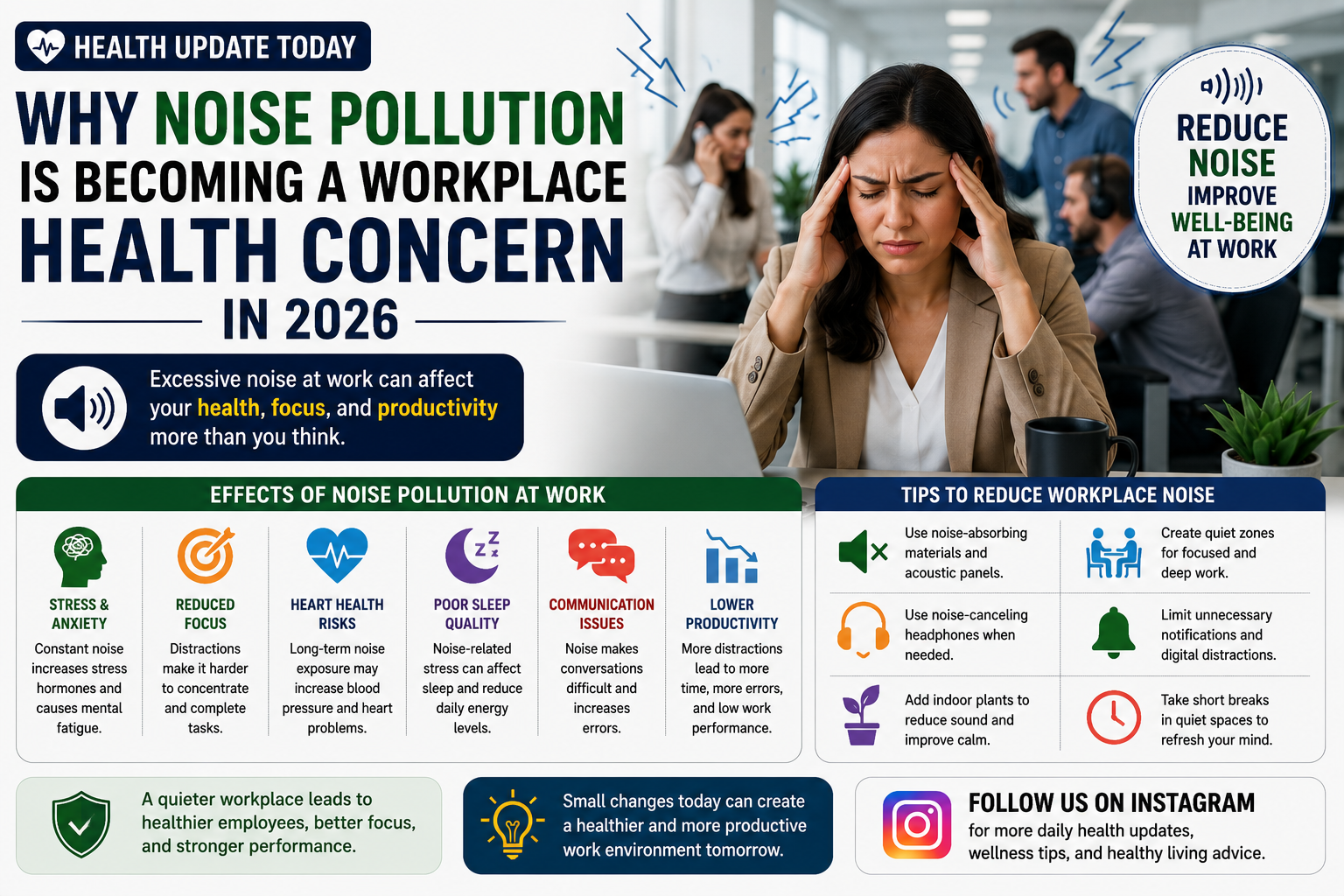
One of the biggest effects of workplace noise pollution is reduced concentration. Many employees require focused attention to complete complex tasks, analyze data, write reports, or solve problems. Continuous interruptions from surrounding noise force the brain to repeatedly shift its attention, making it more difficult to maintain focus. Health professionals explain that this mental overload can reduce work efficiency and increase the likelihood of mistakes.
Another growing concern is the impact of noise on mental health. Constant background noise keeps the brain in a state of heightened alertness, even when employees are not consciously aware of it. Over time, this may contribute to increased stress, anxiety, irritability, and mental fatigue. Occupational health experts believe that creating quieter workspaces can significantly improve emotional well-being and help employees feel more relaxed throughout the day.
Research also suggests that excessive workplace noise may affect heart health. Long-term exposure to high noise levels has been associated with elevated stress hormones, increased blood pressure, and a higher risk of cardiovascular problems. While occasional loud sounds are unlikely to cause serious harm, continuous exposure over months or years may place additional strain on the body. This is why many organizations are beginning to include noise reduction strategies as part of their overall workplace wellness programs.
Sleep quality can also be affected indirectly by workplace noise. Employees who experience constant stress and mental exhaustion during the day may find it more difficult to relax at night. Poor sleep can further reduce concentration, weaken the immune system, and lower overall productivity. Healthcare professionals emphasize that protecting employees from excessive noise can contribute to better work-life balance and healthier sleep patterns.
Another important issue is communication. Ironically, noisy environments often make communication more difficult. Employees may need to repeat conversations, speak louder, or misunderstand important information. This can increase workplace frustration, reduce collaboration, and slow down daily operations. Businesses are increasingly recognizing that a quieter office can improve both communication and overall team performance.
Technology has also contributed to the growing problem. Notifications from smartphones, email alerts, messaging platforms, and continuous virtual meetings create a form of digital noise that adds to physical sound distractions. Experts recommend managing both environmental and digital interruptions to improve employee productivity and mental focus.
Fortunately, organizations can take several practical steps to reduce noise pollution in the workplace. Installing sound-absorbing materials such as acoustic panels, carpets, ceiling tiles, and fabric partitions can help reduce echo and background noise. Creating designated quiet zones for focused work is another strategy becoming increasingly popular in modern offices.
Employees can also protect themselves by using noise-canceling headphones when appropriate, especially during tasks that require deep concentration. Taking short breaks in quiet spaces, practicing mindfulness, and limiting unnecessary interruptions throughout the day can help reduce mental fatigue caused by constant noise exposure.
Workplace design is becoming an important factor in employee health. Many companies are now investing in biophilic office designs that include indoor plants, natural lighting, and sound-absorbing materials to create a calmer working environment. Studies suggest that these improvements not only reduce stress but also enhance creativity, job satisfaction, and overall healthy workplace culture.
Employers are also encouraging flexible work arrangements, allowing employees to work remotely or choose quieter workspaces when performing tasks that require intense concentration. Hybrid work models have shown that reducing environmental distractions can improve both productivity and employee satisfaction.
Health experts believe that awareness of occupational health will continue growing as businesses recognize the relationship between workplace environments and long-term employee well-being. Addressing noise pollution is no longer viewed as simply improving comfort—it is becoming an essential part of creating healthier, safer, and more productive workplaces.
As organizations continue adapting to modern work trends, reducing unnecessary workplace noise may become one of the simplest yet most effective ways to improve employee health. Small changes, such as creating quiet work areas, improving office design, and encouraging mindful communication, can make a significant difference in reducing stress and improving overall wellness.
A healthier workplace is about more than comfortable chairs and standing desks. Protecting employees from excessive noise can improve concentration, support mental health, increase productivity, and contribute to a more positive work environment. As awareness grows in 2026, workplace noise pollution is expected to become a key focus in occupational health and employee wellness initiatives worldwide.
Follow Us On Instagram for more daily health updates, workplace wellness tips, employee health news, mental health advice, and the latest information on creating healthier work environments.
Follow Us On Instagram