


 By
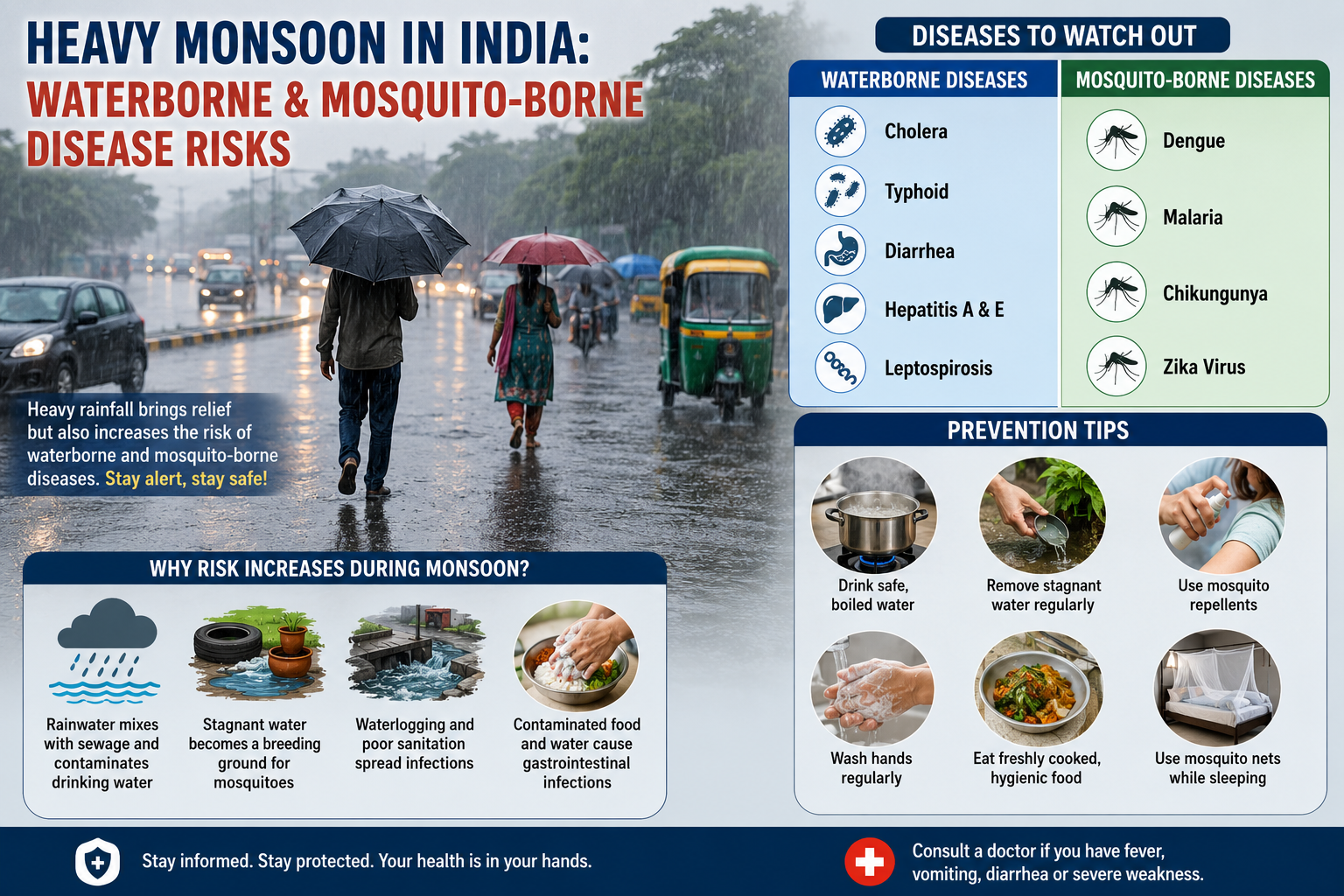
By India is experiencing an active monsoon season, with several parts of the country receiving heavy to very heavy rainfall. The India Meteorological Department (IMD) has forecast an intense monsoon spell from August 11 to August 16, 2026, affecting several regions, including parts of northern, central, eastern and southern India. Along with the much-needed rain, health experts warn that waterlogging, stagnant water, flooding and poor sanitation can increase the risk of several seasonal infections.
Why Heavy Rainfall Increases Health Risks
Heavy rainfall can overwhelm drainage systems and cause waterlogging in residential areas, roads and low-lying locations. Floodwater can mix with sewage, garbage and other contaminants, increasing the possibility of contamination of drinking-water sources.
When people consume contaminated water or food prepared with unsafe water, they may develop gastrointestinal infections. Symptoms can include diarrhoea, vomiting, stomach pain, fever and dehydration.
Flooding can also leave behind stagnant water in containers, tyres, drains, construction sites and other places. These water collections can become breeding sites for mosquitoes.
According to India’s National Centre for Vector Borne Diseases Control (NCVBDC), Aedes aegypti, the main mosquito responsible for dengue transmission in India, can breed in water-holding containers around homes and other buildings.
Dengue and Malaria Risk During Monsoon
Dengue fever is one of the major health concerns during India’s rainy season. The Aedes mosquito can breed in relatively small collections of stagnant water, making household-level prevention particularly important.
Early dengue symptoms can include fever, headache, body pain and fatigue. Because these symptoms can resemble other viral infections, people with persistent or high fever should seek medical advice rather than relying on self-medication.
Current NCVBDC data also show that dengue continues to be reported across Indian states in 2026.
Malaria is another important mosquito-borne disease associated with monsoon conditions. Mosquito populations can increase when rainfall creates suitable breeding environments. Fever, chills, sweating, headache and weakness can occur with malaria, although symptoms can vary.
The Government of India’s vector-borne disease programme continues to monitor diseases including dengue, malaria and chikungunya, particularly because environmental and climatic conditions can influence transmission.
Waterborne Diseases to Watch During the Rainy Season
Water contamination is another major health concern during heavy rainfall and flooding.
Diseases that can become a concern when water and sanitation systems are affected include:
- Cholera
- Typhoid
- Acute diarrhoeal diseases
- Hepatitis A
- Hepatitis E
- Leptospirosis
The NCDC notes that poor water, sanitation and food safety following floods can contribute to several of these infections.
People should be particularly careful about drinking water from uncertain sources. Boiling drinking water when its safety is uncertain, maintaining food hygiene and washing hands regularly can help reduce exposure to contaminated food and water.
Leptospirosis: Another Monsoon Health Concern
Leptospirosis deserves special attention during periods of flooding. The infection can be associated with exposure to water or soil contaminated with urine from infected animals. People who walk through floodwater, especially when they have cuts or wounds, may face increased exposure.
Anyone who develops fever or other concerning symptoms after significant exposure to floodwater should inform a healthcare professional about that exposure. This information can help doctors consider possible causes of illness.
How to Prevent Monsoon Diseases
Simple preventive measures can significantly reduce the risk of monsoon-related infections.
1. Drink Safe Water
Use clean and safe drinking water. If the safety of the water supply is uncertain, use an appropriate method of purification or boiling before consumption.
2. Prevent Mosquito Breeding
Do not allow water to remain stagnant around the home. Empty and clean buckets, flowerpots, coolers, tyres, tanks and other containers regularly.
3. Protect Yourself From Mosquito Bites
Use mosquito repellents, mosquito nets and protective clothing, particularly when mosquito activity is high.
4. Maintain Food Hygiene
Wash fruits and vegetables properly and avoid consuming food that may have been exposed to contaminated water. Keep cooked food covered and maintain clean kitchen surfaces.
5. Avoid Floodwater When Possible
The NCDC recommends staying away from floodwater whenever possible because it can contain sewage, chemicals, waste and disease-causing organisms. If contact with floodwater occurs, exposed areas should be washed with clean water and soap as soon as possible.
6. Do Not Ignore Persistent Fever
Fever during the monsoon should not automatically be assumed to be a simple viral infection. Dengue, malaria, chikungunya, leptospirosis and other infections can produce overlapping symptoms. Early medical evaluation can help identify the cause and appropriate treatment.
When Should You Seek Medical Help?
Seek medical attention if you experience persistent or high fever, repeated vomiting, severe weakness, breathing difficulty, dehydration, unusual bleeding, severe abdominal pain or worsening symptoms.
People who have recently been exposed to floodwater should also tell their doctor about that exposure, particularly if fever or other symptoms develop afterward.
Final Takeaway
The 2026 monsoon season in India brings important health challenges alongside much-needed rainfall. Heavy rain, flooding and waterlogging can increase exposure to contaminated water and create mosquito-breeding environments, raising the risk of dengue, malaria, chikungunya, cholera, typhoid, diarrhoeal infections and leptospirosis.
The best protection starts with simple everyday precautions: drink safe water, maintain food hygiene, eliminate stagnant water, protect yourself from mosquitoes and avoid unnecessary contact with floodwater. Staying alert to symptoms and seeking timely medical care can also help prevent seasonal infections from becoming serious.