

 By
By Mobile Security in 2026: Protecting Smartphones, Tablets, and Mobile Apps from Modern Cyber Threats
Smartphones and tablets have become an integral part of our personal and professional lives. From online banking and digital payments to remote work, healthcare, and social networking, mobile devices store and process vast amounts of sensitive information every day. As mobile technology continues to evolve, cybercriminals are increasingly targeting mobile devices through malware, phishing attacks, malicious applications, and data theft. In 2026, mobile security is more important than ever for protecting users, organizations, and critical business data.
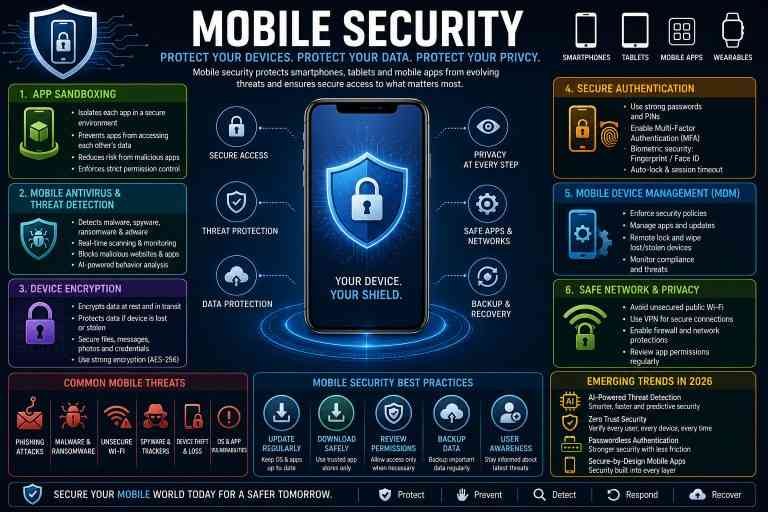
Mobile Security refers to the technologies, policies, and best practices designed to protect smartphones, tablets, and mobile applications from cyber threats. A comprehensive mobile security strategy safeguards devices, applications, and user data while ensuring secure access to digital services.
Why Mobile Security Matters
The rapid growth of remote work, cloud computing, mobile banking, and Bring Your Own Device (BYOD) policies has made mobile devices attractive targets for cybercriminals. Employees often access confidential business emails, cloud storage, customer databases, and enterprise applications from their smartphones, making these devices gateways to sensitive corporate information.
Common mobile threats include phishing attacks, malicious applications, ransomware, spyware, unsecured public Wi-Fi networks, and operating system vulnerabilities. If a mobile device is compromised, attackers can steal personal information, financial data, login credentials, or even gain unauthorized access to an organization’s network.
Implementing robust mobile security measures helps minimize these risks while protecting user privacy and maintaining business continuity.
App Sandboxing: Isolating Applications Securely
App sandboxing is one of the most effective security mechanisms built into modern mobile operating systems. It isolates each application in its own secure environment, preventing apps from accessing each other’s data without explicit permission.
Even if a malicious application is installed, sandboxing limits its ability to read contacts, messages, photos, financial information, or files belonging to other applications. Android and iOS continue to enhance sandboxing technologies by enforcing strict permission controls and reducing unnecessary system access.
Developers should also follow secure coding practices and request only the permissions necessary for their applications, reducing the overall attack surface.
Mobile Antivirus and Threat Detection
While modern smartphones include built-in security features, mobile antivirus solutions provide an additional layer of protection against evolving cyber threats.
Mobile security software can help detect:
- Malware and ransomware
- Spyware
- Malicious applications
- Phishing websites
- Unsafe downloads
- Suspicious device behavior
Many enterprise security solutions now leverage Artificial Intelligence (AI) and machine learning to analyze application behavior, detect zero-day threats, and automatically block malicious activities before they compromise devices.
Installing applications only from trusted app stores and keeping security software updated significantly improves device protection.
Device Encryption for Data Protection
Device encryption is one of the most effective methods of protecting sensitive information stored on smartphones and tablets. Encryption converts readable information into unreadable encrypted data that can only be accessed using the correct authentication credentials.
If a device is lost or stolen, encrypted data remains protected from unauthorized users. Most modern mobile operating systems enable full-device encryption by default, but users should verify that encryption is active and regularly install operating system updates.
Organizations should also encrypt cloud backups and sensitive application data to provide end-to-end security.
Secure Authentication and Identity Verification
Weak passwords remain one of the leading causes of mobile security breaches. Strong authentication significantly reduces the risk of unauthorized access.
Best practices include:
- Enabling Multi-Factor Authentication (MFA)
- Using biometric authentication such as fingerprint or facial recognition
- Creating strong and unique passwords
- Using password managers
- Automatically locking devices after inactivity
These measures protect both personal information and corporate resources, even if login credentials are compromised.
Mobile Device Management (MDM)
Businesses increasingly rely on Mobile Device Management (MDM) platforms to secure employee devices and enforce security policies across enterprise environments.
MDM solutions enable administrators to:
- Enforce device encryption
- Deploy security updates remotely
- Manage approved applications
- Monitor device compliance
- Configure security settings
- Remotely lock or wipe lost devices
These capabilities are especially valuable for organizations supporting hybrid workforces and BYOD environments while maintaining compliance with industry regulations.
Emerging Mobile Security Trends in 2026
The future of mobile security is being shaped by Zero Trust architecture, AI-powered threat detection, and privacy-focused technologies. Zero Trust ensures that every user and device is continuously verified before accessing sensitive resources, regardless of location.
AI-powered security platforms analyze millions of mobile events to identify abnormal behavior, detect emerging threats, and automate incident response. In addition, secure hardware components, stronger application review processes, encrypted communications, and passwordless authentication are making mobile ecosystems more resilient against sophisticated cyberattacks.