

 By
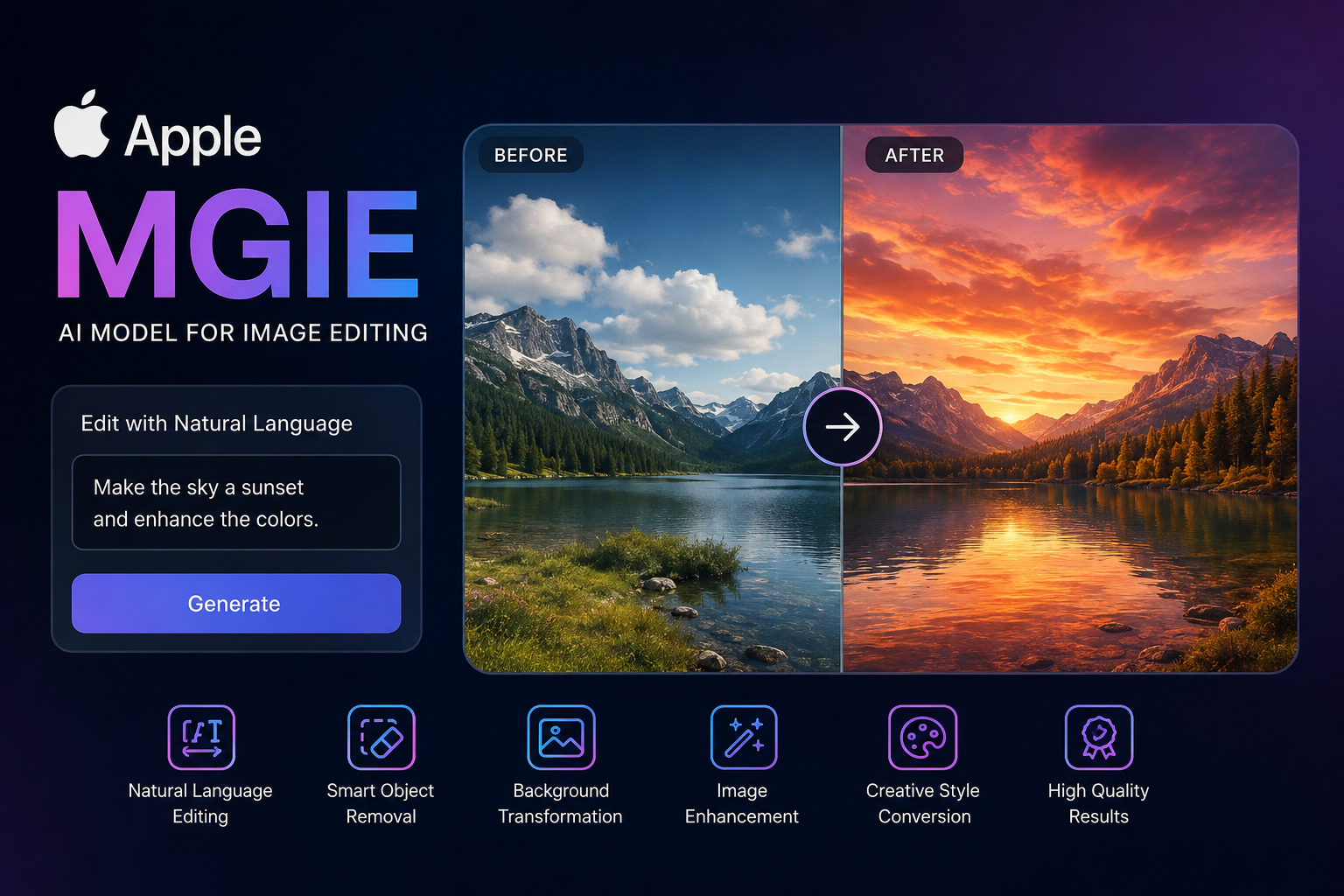
By Artificial intelligence is transforming digital creativity by making complex tasks easier and more accessible. One of the latest innovations attracting attention is MGIE (Multimodal Guided Image Editing), an advanced AI model designed to edit images using simple text instructions. Instead of relying on complicated editing software or manual adjustments, users can describe the changes they want, and the AI intelligently modifies the image.
This breakthrough highlights how AI is making creative tools more user-friendly for designers, photographers, marketers, and everyday users. By combining natural language understanding with computer vision, MGIE demonstrates how artificial intelligence can bridge the gap between human communication and digital image editing.
A New Era of Intelligent Image Editing
Traditional image editing often requires knowledge of professional software, layers, masks, and editing techniques. AI-powered editing introduces a different approach by allowing users to communicate with the system using everyday language.
For example, instead of manually adjusting brightness or selecting objects, a user can simply write commands such as:
- Make the background brighter.
- Remove unwanted objects.
- Add a warm sunset effect.
- Improve image clarity.
- Change the season from summer to winter.
The AI interprets these instructions and performs the requested edits automatically, reducing both time and effort.
How the Technology Works
The model combines advanced language processing with image analysis. It first understands the written instruction, analyzes the uploaded image, and determines the best editing strategy.
Rather than following simple keyword matching, the AI understands the context of the request. It identifies objects, lighting, colors, textures, and scene composition before applying modifications that appear realistic and natural.
This intelligent workflow allows the model to generate edits that closely match the user’s intention while preserving image quality.
Key Features
Natural Language Commands
Users can sorry to edit images without learning professional editing software. Simple sentences are enough to produce high-quality visual changes.
Smart Image Enhancement
The AI automatically improves brightness, contrast, sharpness, colors, and overall image quality while maintaining a natural appearance.
Object Editing
Specific objects can be removed, replaced, resized, or modified without affecting the rest of the image.
Background Transformation
Users can change environments, lighting conditions, weather, or scenery using descriptive text prompts.
Creative Style Conversion
Images can be transformed into different artistic styles or visual moods, making creative experimentation much easier.
Faster Editing Workflow
Tasks that traditionally take several minutes—or even hours—can often be completed within seconds.
Benefits for Different Users
Content Creators
Social media creators can produce engaging visuals quickly without advanced editing skills.
Photographers
Professional photographers can accelerate post-processing while maintaining image quality.
Designers
Graphic designers can generate creative variations and concepts much faster during the design process.
Businesses
Companies can improve product images, promotional graphics, and marketing materials with minimal manual editing.
Students and Beginners
People with little editing experience can create professional-looking images through simple text instructions.
Real-World Applications
This type of AI image editing technology has many practical uses across industries.
Some common applications include:
- Social media content creation
- Digital marketing campaigns
- Product photography
- Online education
- Graphic design
- Advertising
- Website development
- Presentation design
- Creative storytelling
- Visual content production
Its flexibility makes it useful for both personal and professional projects.
Why This Innovation Matters
Modern AI is moving beyond automation toward intelligent collaboration. Instead of replacing creativity, it assists users by handling repetitive editing tasks while allowing them to focus on ideas and storytelling.
Natural language interaction also makes advanced technology accessible to people who have never used professional editing software. This helps democratize creative tools and encourages more individuals to explore digital content creation.
As AI continues to evolve, text-guided editing is expected to become a standard feature in many creative applications.
Future Possibilities
The next generation of AI image editing is expected to offer even greater capabilities, including:
- Higher-resolution editing
- Better object recognition
- Improved realism
- Faster processing speeds
- Video editing through text instructions
- Personalized editing styles
- Real-time collaboration
- Smarter creative suggestions
These improvements will continue making digital content creation more efficient and intuitive.
Conclusion
MGIE represents an important step toward a future where image editing becomes as simple as having a conversation. By combining language understanding with intelligent visual processing, it enables users to perform complex edits through natural text instructions rather than technical tools.
As AI-powered creativity continues to grow, technologies like MGIE are expected to reshape digital design, photography, and content creation by making professional-quality editing faster, simpler, and more accessible. This evolution reflects the growing role of artificial intelligence as a creative assistant, helping users transform ideas into high-quality visuals with greater ease and efficiency.