


 By
Apple’s Record-Breaking Revenue in 2026: How iPhone Innovation and AI Are Shaping Apple’s Future
Apple continues to strengthen its position in the global electronics industry with impressive financial results, new product innovations, and growing investments in artificial intelligence. As technology companies compete to deliver smarter devices and better digital experiences, Apple is attracting attention with its latest developments.
On November 3, 2026, Apple’s latest quarterly results became a major technology headline. The company reported revenue of approximately $114.5 billion for its September quarter, marking a 12% increase compared with the same period last year. Strong iPhone sales, Mac growth, and increasing services revenue contributed to this performance.
Let’s explore the latest developments and what they mean for Apple’s future.
1. Apple Reports Record Quarterly Revenue
One of the biggest highlights is Apple’s impressive financial performance. The company achieved $114.5 billion in quarterly revenue, demonstrating continued demand for its electronics and digital services.
The iPhone remained a major contributor, generating approximately $57.6 billion in revenue. Apple’s services business, which includes the App Store, iCloud, subscriptions, and other digital offerings, also achieved a new record.
These results demonstrate that Apple is not relying entirely on hardware sales. Its growing ecosystem of products and services continues to play an important role in its business strategy.
2. iPhone Innovation Continues to Attract Attention
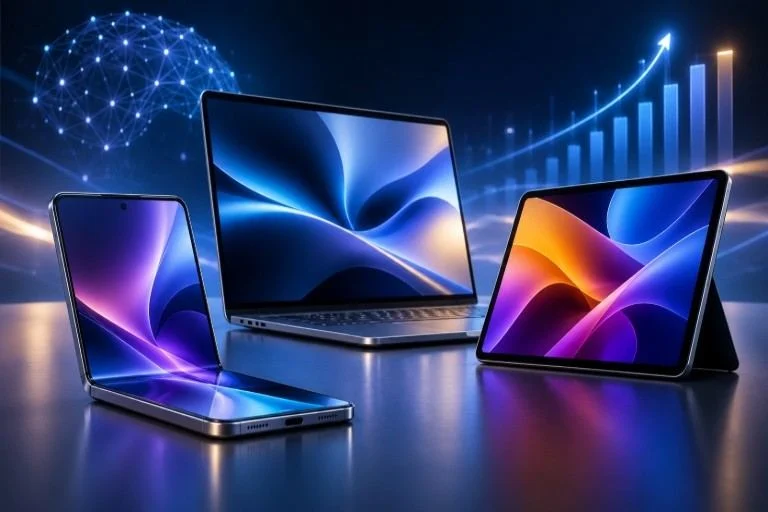
The iPhone remains one of Apple’s most important products. With its latest iPhone 18 Pro models and the introduction of the foldable iPhone Duo, Apple is exploring new ways to improve smartphone experiences.
The foldable iPhone Duo is particularly interesting because foldable technology is becoming an important area of competition in the smartphone market.
Consumers are increasingly looking for devices that offer larger displays, improved cameras, better battery performance, and advanced features without compromising portability.
However, high demand and production challenges are affecting the availability of the new foldable model. This shows that launching innovative electronics also requires strong manufacturing and supply-chain management.
3. Artificial Intelligence Is Becoming Apple’s Priority
Artificial intelligence is one of the biggest technology trends in 2026, and Apple is working to strengthen its position in this growing market.
The company’s AI strategy focuses on improving Siri and bringing intelligent features into its devices. AI-powered assistance can help users perform everyday activities, organize information, edit content, and interact with their devices more efficiently.
Apple’s approach also emphasizes privacy and secure processing of personal information.
The success of its AI strategy will depend on how effectively these features work in everyday situations. Consumers are expecting technology that is not only intelligent but also reliable, convenient, and easy to use.
4. Mac and iPad Products Are Receiving New Technology Upgrades
Apple is also expanding its innovation beyond smartphones. Its latest Mac and iPad announcements are generating interest among students, professionals, designers, and technology enthusiasts.
The new M6-powered Mac lineup focuses on improved computing performance, while the updated MacBook Pro introduces touchscreen capabilities and an advanced display.
The new OLED iPad mini is another important development, offering improvements in display technology and processing performance.
These upgrades demonstrate Apple’s continued focus on combining powerful hardware with software designed to improve productivity and entertainment.
5. Rising Component Costs Remain a Challenge
Despite strong financial results, Apple faces challenges involving rising memory-chip prices and limited component availability.
Increasing demand for memory chips, partly driven by AI data centres, is putting pressure on electronics manufacturers.
These higher costs could affect Apple’s profit margins and product pricing in the coming quarters. The company must balance innovation, manufacturing expenses, and competitive pricing while maintaining product quality.
For consumers, this could make future electronics purchases more expensive, depending on how manufacturers manage these costs.
6. What Can Consumers Expect From Apple Next?
Apple’s latest developments indicate that the company is moving towards a future built around artificial intelligence, advanced displays, powerful processors, and connected smart devices.
Consumers can expect continued improvements in smartphones, computers, tablets, and smart-home technology.
The important question is how Apple will turn these innovations into practical features that genuinely improve everyday digital experiences.