 By
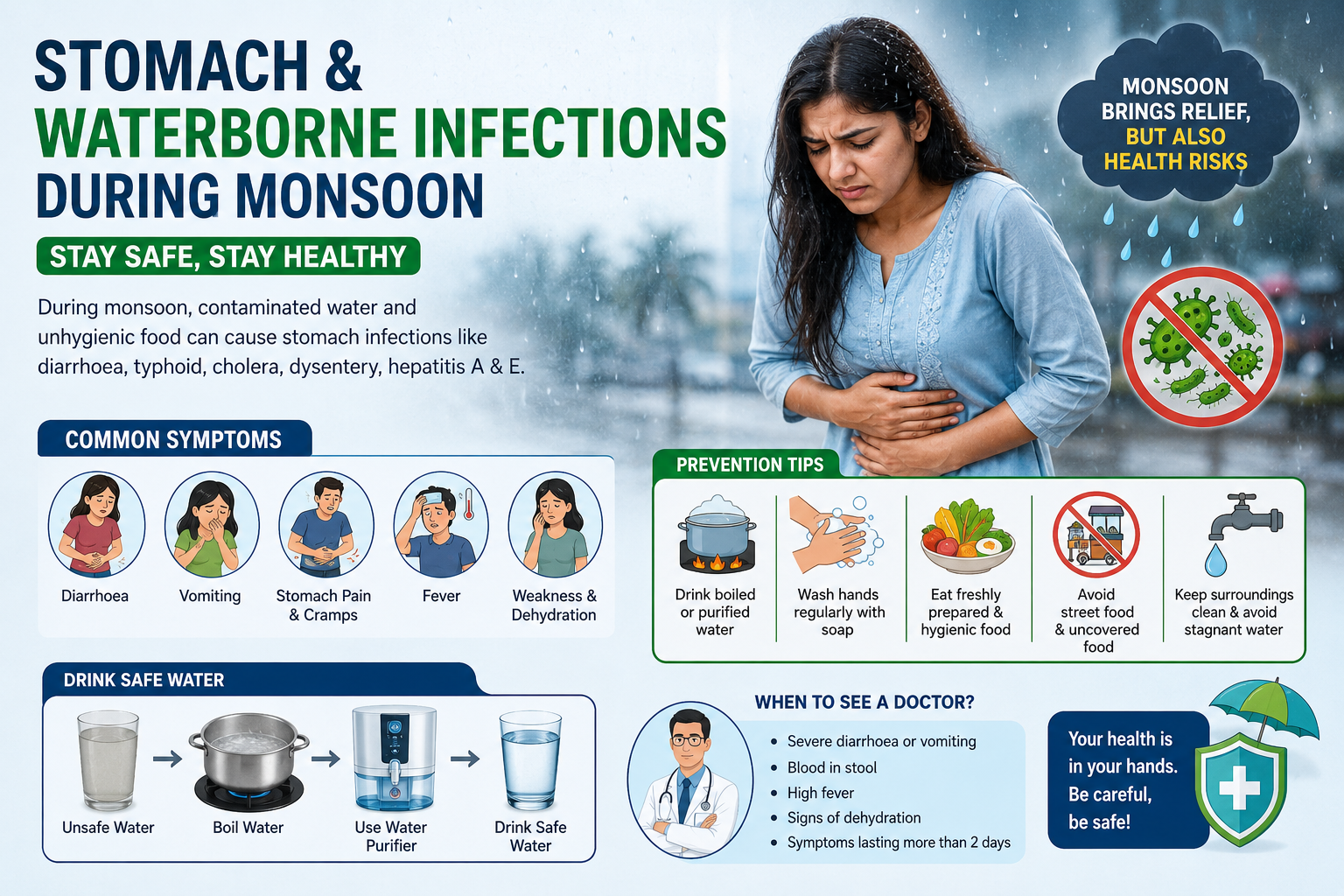
By The monsoon season brings relief from the summer heat, but it also creates favorable conditions for the spread of stomach and waterborne infections. Heavy rainfall, flooding, waterlogging, poor drainage and sewage contamination can affect drinking-water quality and increase exposure to harmful bacteria, viruses and parasites. During this period, illnesses such as gastroenteritis, diarrhoea, typhoid, cholera, dysentery and hepatitis A and E can become a concern.
Waterborne diseases mainly spread when people consume contaminated water or food. Contamination can happen when sewage mixes with water sources, when food is prepared using unsafe water or when food is handled without proper hygiene. Understanding these risks and following simple preventive measures can help protect individuals and families throughout the rainy season.
Why Waterborne Infections Increase During Monsoon
Heavy rainfall can overwhelm drainage and sewage systems. Floodwater may carry waste, bacteria and other contaminants into rivers, wells, tanks and other water sources. In areas with poor sanitation, this can increase the possibility of contaminated drinking water.
Food safety can also become more challenging during the rainy season. Humid conditions may affect food storage, while uncovered food can be exposed to insects, dust and contaminated water. Eating food prepared under unhygienic conditions can increase the risk of stomach infections.
Common Waterborne and Stomach Infections
Gastroenteritis is one of the common illnesses associated with contaminated food and water. It can cause diarrhoea, vomiting, nausea, stomach cramps and fever.
Typhoid is a bacterial infection that can spread through contaminated food and water. Common symptoms include prolonged fever, weakness, headache, abdominal discomfort and loss of appetite.
Cholera can cause sudden and severe watery diarrhoea and vomiting. Rapid loss of fluids can lead to serious dehydration, making timely medical care important.
Dysentery can cause diarrhoea, abdominal pain and sometimes blood or mucus in the stool. It can spread through contaminated food or water and poor hand hygiene.
Hepatitis A and E are viral infections that can spread through contaminated food and water. They may cause tiredness, nausea, fever, abdominal discomfort and jaundice.
Symptoms to Watch For
Symptoms of waterborne infections can vary depending on the cause. Common symptoms include diarrhoea, vomiting, nausea, stomach pain, abdominal cramps, fever, headache, weakness and loss of appetite.
One of the biggest concerns with severe diarrhoea and vomiting is dehydration. Signs may include excessive thirst, dry mouth, weakness, dizziness and reduced urination. Children and older adults can be particularly vulnerable to dehydration.
If symptoms are severe, persistent or getting worse, medical attention should be sought promptly.
How to Prevent Waterborne Diseases During Monsoon
The best way to reduce the risk of waterborne infections is to maintain good food, water and personal hygiene.
Always drink safe and clean water. If the safety of drinking water is uncertain, use an appropriate purification method, such as boiling or a properly maintained water purifier. Avoid drinking water from unknown sources, especially after flooding or heavy waterlogging.
Handwashing is another important preventive measure. Wash your hands thoroughly with soap and water before eating or preparing food and after using the toilet. Good hand hygiene can significantly reduce the spread of germs.
Food should preferably be freshly prepared and consumed while it is still safe. Avoid uncovered food and be cautious with street food when cleanliness and water quality are uncertain. Keep cooked food covered and store it properly.
Fruits and vegetables should be washed thoroughly using safe water before eating or cooking. Avoid consuming cut fruits or other foods that have been exposed to the environment for long periods.
Kitchen hygiene is equally important. Clean cooking surfaces, utensils and containers regularly. Keep raw and cooked foods separate to reduce the risk of cross-contamination.
Stay Hydrated and Act Early
If diarrhoea or vomiting occurs, replacing lost fluids is important. Oral rehydration solution (ORS) can help replace fluids and electrolytes lost from the body. People should avoid delaying medical care when symptoms are severe.
Seek medical attention if there is persistent vomiting, severe dehydration, blood in the stool, severe abdominal pain, persistent fever, unusual weakness or worsening symptoms. Antibiotics should not be taken without medical advice because many stomach infections are not caused by bacteria.
Conclusion
Stomach and waterborne infections during monsoon can pose a significant health risk when contaminated water, unsafe food and poor sanitation allow germs to spread. However, many infections can be prevented through simple daily precautions.
Drinking safe water, washing hands regularly, eating freshly prepared food, maintaining kitchen cleanliness and avoiding potentially contaminated food and water are important steps for staying healthy during the rainy season. By practicing good hygiene and responding quickly to warning signs, individuals and families can reduce the risk of monsoon-related stomach infections and waterborne diseases.
Follow Us On Instagram