 By
By 🦴 World Arthritis Day 2026: Achieve Your Dreams by Taking Care of Your Joints
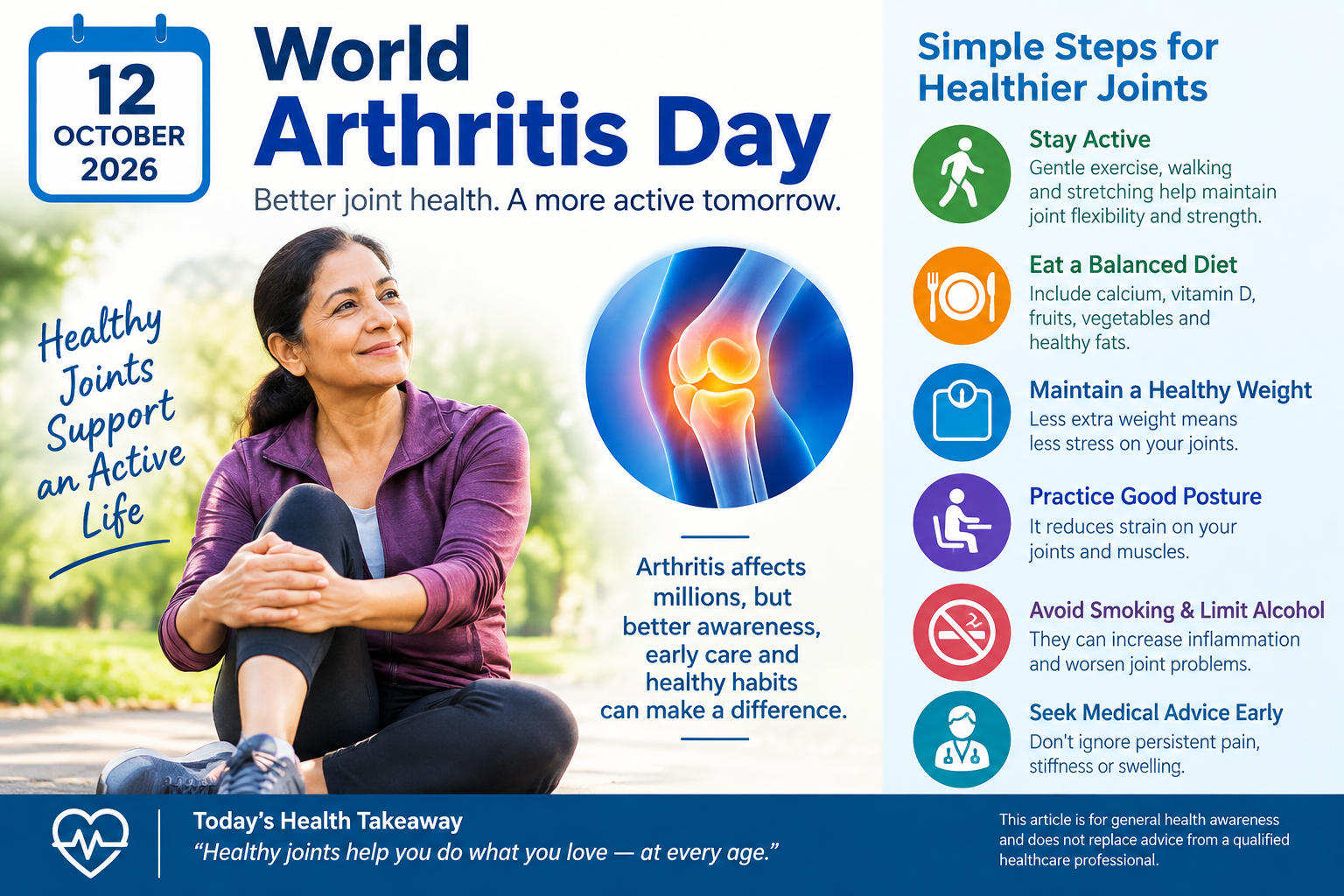
World Arthritis Day is observed every year on 12 October. The 2026 campaign theme is “Achieve Your Dreams,” highlighting the goals of people living with arthritis and other rheumatic and musculoskeletal diseases. The campaign encourages early diagnosis, better access to treatment and greater understanding of the challenges people face. Source: EULAR
Arthritis is not simply a problem associated with old age. It can affect people of different ages and may interfere with walking, working, sleeping and performing everyday activities.
🦵 What Is Arthritis?
Arthritis refers to a group of conditions that affect the joints. Depending on the type, it can cause pain, swelling, stiffness and difficulty moving.
Two common types include:
- Osteoarthritis: A condition involving changes in the joint and surrounding tissues, commonly affecting the knees, hips and hands.
- Rheumatoid arthritis: An autoimmune condition in which the immune system attacks the lining of the joints, causing inflammation.
Other inflammatory and musculoskeletal conditions can also affect movement and quality of life. Identifying the specific condition is important because treatments can differ. Source: WHO
⚠️ Early Warning Signs You Shouldn’t Ignore
Arthritis symptoms may develop gradually or appear more suddenly, depending on the condition.
Watch for signs such as:
- Persistent joint pain
- Swelling or tenderness
- Stiffness after waking up or resting
- Difficulty bending the knees or fingers
- Reduced range of movement
- Warmth around an affected joint
- Unexplained fatigue, particularly with inflammatory arthritis
If symptoms persist, worsen or interfere with daily activities, consult a qualified healthcare professional. Sudden severe joint pain with redness, heat or fever needs urgent medical assessment because it may indicate an infection or another serious problem.
🚶♀️ Can Exercise Help Protect Your Joints?
Yes. Appropriate physical activity can strengthen the muscles supporting the joints, improve mobility and help manage symptoms of osteoarthritis.
Suitable activities may include:
- Walking at a comfortable pace
- Swimming or water-based exercise
- Gentle stretching
- Cycling on a stationary bicycle
- Strengthening exercises recommended by a physiotherapist
Start gradually and choose activities according to your ability. Exercise should not be forced through severe pain. A physiotherapist or clinician can recommend movements suited to your diagnosis and mobility.
Important: Rest may be necessary during some flare-ups, but prolonged inactivity can weaken muscles and reduce mobility. A personalised activity plan can help balance movement and recovery.
🥗 Foods That Support Healthy Joints
No single food can cure arthritis. However, a balanced diet supports general health and helps the body obtain the nutrients needed for muscles, bones and normal function.
Include a variety of:
Fruits and vegetables: Choose colourful produce such as oranges, guava, tomatoes, spinach and carrots.
Protein-rich foods: Include eggs, fish, chicken, beans, lentils, milk or curd according to your dietary preferences.
Healthy fats: Nuts, seeds and oily fish can be part of a balanced eating pattern.
Calcium and vitamin D sources: These nutrients support bone health. Ask a healthcare professional whether supplements are appropriate for you.
Avoid relying on unverified supplements or extreme diets advertised as arthritis cures.
⚖️ Why Maintaining a Healthy Weight Can Matter
For people with osteoarthritis affecting weight-bearing joints, excess body weight can increase the load on the knees and hips.
If weight management is appropriate, gradual, sustainable changes to eating habits and physical activity may help reduce joint stress and improve mobility. People who are underweight or have other health concerns should seek individual advice rather than follow restrictive diets.
💊 When Is Medical Treatment Necessary?
Treatment depends on the type of arthritis, its severity and the person’s overall health.
A healthcare professional may recommend medication, physiotherapy, assistive devices or other treatments. Some inflammatory forms of arthritis require early specialist care to help control inflammation and prevent joint damage.
Do not start, stop or regularly use painkillers without appropriate medical guidance. Some medicines can cause stomach, kidney or cardiovascular problems, especially when used incorrectly or for long periods.
❤️ The Emotional Side of Living With Arthritis
Chronic pain can affect sleep, mood, confidence, employment and relationships. People may appear healthy while struggling with pain or fatigue that others cannot see.
Family members, employers and communities can help by listening, offering practical support and respecting individual limitations. Early care and suitable adjustments can help people continue participating in activities that matter to them.
🌿 Today’s Health Takeaway
Arthritis does not have to mean giving up on the activities and goals you value.
This World Arthritis Day, remember three important steps: recognise persistent symptoms, seek appropriate medical advice and stay active in ways that are safe for your joints.
The 2026 theme, “Achieve Your Dreams,” reminds us that better awareness, timely care and supportive communities can help people living with arthritis work toward a better quality of life.
This article is for general health awareness and does not replace advice from a qualified healthcare professional.
Follow Us On Instagaram