


 By
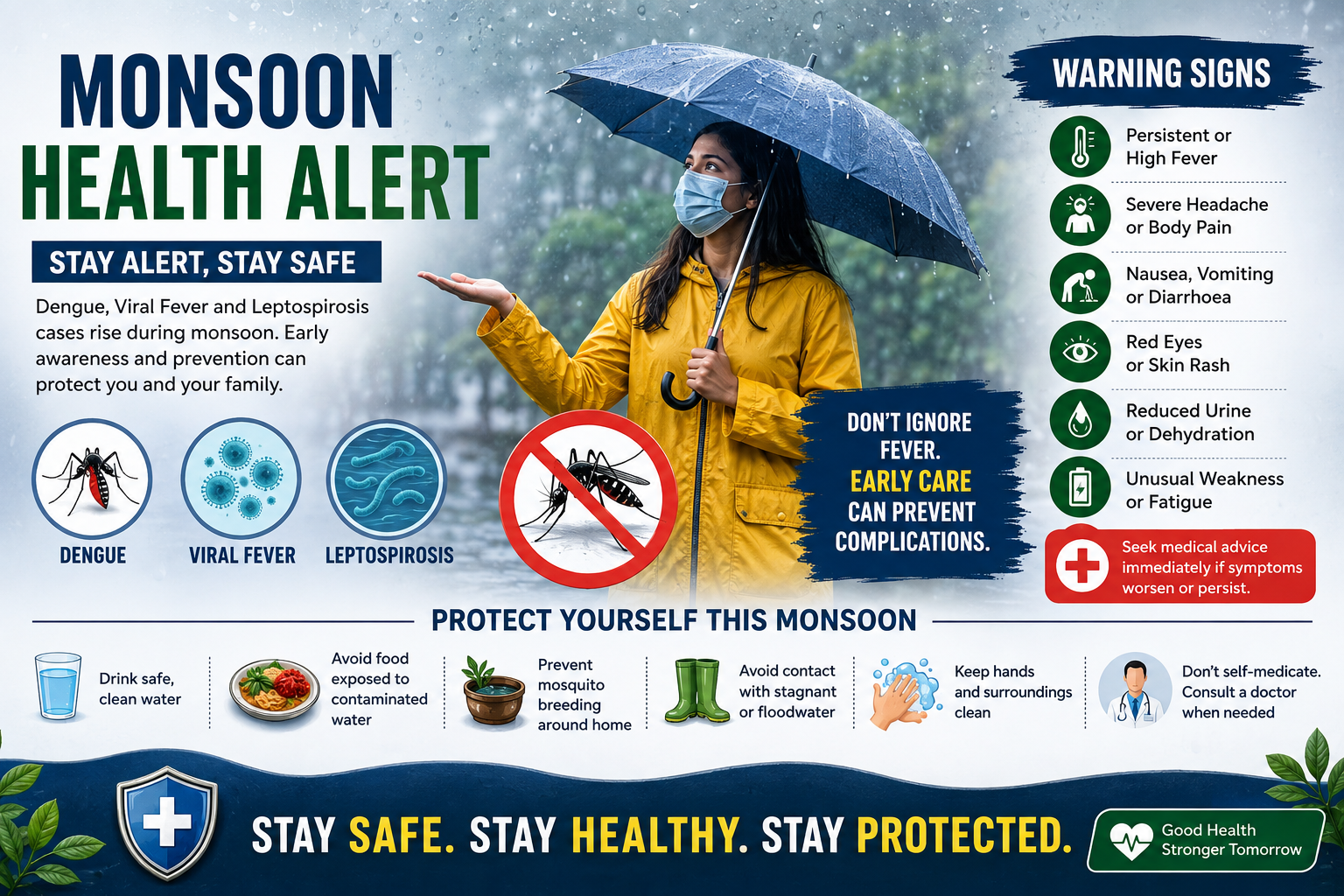
By The monsoon season brings much-needed relief from the summer heat, but it also creates favorable conditions for several infectious diseases. Increased humidity, stagnant water, flooding and contaminated water sources can contribute to the spread of dengue, viral fever, leptospirosis, typhoid and other monsoon-related illnesses.
During this season, people should pay attention to symptoms such as persistent fever, body pain, headache, vomiting, diarrhoea, weakness and dehydration. Early medical evaluation can help identify the cause of illness and reduce the risk of complications.
Why Do Infections Increase During Monsoon?
Heavy rainfall can result in waterlogging and stagnant water around homes, roads and public spaces. These conditions provide breeding grounds for mosquitoes, including the mosquitoes that transmit dengue.
At the same time, flooding and poor sanitation can contaminate drinking-water sources. This increases the possibility of waterborne infections. People who walk through floodwater or come into contact with contaminated water or soil may also be exposed to bacteria that can cause infections such as leptospirosis.
Crowded indoor environments and seasonal weather changes can also contribute to the spread of respiratory viral infections.
Dengue: Know the Warning Signs
Dengue is a mosquito-borne viral infection that can cause a sudden high fever. Common symptoms may include:
- High fever
- Severe headache
- Muscle and joint pain
- Pain behind the eyes
- Nausea or vomiting
- Skin rash
- Extreme tiredness
In some cases, dengue can become serious. Warning signs such as severe abdominal pain, persistent vomiting, bleeding, unusual sleepiness or restlessness, difficulty breathing, or a significant reduction in urine output require prompt medical attention.
People with suspected dengue should avoid taking medicines without medical advice. In particular, some pain-relieving medicines can increase bleeding risk, so medication choices should be discussed with a healthcare professional.
Viral Fever During the Rainy Season
Not every fever during monsoon is dengue. Several viral infections can cause fever, weakness, headache, cough, sore throat, body aches or stomach-related symptoms.
Because different infections can produce similar symptoms, identifying the cause based only on symptoms can be difficult. If fever is persistent, severe or accompanied by concerning symptoms, consulting a doctor and undergoing appropriate testing may be necessary.
Adequate rest, safe hydration and nutritious food can support recovery, but medical advice should be followed when symptoms are significant.
Leptospirosis and Floodwater Exposure
Leptospirosis is a bacterial infection that can spread through water or soil contaminated with urine from infected animals. The risk can increase after heavy rainfall and flooding.
People who work or walk in flooded areas may have greater exposure, especially when they have cuts or wounds on their skin.
Symptoms can include:
- Fever
- Headache
- Muscle pain
- Chills
- Vomiting
- Red eyes
- Weakness
If these symptoms develop after exposure to floodwater or potentially contaminated soil, medical attention should be sought promptly.
How to Stay Healthy During Monsoon
Preventing monsoon infections starts with simple daily precautions.
1. Prevent mosquito breeding:
Remove standing water from buckets, plant pots, coolers, containers and other areas around the home. Keep water-storage containers properly covered.
2. Drink safe water:
Use clean, treated or properly boiled drinking water, particularly in areas affected by flooding or water contamination.
3. Maintain food hygiene:
Wash fruits and vegetables properly and avoid food or drinks that may have been exposed to contaminated water.
4. Avoid unnecessary contact with floodwater:
Floodwater can contain harmful microorganisms and waste. If exposure is unavoidable, wear appropriate protective footwear and clean exposed skin afterward.
5. Protect against mosquito bites:
Use mosquito nets, screens and suitable mosquito repellents. Wearing clothing that covers the arms and legs can also reduce exposure.
6. Maintain personal hygiene:
Wash your hands regularly, especially before eating and after using the toilet or returning from outside.
When Should You See a Doctor?
Fever should not automatically be assumed to be “just a viral fever.” Seek medical advice if the fever is persistent, unusually high, keeps returning, or is accompanied by severe weakness, dehydration, breathing difficulty, bleeding, persistent vomiting, confusion or severe abdominal pain.
People with existing medical conditions, young children and older adults may require extra attention during infections.
Final Word
Monsoon illnesses can often be reduced through clean water, good sanitation, mosquito control, food hygiene and early medical care. Paying attention to symptoms and avoiding self-medication can make a significant difference.
This monsoon, don’t ignore persistent fever or unusual symptoms. Stay alert, follow preventive measures and seek professional medical advice when needed.
Stay safe. Stay healthy. Stay protected this monsoon. 🌧️🩺
Follow Us On Instagram