 By
By India Health Update | August 2026
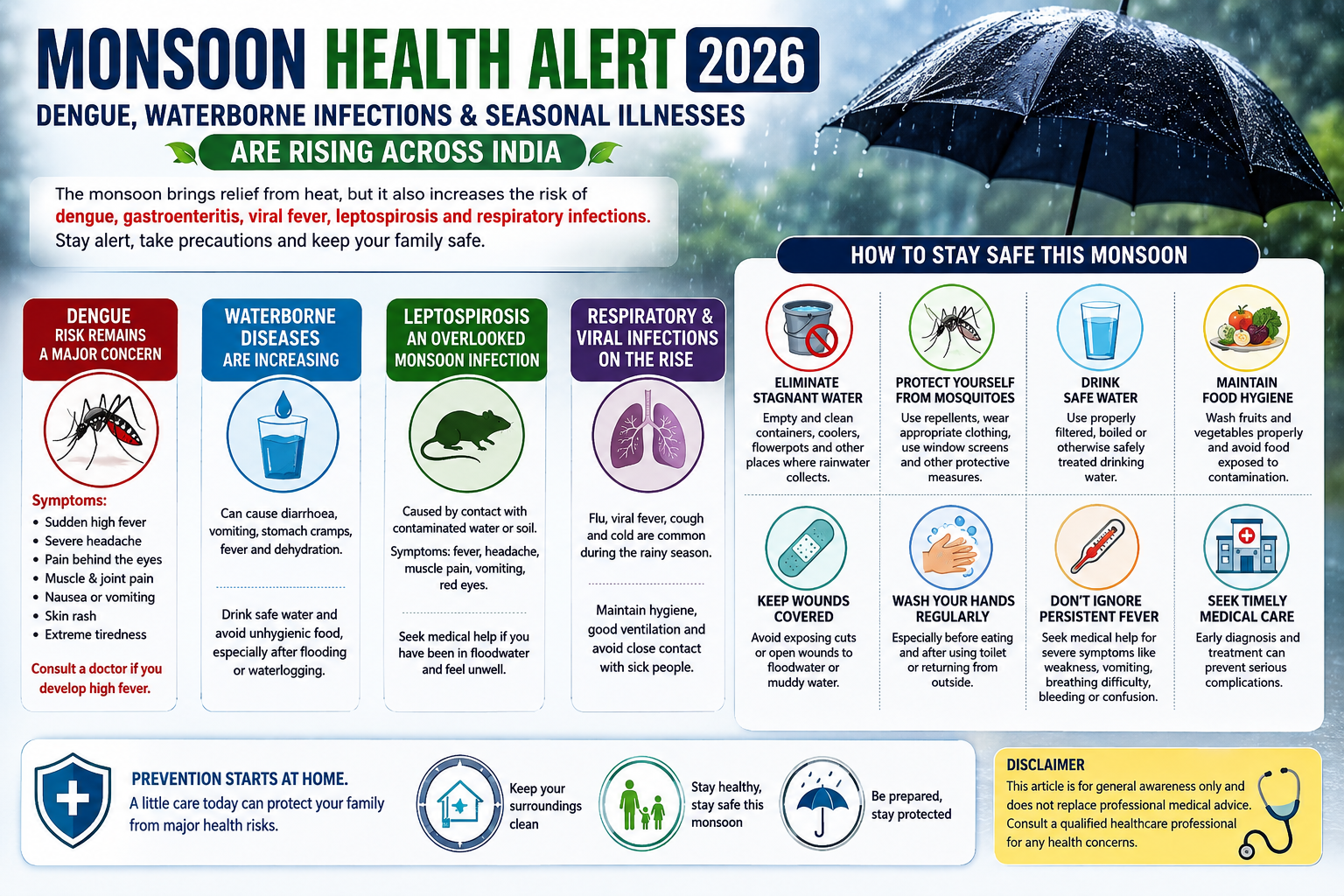
As the monsoon continues across India, health experts and hospitals are reporting increased concerns over seasonal infections. Recent reports indicate a rise in illnesses including dengue, gastroenteritis, viral fever, respiratory infections and other diseases associated with rain, stagnant water, humidity and contaminated water sources.
Dengue Risk Remains a Major Concern
Dengue continues to be one of the most important mosquito-borne illnesses during the rainy season. Recent reports from Delhi and other cities have highlighted increasing dengue cases and the need for stronger prevention measures.
The Aedes mosquito responsible for dengue can breed in small amounts of stagnant water around homes, including containers, flowerpots, discarded items and water-storage areas.
Common dengue symptoms can include:
- Sudden high fever
- Severe headache
- Pain behind the eyes
- Muscle and joint pain
- Nausea or vomiting
- Skin rash
- Extreme tiredness
Anyone developing persistent or high fever during the monsoon should consult a healthcare professional rather than assuming it is simply a seasonal viral fever.
Waterborne Diseases Are Also Increasing
Heavy rainfall and flooding can increase the possibility of contaminated drinking water. Recent reports from Ahmedabad, for example, recorded cases of gastroenteritis alongside dengue during August.
Waterborne illnesses can cause diarrhoea, vomiting, stomach cramps, fever and dehydration. Children and older adults can become dehydrated quickly, making early medical attention important when symptoms are severe or persistent.
People should drink properly treated water and avoid consuming food or beverages from questionable sources, particularly after flooding or waterlogging.
Leptospirosis: An Often-Overlooked Monsoon Infection
Another infection that deserves attention during the rainy season is leptospirosis. The disease can occur after exposure to water or soil contaminated with bacteria, particularly during flooding. Recent health advisories have highlighted the risk among people who enter floodwater or participate in cleaning and rescue activities.
Symptoms may include fever, headache, muscle pain, vomiting and redness of the eyes. Severe infections can affect organs such as the kidneys and liver.
People who have been exposed to floodwater and subsequently develop fever or unusual symptoms should seek medical advice promptly.
Respiratory and Viral Infections
Monsoon weather can also coincide with increased respiratory illnesses. Recent reports from Delhi indicate a rise in flu-like illnesses and infections caused by respiratory viruses, with symptoms such as fever and persistent cough being reported.
Good ventilation, regular handwashing, avoiding close contact with people who are unwell and staying home when sick can help reduce transmission.
How to Stay Healthy This Monsoon
A few simple precautions can significantly reduce exposure to seasonal infections:
1. Eliminate stagnant water
Empty and clean containers, coolers, flowerpots and other places where rainwater can collect.
2. Protect yourself from mosquitoes
Use mosquito repellents, appropriate clothing, window screens and other protective measures.
3. Drink safe water
Use properly filtered, boiled or otherwise safely treated drinking water.
4. Maintain food hygiene
Wash fruits and vegetables properly and avoid food that has been exposed to contamination.
5. Keep wounds covered
Avoid exposing cuts or open wounds to floodwater or muddy water.
6. Wash your hands regularly
Hand hygiene is especially important before eating and after using the toilet or returning from outside.
7. Do not ignore persistent fever
Fever accompanied by severe weakness, breathing difficulty, repeated vomiting, dehydration, bleeding, confusion or worsening symptoms requires prompt medical evaluation.
The Bottom Line
The monsoon brings much-needed rain, but it can also create conditions that favour mosquitoes, contaminated water and the spread of seasonal infections. Recent health reports across India show why dengue, gastroenteritis, leptospirosis and respiratory illnesses should not be ignored.
Prevention starts at home. Keeping surroundings clean, removing stagnant water, drinking safe water, maintaining food hygiene and seeking timely medical care can help families stay safer throughout the rainy season.
Disclaimer: This article is for general health awareness and does not replace professional medical advice. If you develop concerning or persistent symptoms, consult a qualified healthcare professional.
Follow Us On Instagram