


 By
By For decades, lung cancer has been strongly associated with smoking. But doctors in India are increasingly reporting lung cancer among people who have never smoked, including younger adults and women. This changing pattern is raising concerns about the role of air pollution and other environmental exposures in lung health.
Recent reports from Indian oncologists suggest that the traditional picture of lung cancer as primarily a smoker’s disease is no longer complete. While tobacco use remains the single biggest risk factor, doctors are seeing more cases among non-smokers, prompting greater attention to air pollution, second-hand smoke, indoor pollution, workplace exposure and genetic factors.
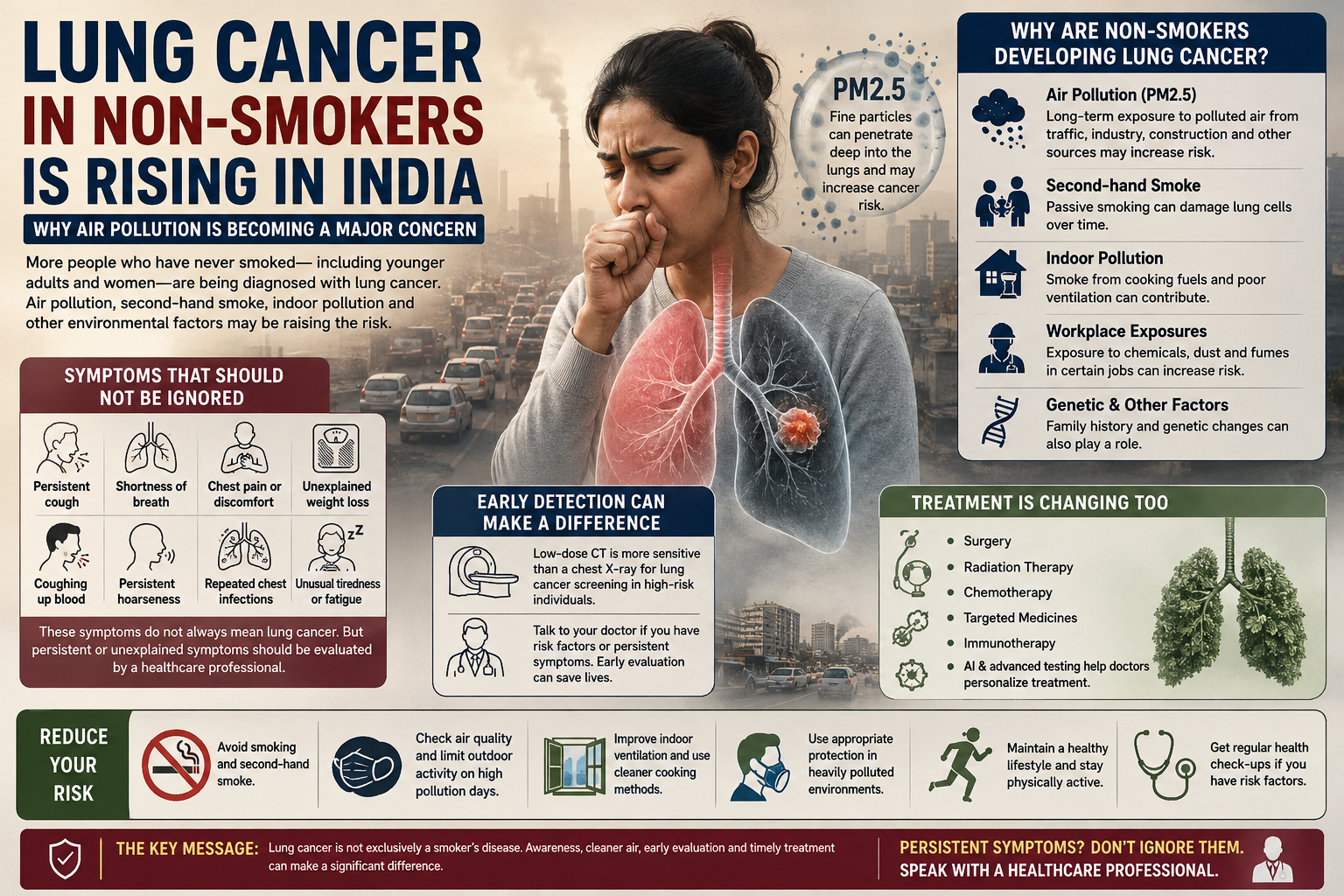
Why Are Non-Smokers Developing Lung Cancer?
Lung cancer can develop through several pathways. Smoking is a major cause, but it is not the only one.
A 2026 report from the Union for International Cancer Control noted that long-term exposure to PM2.5 is associated with increased cancer risk, including an increased risk of dying from lung cancer.
However, it is important not to assume that air pollution is responsible for every lung cancer case in a non-smoker. Researchers and doctors also consider second-hand smoke, household air pollution, occupational exposures, family history and genetic changes.
Women and Younger Adults Are Also Being Diagnosed
Another concerning trend is the growing number of younger adults and women being diagnosed with lung cancer.
Doctors have reported seeing more female and younger patients who have never smoked. Experts believe several factors may contribute, including environmental pollution, passive smoking, indoor pollution from cooking fuels and genetic susceptibility.
This does not mean that every non-smoking woman or young person is at high risk. Instead, the trend highlights why persistent respiratory symptoms should not automatically be dismissed as a minor infection simply because someone has never smoked.
Symptoms That Should Not Be Ignored
Lung cancer can sometimes develop silently, particularly in its early stages. When symptoms appear, they may resemble common respiratory problems.
Possible warning signs include:
- A cough that persists or keeps getting worse
- Shortness of breath
- Chest discomfort or pain
- Unexplained weight loss
- Coughing up blood
- Persistent hoarseness
- Repeated chest infections
- Unusual or continuing tiredness
These symptoms do not necessarily mean a person has lung cancer. Many can occur with infections and other respiratory conditions. However, persistent or unexplained symptoms should be evaluated by a healthcare professional.
Can Air Pollution Be Reduced as a Health Risk?
Individuals cannot completely control the outdoor air they breathe, particularly in heavily polluted cities. However, some practical measures can reduce exposure.
People can check local air-quality conditions, limit prolonged outdoor activity when pollution levels are particularly high, avoid tobacco smoke, improve ventilation when appropriate and use suitable respiratory protection in heavily polluted environments.
Indoor air quality also matters. Smoke from tobacco and certain cooking fuels can increase exposure to harmful pollutants. Better ventilation and cleaner cooking methods can help reduce indoor pollution.
Early Detection Can Make a Difference
One of the biggest challenges with lung cancer is that symptoms may appear only after the disease has progressed. Recent medical guidance emphasizes that people at higher risk should discuss screening with a healthcare professional.
Low-dose CT is generally more sensitive than a routine chest X-ray for lung cancer screening in appropriate high-risk populations. Screening recommendations are mainly designed around age and smoking history, so people should not assume that everyone needs a CT scan simply because of concerns about pollution.
For people with unusual symptoms or specific risk factors, doctors may recommend additional investigations based on their individual circumstances.
Treatment Is Changing Too
The outlook for lung cancer has also changed because of advances in diagnosis and treatment.
Modern treatment can include surgery, radiation therapy, chemotherapy, targeted medicines and immunotherapy, depending on the type and stage of cancer.
Molecular and biomarker testing can help doctors identify specific characteristics of a tumour and determine whether targeted therapies or immunotherapy may be appropriate. Artificial intelligence is also increasingly being explored as a decision-support tool for analysing scans and pathology.
The Key Message for Everyone
The rise of lung cancer among non-smokers is an important reminder that lung health depends on more than tobacco use.
Smoking remains the leading preventable cause of lung cancer, but air pollution, second-hand smoke, household pollution, occupational exposures and genetic factors can also contribute to an individual’s risk.
The best approach is to avoid smoking and second-hand smoke, reduce exposure to polluted air where practical, maintain good indoor ventilation and take persistent respiratory symptoms seriously.
Final Takeaway
Lung cancer is not exclusively a smoker’s disease. The growing number of cases being reported among non-smokers in India highlights the need for greater awareness, cleaner air, early medical evaluation and continued research.
If a cough, breathing problem, chest discomfort or unexplained weight loss persists, don’t simply ignore it—speak with a healthcare professional. Early evaluation can make a significant difference.
Follow Us On Instagram