 By
By Meta Title: H1N1 Cases Rise in India 2026: Symptoms, Prevention & Safety Tips
Meta Description: H1N1 cases are rising in parts of India during the monsoon. Know the symptoms, warning signs, prevention tips and when to seek medical care.
Focus Keyword: H1N1 cases in India 2026
Secondary Keywords: H1N1 symptoms, swine flu symptoms, H1N1 prevention, seasonal flu India, H1N1 cases Delhi, monsoon flu
H1N1 Cases Rise During Monsoon Season
India is seeing increased activity of seasonal influenza, with H1N1 (swine flu) cases rising in Delhi and other parts of the country. Delhi health authorities have issued an advisory asking people to follow respiratory hygiene, avoid unnecessary exposure to crowded places and seek medical advice when flu-like symptoms appear.
The latest reports indicate that Delhi has recorded 1,777 H1N1 cases this year, with more than 2,300 Influenza-A cases reported overall. However, the Indian Council of Medical Research (ICMR) has clarified that there is no new H1N1 strain circulating in India. Experts say the current increase is consistent with seasonal influenza activity rather than the emergence of a new virus.
What Is H1N1?
H1N1 is a subtype of Influenza A virus. It is commonly known as swine flu and spreads from person to person, mainly through respiratory droplets and close contact.
According to the World Health Organization, influenza is a contagious respiratory illness that can range from mild to severe. Common symptoms include fever, cough, sore throat, headache, muscle aches and fatigue.
Most people recover from seasonal influenza, but complications can occur, particularly among vulnerable groups.
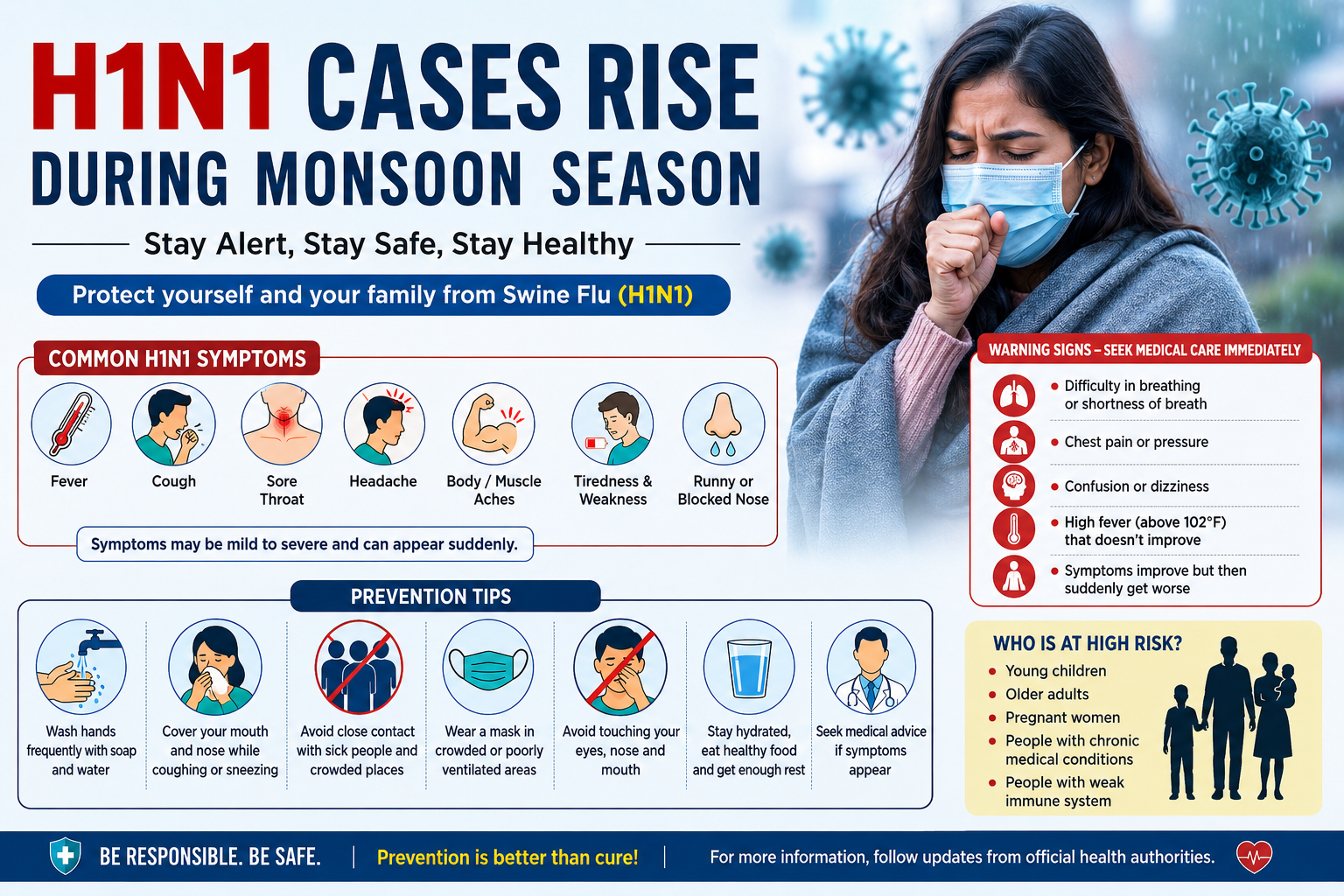
Common H1N1 Symptoms
H1N1 symptoms can resemble those of other viral respiratory infections. Common symptoms include:
- Fever or feeling feverish
- Dry or persistent cough
- Sore throat
- Headache
- Body or muscle aches
- Chills
- Tiredness and weakness
- Runny or blocked nose
Not everyone experiences all of these symptoms. Because influenza can resemble other infections, symptoms alone cannot always determine whether someone has H1N1.
Who Should Be More Careful?
Certain people have a higher risk of developing complications from influenza. These include:
- Young children
- Older adults
- Pregnant women
- People with chronic medical conditions
- People with weakened immune systems
People in these groups should contact a healthcare professional promptly if they develop significant flu-like symptoms.
H1N1 Prevention Tips
Simple precautions can help reduce the spread of seasonal influenza.
1. Wash Your Hands Regularly
Wash your hands thoroughly with soap and water, particularly after coughing, sneezing or being in crowded public areas.
2. Cover Your Mouth and Nose
Use a tissue or your elbow when coughing or sneezing. Avoid coughing or sneezing directly into your hands.
3. Avoid Close Contact When Sick
If you develop flu-like symptoms, reduce close contact with others and follow medical advice.
4. Consider a Mask in Crowded Places
Wearing a mask in crowded or poorly ventilated settings can provide an additional layer of protection, particularly when respiratory infections are circulating.
5. Avoid Touching Your Face
Try not to frequently touch your eyes, nose and mouth with unwashed hands.
6. Stay Hydrated and Rest
Adequate fluids and sufficient rest can support recovery when you are unwell.
Delhi’s health advisory also recommends maintaining respiratory hygiene, regular handwashing, avoiding close contact with people who have respiratory infections and seeking medical advice when symptoms develop.
When Should You See a Doctor?
Do not ignore symptoms that are severe, persistent or getting worse.
Seek medical attention if you experience difficulty breathing, chest pain, severe weakness, confusion, persistent or worsening fever, or symptoms that improve and then suddenly become worse.
People at higher risk of complications should seek medical advice earlier rather than waiting for symptoms to become severe.
Also, avoid taking antibiotics or other prescription medicines on your own. Influenza is caused by a virus, and treatment decisions should be made by a qualified healthcare professional.
Is There a New H1N1 Virus Strain?
There is currently no confirmed new H1N1 strain in India, according to ICMR. Scientists have emphasized that the current increase is associated with seasonal influenza activity and does not mean that a new pandemic strain has emerged.
Therefore, people should remain alert without spreading unnecessary fear or misinformation.
Final Word
The rise in H1N1 and seasonal influenza cases during the monsoon season is a reminder to take respiratory health seriously. Maintaining good hand hygiene, avoiding close contact when sick, using masks in crowded settings when appropriate and seeking timely medical advice can help reduce the risk of complications and transmission.
People should rely on updates from health authorities and qualified medical professionals rather than social-media rumours. While the current H1N1 increase deserves attention, health authorities have clarified that there is no new H1N1 strain causing the present rise.
Disclaimer: This article is for general awareness and does not replace professional medical advice. If you have severe or worsening symptoms, consult a qualified healthcare professional promptly.
Sources
- WHO – Seasonal Influenza
- National Centre for Disease Control (NCDC), Ministry of Health & Family Welfare
- Recent Delhi health department advisory
- ICMR clarification on H1N1 activity
Follow Us On Instagram