


 By
By Meta Description: India’s Supreme Court is pressing for clearer warning labels on packaged foods high in sugar, salt and saturated fat. Here’s what the latest food-label debate means for consumers and public health.
India’s Junk Food Debate Gets a Fresh Health Warning
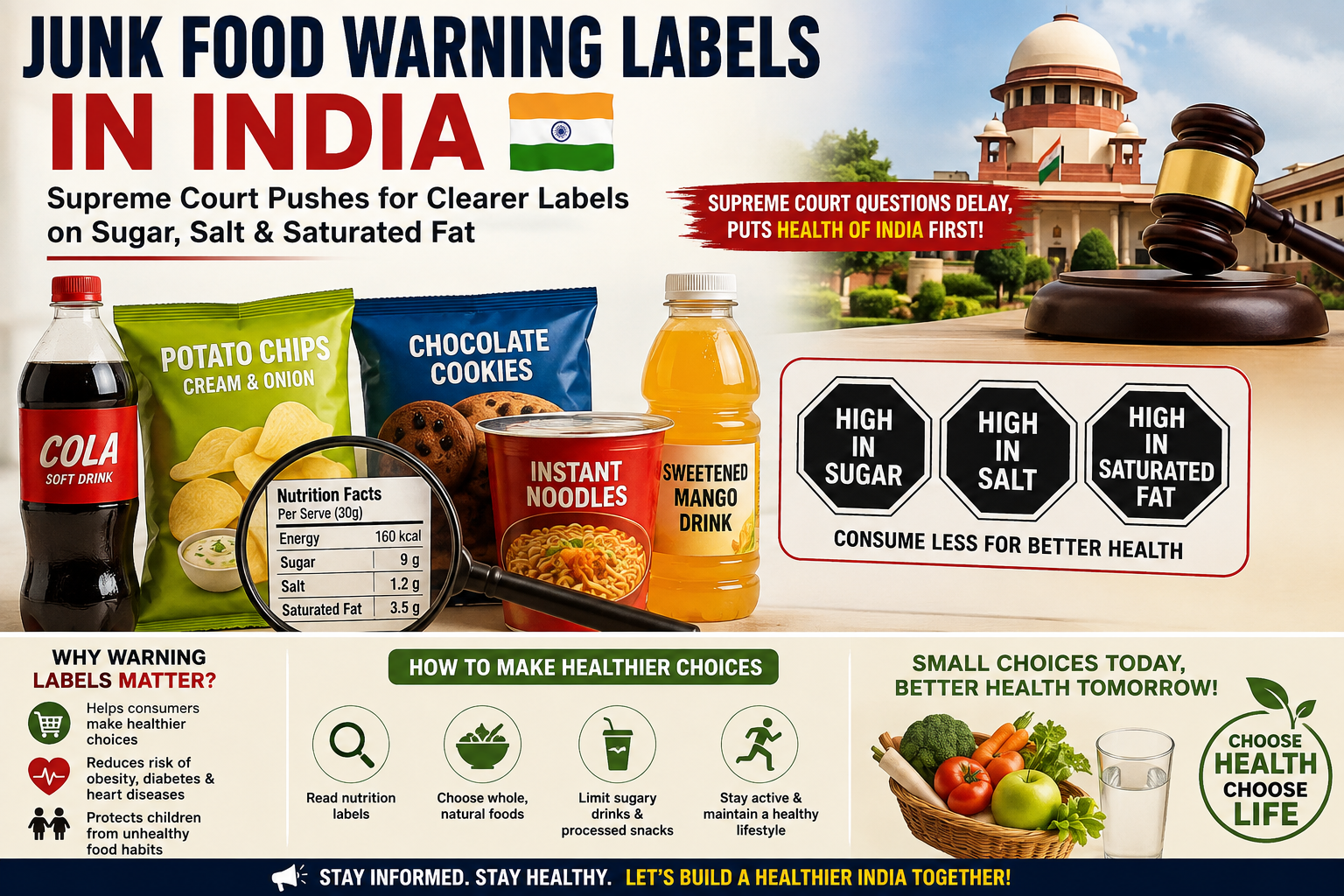
India’s debate over warning labels on packaged foods has gained fresh attention after the Supreme Court questioned the delay in introducing front-of-pack warning labels for products containing high levels of sugar, salt and saturated fat.
The Supreme Court had earlier taken up the issue in February 2026, asking authorities to seriously consider front-of-pack warnings. In August, the court again pressed the Centre and the Food Safety and Standards Authority of India (FSSAI) for a decision.
What Are Front-of-Pack Warning Labels?
Front-of-pack labelling, commonly known as FoPL, means displaying important nutritional warnings prominently on the front of a food package.
Instead of requiring consumers to turn a packet around and study a detailed nutrition table, a warning label could quickly indicate when a product contains high amounts of nutrients such as:
- Sugar
- Salt
- Saturated fat
The goal is simple: help consumers make healthier choices quickly and easily.
This can be especially useful for people who may not understand technical nutrition information or who are shopping in a hurry.
Why Is This Important for Public Health?
Packaged snacks, sugary beverages, instant foods and other highly processed products can sometimes contain substantial amounts of sugar, salt or unhealthy fats.
Regularly consuming excessive amounts of these nutrients can contribute to an unhealthy diet. Over time, poor dietary patterns can increase the risk of conditions such as obesity, cardiovascular disease and type 2 diabetes.
The issue is particularly important for children and teenagers, who are frequently exposed to advertising for snacks, sugary drinks and other processed foods.
Recent reporting has highlighted concerns about increasing childhood obesity and the need for stronger consumer awareness.
What Has the Supreme Court Said?
The Supreme Court has questioned why India has taken so long to introduce stronger front-of-pack warnings.
In its August proceedings, the court gave the Centre additional time to place its final decision on the proposed warning-label system. The court’s intervention has brought renewed attention to the responsibilities of regulators and the importance of public health.
The debate is not simply about changing packaging. It is also about whether consumers receive enough information to understand what they are buying.
Why Are Food Labels Important for Consumers?
Food labels can help people compare similar products.
For example, a shopper choosing between two breakfast cereals, snacks or beverages may find it difficult to understand which product contains more sugar or salt simply by looking at the marketing on the front of the package.
Clear nutritional information can make that decision easier.
For people trying to manage their overall diet, reducing excessive consumption of sugar, salt and saturated fat can be an important part of healthier eating.
The Role of the Food Industry
The proposed labelling system has also generated debate involving food and beverage manufacturers.
Reuters reported that India’s earlier attempt to introduce colour-coded front-of-pack warnings faced opposition from parts of the food industry. The regulator subsequently considered alternative approaches to presenting nutritional information.
More recently, Nestlé’s global leadership has said the company supports front-of-pack labelling while calling for a science-based approach and consultation with food manufacturers.
The central challenge is finding a system that is scientifically sound, easy for consumers to understand and effective in protecting public health.
What Can Consumers Do Right Now?
Consumers do not have to wait for new warning labels to start making healthier choices.
Before buying packaged food, check the nutrition information and pay attention to:
1. Sugar: Compare products and avoid making sugary snacks and drinks a daily habit.
2. Salt: Excessive salt intake can contribute to unhealthy dietary patterns, so check sodium information when available.
3. Saturated fat: Look at the saturated-fat content, particularly when regularly consuming processed snacks and fried foods.
4. Serving size: A packet may contain multiple servings, so don’t assume the nutrition numbers always represent the entire package.
5. Ingredients: Ingredients are generally listed in descending order by weight. Reading the ingredient list can provide additional information about what a product contains.
Healthier Choices Start With Small Changes
You do not necessarily have to completely eliminate packaged foods from your diet. The bigger goal is to avoid relying heavily on highly processed foods and build healthier everyday habits.
Fresh fruits, vegetables, pulses, whole grains, nuts and minimally processed foods can form an important part of a balanced diet.
For children, parents can also encourage healthier snacks and limit frequent consumption of sugary drinks, sweets and highly processed snack foods.
Final Takeaway
The latest Supreme Court intervention has once again put junk food warning labels and consumer health at the centre of India’s food-policy debate.
Whether and how mandatory front-of-pack warnings will be implemented remains an important regulatory question. But consumers can already take action by reading nutrition labels, comparing products and limiting excessive intake of sugar, salt and saturated fat.
As India’s packaged-food market continues to grow, clear and understandable food information could play an important role in helping people make healthier choices.
Disclaimer: This article is intended for general health awareness and does not replace advice from a qualified doctor or registered dietitian.