

 By
By Health News Update | August 28, 2026
The increase has raised concerns among public health officials because measles is one of the most contagious infectious diseases. The latest outbreak has affected communities across multiple U.S. jurisdictions, with a large proportion of infections connected to outbreaks.
Two Measles-Related Deaths Reported in Pennsylvania
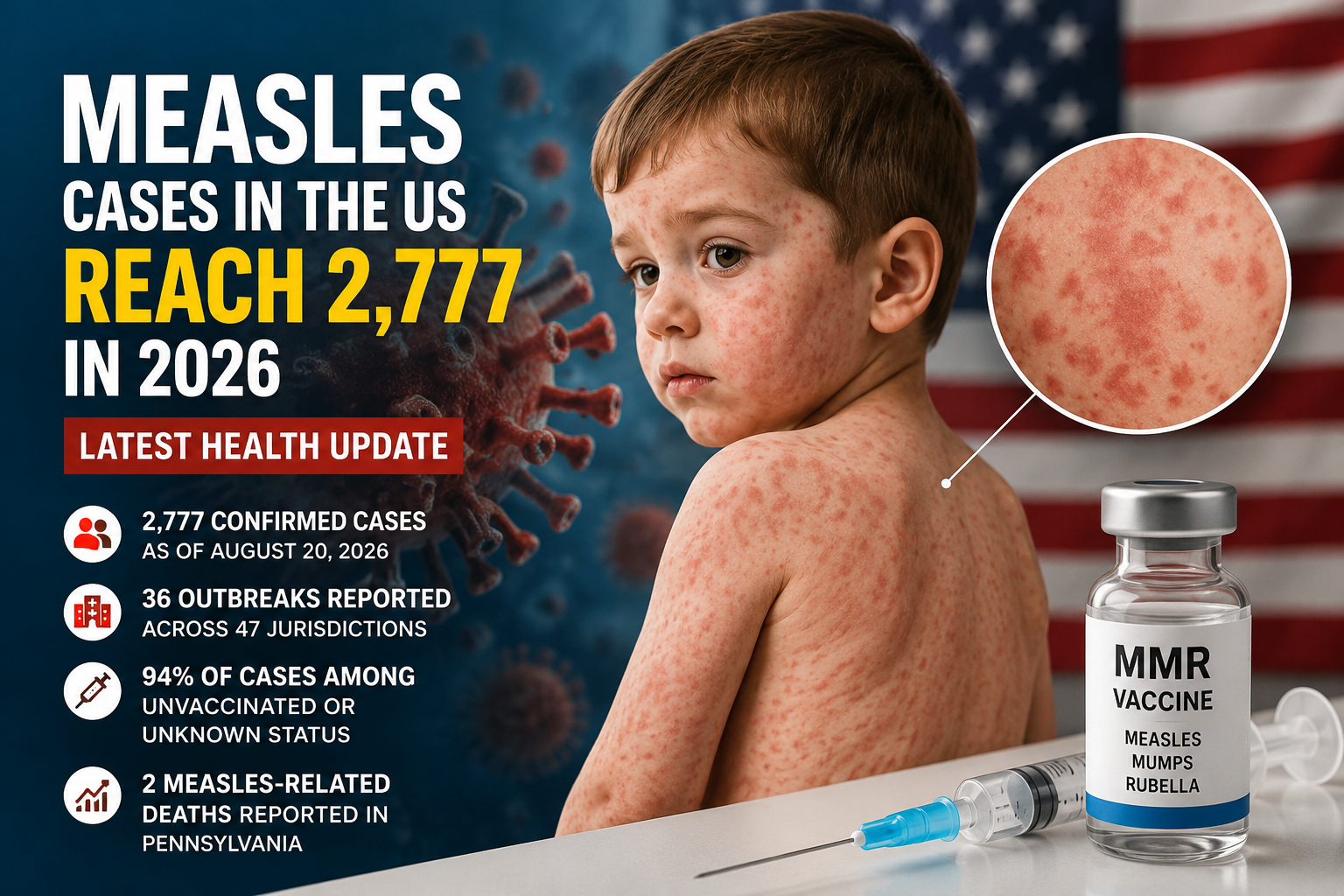
The situation became more serious this week after Pennsylvania reported two measles-related deaths in Lancaster County. The deaths were the first measles-associated deaths reported in the United States in 2026. Health officials said both individuals were unvaccinated.
The deaths have renewed calls for people to check their vaccination status and ensure that children receive recommended measles, mumps and rubella (MMR) vaccinations.
How Big Is the 2026 Measles Outbreak?
According to CDC data available through August 20:
- 2,777 confirmed cases have been reported.
- Cases have been reported across 47 jurisdictions, in addition to cases among international visitors.
- 36 outbreaks have been reported during 2026.
- About 94% of confirmed cases are outbreak-associated.
- 193 people, or about 7% of cases, have been hospitalized.
- About 94% of cases involved people who were unvaccinated or whose vaccination status was unknown.
The numbers show why health authorities are urging communities to take measles prevention seriously.
What Is Measles?
Measles is a highly contagious viral infection that primarily affects the respiratory system. It spreads when an infected person coughs, sneezes or breathes near other people.
The virus can spread particularly quickly in crowded settings and among communities where vaccination coverage is low.
A person with measles can infect others before the characteristic rash appears, making early recognition and appropriate medical advice important.
Common Symptoms of Measles
Measles symptoms generally begin several days after exposure and may initially look similar to other viral infections.
Common symptoms include:
- High fever
- Cough
- Runny nose
- Red or watery eyes
- Tiredness
- Small white spots inside the mouth
- A red skin rash that can spread across the body
The rash often begins on the face or hairline and then spreads downward.
Anyone experiencing symptoms after a known exposure should contact a healthcare professional before visiting a clinic or hospital, because measles is highly contagious.
Why Is Measles So Contagious?
Measles is considered one of the most contagious diseases known.
If a person who is not immune is exposed to the virus, the likelihood of infection can be very high. This is why vaccination coverage plays an important role in preventing community outbreaks.
When vaccination levels fall, the virus can spread more easily, particularly among children and people who cannot be vaccinated for certain medical reasons.
Vaccination Remains the Key Prevention Method
The MMR vaccine is the primary tool used to prevent measles.
CDC data for 2026 show that the overwhelming majority of reported cases involved people who were unvaccinated or whose vaccination status was unknown.
Health authorities recommend that eligible children receive the recommended MMR vaccinations according to the childhood immunization schedule. Adults who are unsure about their vaccination history should speak with a healthcare professional about whether vaccination or testing is appropriate.
Who Is Most at Risk?
Although measles can affect anyone who is not immune, certain groups can face greater risks from complications.
These include:
- Young children
- Infants who are too young for routine vaccination
- Pregnant people
- People with weakened immune systems
- Unvaccinated individuals
- People living in areas experiencing outbreaks
Complications can include ear infections, pneumonia and, in rare cases, inflammation of the brain.
What Should You Do If You Think You Have Measles?
If you develop a high fever, cough, red eyes and a characteristic rash, especially after possible exposure to measles, contact a healthcare professional promptly.
Because measles spreads extremely easily, it is important to call ahead before going to a healthcare facility. This allows healthcare workers to take precautions and reduce the risk of exposing other patients.
People should also avoid close contact with others until they receive appropriate medical guidance.
The Bigger Public Health Concern
The current outbreak is significant because measles had previously been eliminated from continuous transmission in the United States.
The resurgence demonstrates how quickly a highly contagious disease can return when immunity levels decline and outbreaks are allowed to spread.
The latest CDC figures therefore serve not only as a U.S. health update but also as a reminder for countries around the world about the importance of maintaining strong vaccination coverage.
Final Takeaway
The United States has recorded 2,777 confirmed measles cases in 2026 as of August 20, making this a major public health story.
The recent deaths in Pennsylvania have added urgency to the situation. Health experts continue to emphasize vaccination, early recognition of symptoms and appropriate medical care as important tools for limiting further transmission.
People should rely on official health authorities and qualified healthcare professionals for vaccination and treatment advice rather than unverified information circulating online.
Disclaimer: This article is intended for general health information and news reporting. It is not a substitute for professional medical advice, diagnosis or treatment.