

 By
By AI PCs Are Changing Computers in 2026: The Rise of Local AI Computing
The personal computer is entering a new phase in 2026. For decades, improvements in computers were largely measured by faster processors, better graphics, more memory and higher-resolution displays. Today, another major capability is becoming central to PC design: artificial intelligence.
The latest computers are increasingly being designed not only to run applications but also to process AI workloads directly on the device. Recent announcements surrounding Windows PCs, Intel Core Ultra processors, AMD Ryzen AI systems and NVIDIA’s RTX Spark platform show how quickly AI-powered computing is becoming part of the mainstream PC market.
What Makes an AI PC Different?
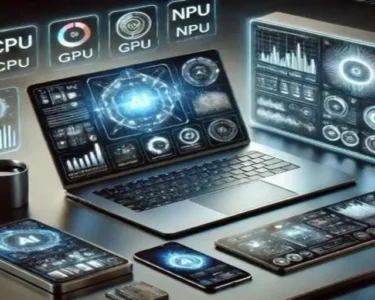
An AI PC typically includes specialized hardware called a Neural Processing Unit (NPU). Unlike a traditional CPU, which handles general computing tasks, or a GPU, which excels at graphics and highly parallel workloads, an NPU is designed specifically for AI-related operations.
This dedicated hardware can handle tasks such as image processing, voice recognition, background effects during video calls and other AI features without sending every operation to a remote cloud server.
This approach can potentially improve responsiveness while also reducing dependence on an internet connection for supported AI features.
Intel, AMD and NVIDIA Push Local AI
Competition between chipmakers is intensifying around AI-capable computers.
Intel’s latest Core Ultra Series 3 processors are appearing in new laptops and other Windows systems, with manufacturers highlighting their AI processing capabilities. Microsoft has also showcased new PCs at IFA 2026 featuring Intel’s latest processors and AI-focused hardware.
AMD is taking a similar approach with its Ryzen AI processor family. At IFA, AMD highlighted what it calls the era of personal AI, including systems designed to support local AI workloads and developer-focused computing. New computers using Ryzen AI Max 400 Series processors were also announced by PC manufacturers.
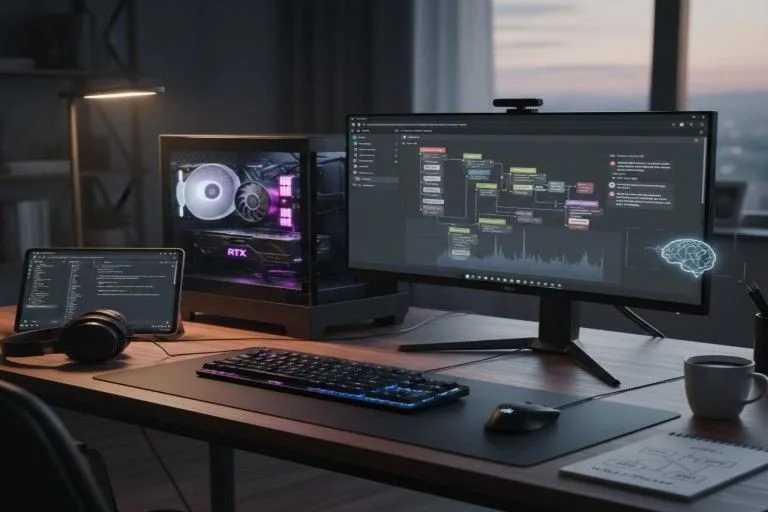
NVIDIA is approaching the market from a different direction, focusing heavily on GPU-powered local AI. The company and its partners have announced RTX Spark Windows PCs, with systems expected to arrive in October 2026. These machines are designed for demanding AI workloads that traditionally depended heavily on cloud computing.
AI Agents Could Change How We Use Computers
One of the most interesting developments is the move from simple AI assistants toward AI agents.
Instead of simply answering a question, an AI agent can potentially complete a sequence of tasks. For example, it could organize information, work with applications, create documents or perform multiple steps to accomplish a goal.
Recent developments are already moving this concept onto Windows PCs. Perplexity’s Portable Computer, for example, has expanded to Windows and can perform multi-step tasks locally on compatible NVIDIA RTX hardware, although its hardware and subscription requirements are substantial.
This could eventually change the traditional computer interface. Instead of opening several applications and manually moving information between them, users may increasingly describe what they want and allow AI software to coordinate the required tasks.
Privacy and Offline Processing
Another important advantage of local AI is the possibility of keeping more information on the computer.
When an AI workload can be processed locally, sensitive information does not necessarily have to travel to a remote server for every task. This could be particularly useful for businesses, developers and users working with private documents.
However, local AI does not automatically mean complete privacy. Users still need to understand which applications process information locally and which services send data to cloud servers.
More Powerful Hardware Is Coming
The next generation of computers is also likely to become more specialized. Manufacturers are experimenting with increasingly powerful processors, larger unified-memory configurations, dedicated AI accelerators and GPUs designed specifically for local AI.
At the same time, PC manufacturers are experimenting with new form factors and designs. Microsoft highlighted a wide range of new Windows systems at IFA, from lightweight laptops to workstations and AI-focused desktops.
For consumers, this means the definition of a “powerful computer” is changing. CPU performance remains important, but buyers may increasingly compare NPU capability, GPU performance, memory capacity and AI software support alongside traditional specifications.
What This Means for Computer Users
The biggest change may not be a single new laptop or processor. Instead, it is the gradual integration of AI into everyday computing.
Students could use AI tools for research and organization. Professionals may automate repetitive tasks. Creators can use AI-assisted editing tools, while developers can run coding models directly on capable machines.
The technology is still developing, and software support will be just as important as hardware. But the direction is clear: computers are becoming more than machines that run applications. They are increasingly being designed to understand, assist and perform tasks alongside their users.
As 2026 progresses, AI PCs and local AI computing are likely to remain two of the most important trends in the computer-electronics industry.