 By
By AI PCs Take Center Stage in 2026: How Computers Are Becoming Smarter and More Powerful
The computer industry is entering a new phase in 2026 as artificial intelligence becomes a major part of modern PCs and laptops. Instead of depending entirely on cloud-based services, newer computers are increasingly designed to process AI workloads directly on the device.
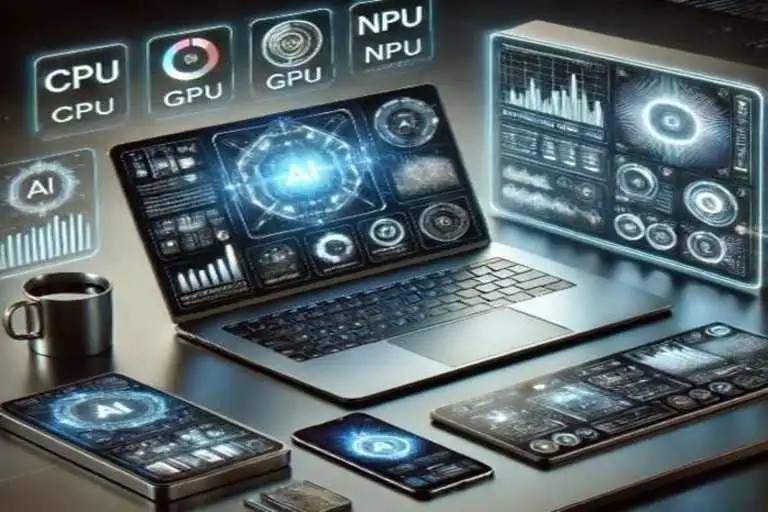
Recent laptop launches and announcements show manufacturers focusing heavily on dedicated AI hardware, including Neural Processing Units (NPUs), alongside traditional CPUs and GPUs. Microsoft describes an AI PC as a computer designed to run AI capabilities directly on the device, combining specialized hardware, software and operating-system features.
AI Is Becoming a Core Computer Feature
For years, processors were primarily judged by CPU performance, graphics capability, memory and storage. In 2026, another specification is receiving considerable attention: AI processing performance.
Modern AI PCs use NPUs to handle certain artificial-intelligence tasks more efficiently. This can include features such as background effects during video calls, image processing, transcription and other AI-assisted applications.
The advantage of local processing is that some tasks can happen directly on the computer instead of constantly sending information to a remote server. This can potentially improve responsiveness and reduce dependence on an internet connection for supported features.
New AI Hardware Is Driving PC Innovation
The latest generation of processors is pushing computer manufacturers toward more specialized designs. Intel, AMD, Qualcomm and NVIDIA are all involved in different parts of the emerging AI-PC ecosystem.
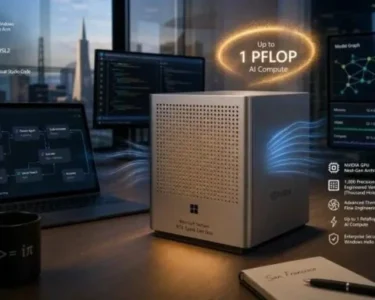
At IFA 2026, ASUS showcased ProArt laptops and a mini PC using NVIDIA’s RTX Spark platform, highlighting the industry’s movement toward computers capable of handling demanding AI workloads locally.
NVIDIA has also positioned its RTX Spark technology around personal AI computing and AI-agent workloads, illustrating how the definition of a personal computer is expanding beyond traditional applications such as web browsing, office software and gaming.
Laptops Are Becoming More Portable Without Giving Up Performance
Another important trend is the continued effort to combine performance with portability.
Manufacturers are experimenting with thinner laptops, efficient processors and new cooling technologies. Lenovo, for example, recently demonstrated a very thin laptop concept using solid-state AirJet cooling technology rather than conventional fan-based cooling.
This trend is particularly important for students, professionals and creators who want powerful computers that can be carried easily.
Battery efficiency is also becoming increasingly important. AI workloads can require significant processing power, so manufacturers are working to distribute workloads intelligently between the CPU, GPU and NPU.
Mini PCs Are Getting More Powerful
The AI-PC trend isn’t limited to laptops. Mini PCs and compact desktops are also becoming more capable.
MSI’s Cubi NUC AI+ 3MG, for example, combines a compact form factor with Intel’s newer processor technology and dedicated AI capabilities. The system supports up to 128GB of DDR5 memory and multiple high-resolution displays.
This illustrates how desktop computing is moving toward smaller machines that can still handle productivity, development and selected AI workloads.
Gaming and Creative Computers Continue to Evolve
Gaming PCs and creator laptops remain an important part of the computer market. Modern high-end systems combine powerful CPUs with discrete GPUs to handle demanding games, 3D rendering, video editing and AI applications.
At the same time, manufacturers are exploring ways to use AI for graphics enhancement, content creation and other workloads. High-performance gaming laptops are therefore increasingly positioned as multipurpose machines rather than devices designed exclusively for gaming.
What Computer Buyers Should Watch in 2026
For anyone planning to purchase a computer in 2026, AI capability is worth considering—but it should not be the only specification.
Buyers should also look at processor performance, RAM, SSD capacity, display quality, battery life, graphics hardware, connectivity and software compatibility. The importance of each specification depends on the intended workload.
For example, a student may prioritize battery life and portability, while a video editor may need more RAM and a powerful GPU. A developer working with local AI models may place greater importance on memory capacity and AI acceleration.
The growing number of AI-enabled computers means consumers now have more choices than ever. Industry coverage in India also shows a wide range of AI laptops using processors from Intel, AMD, Qualcomm and Apple.
The Future of Computers Is Becoming More AI-Driven
The biggest computer trend of 2026 is not simply faster processors—it is the integration of AI into the computer itself.
From laptops and desktops to mini PCs and workstations, manufacturers are designing systems that can perform more AI processing locally. As software developers take advantage of NPUs and increasingly capable GPUs, AI features are likely to become a more normal part of everyday computing.
The result is a changing definition of what a personal computer can do. Instead of being just a device for running applications, the modern PC is increasingly becoming an intelligent computing platform designed to assist with work, creativity, communication and other digital tasks.