

 By
By Cold frontier travel is drawing people toward places that feel far removed from an ordinary holiday: Antarctica’s ice-filled channels, Svalbard’s Arctic coast and the wildlife-rich Galápagos Islands. These journeys promise close encounters with remarkable ecosystems, usually aboard ships built around guided exploration. Yet their appeal comes with a responsibility. As more travelers seek remote nature, the question is how to experience it without adding unnecessary pressure to the places they came to see.
The three destinations share an expedition style, but they are geographically distinct. Antarctica and Svalbard are polar regions. The Galápagos Islands sit near the equator, where volcanic landscapes and unusual wildlife offer a very different kind of remote voyage. Together, they show why travelers are increasingly interested in trips shaped by nature, learning and access to places that require careful management.
Antarctica: A Journey Shaped by Ice and Weather
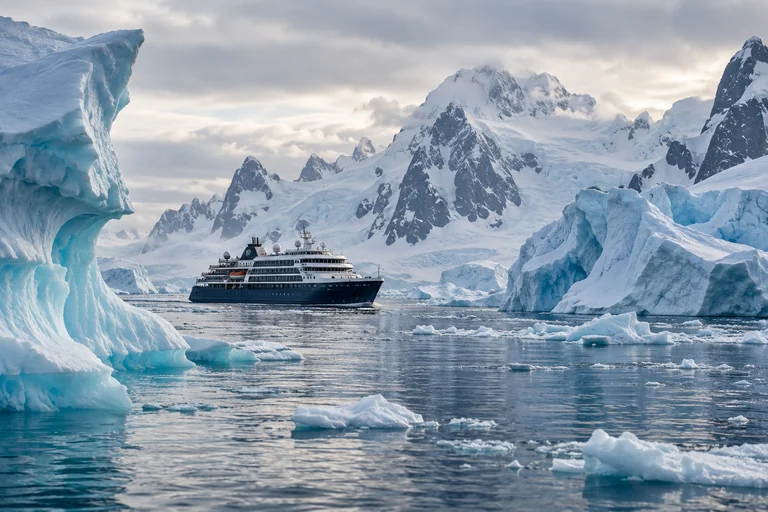
An Antarctic expedition rarely unfolds exactly as a brochure photograph suggests. Sea ice, wind and wildlife activity can change the day’s plans. Passengers might watch penguins from shore, travel between icebergs in a small boat or spend an afternoon observing the landscape from the ship. That flexibility is part of the experience: the environment sets the schedule.
The scale of Antarctic tourism makes careful management essential. The International Association of Antarctica Tour Operators (IAATO) reports 85,195 landed visits, 27,217 cruise-only visitors and 1,106 deep-field visitors for the 2025–26 season. These are different visitor categories; they are not a measure of bookings or proof that every voyage sold out.
Travelers should also understand what their ticket includes. Some voyages offer shore landings, while cruise-only itineraries view Antarctica from the vessel. IAATO’s operating rules limit landing groups to 100 visitors ashore at a site at one time. When comparing cruises, the ship’s passenger capacity and landing arrangements matter as much as the route.
Svalbard: Exploring the Arctic on Its Own Terms
Far north of mainland Norway, Svalbard offers glaciers, tundra, seabirds and the possibility of seeing Arctic wildlife. Its expedition season attracts travelers who want to understand a living northern landscape, rather than simply collect a photograph of it. Wildlife sightings cannot be guaranteed, and routes depend on conditions and local restrictions.
Cruise tourism also has a substantial local role. An Association of Arctic Expedition Cruise Operators report says cruise visitors generated NOK 361.5 million in local revenue in Svalbard in 2024, with expedition cruises contributing the largest share. Revenue demonstrates the industry’s economic importance; it does not establish a record for bookings.
Rules have become more specific as the region manages visitor activity. Environmental changes that took effect in January 2025 introduced restrictions on tourist landings in protected areas. New field safety regulations took effect in January 2026. A good operator should explain how its itinerary follows the current rules and why a planned landing may change.
Galápagos: A Remote Expedition Beyond the Polar Regions
The Galápagos Islands belong in a conversation about nature-focused expeditions, even though they are not a cold or polar destination. Their appeal lies in volcanic islands, marine habitats and animals found nowhere else. A small-ship voyage can connect several visitor sites, while land-based stays offer another way to explore with authorized local services.
Popularity brings real pressure. The Galápagos National Park Directorate reported 279,277 visitors in 2024 and publishes visitor statistics for later periods. Those figures describe arrivals to the islands, not expedition-cruise bookings specifically. A 2025 report from the Charles Darwin Foundation also examined how growing tourism pressure can be managed while protecting the archipelago’s ecosystems.
The park asks visitors to stay at least two meters from wildlife, avoid touching or feeding animals, remain on marked trails and use authorized tourism services. These rules protect the encounters that make the islands memorable. Seeing an animal behave naturally from a respectful distance is a better experience than disturbing it for a closer image.
How to Choose a Responsible Expedition
Before booking cold frontier travel, compare more than destinations and cabin prices. Ask how many passengers will be aboard, whether shore visits are included, what guides teach, and how the operator handles wildlife distance, cleaning of equipment and changes caused by weather. For Antarctica, review IAATO’s visitor guidance. For Svalbard and Galápagos, check the relevant local rules close to departure because access requirements can change.
It is also sensible to leave room in the itinerary and budget for delays. Remote travel depends on conditions that no operator controls. A flexible schedule makes it easier to enjoy the journey that actually happens, including a quiet hour watching a coastline from the deck.
The return of interest in remote expeditions is clear from visitor activity, but a single verified figure does not support a sweeping claim that bookings across Antarctica, Svalbard and Galápagos are all breaking records. What these destinations offer is more lasting than a booking headline: a chance to observe extraordinary places closely, learn why they matter and travel within the limits set to protect them.