

 By
By AI PCs Are Entering a New Era: Smarter Computers, Faster Performance and Local AI
The computer industry is entering a new stage in 2026 as artificial intelligence becomes a central part of laptops and desktop PCs. Instead of relying entirely on cloud-based AI services, the latest computers are increasingly designed to process AI workloads directly on the device. This shift is creating a new generation of PCs that can deliver faster responses, improved privacy and better efficiency.
Recent announcements from Microsoft, Qualcomm, NVIDIA and Google show how quickly this market is developing. New processors, dedicated neural processing units and AI-focused software are turning traditional computers into intelligent productivity devices.
Local AI Is Becoming a Major PC Feature
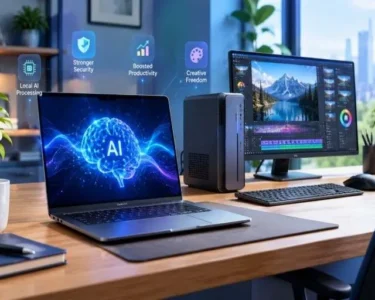
One of the biggest changes is the growth of on-device AI. Modern AI PCs include dedicated hardware that can process certain artificial-intelligence tasks locally. This can reduce the need to send every request to a remote data center.
Microsoft’s latest Surface Pro 12-inch and Surface Laptop 13-inch, announced September 23, use Qualcomm’s Snapdragon X2 Plus processor. Microsoft says the new systems offer up to 95% faster on-device AI inference compared with the previous generation, alongside improvements in graphics and battery efficiency.
For users, local processing can mean lower latency for supported features and potentially greater privacy when sensitive information remains on the computer. Microsoft says supported AI experiences can use the device, the cloud or both depending on the task.
NVIDIA Is Bringing Powerful AI to Personal Computers
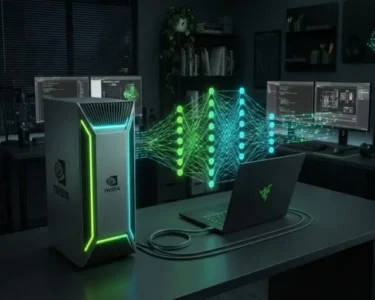
NVIDIA is taking the concept further with its RTX Spark platform. The company introduced the new system as a class of Windows PCs designed for personal AI agents and advanced local AI workloads.
This technology is particularly relevant for developers, creators and AI enthusiasts who want to experiment with larger models without depending completely on cloud computing.
The move also changes what consumers may expect from a high-performance computer. In the past, specifications such as CPU performance, graphics capability and storage dominated PC discussions. Increasingly, AI performance is becoming another important specification.
Googlebook Adds Another Direction
Google is approaching the AI PC market from the software and ecosystem side with its new Googlebook laptops. Pre-orders opened September 21, with prices starting at $899. The devices combine Google’s Gemini AI capabilities with closer integration between Android phones and laptops.
Googlebook models are being produced by Acer, Asus, Dell, HP and Lenovo. Google says the computers can offer up to 14 hours of battery life and are designed to provide features such as AI-assisted writing, organization and cross-device continuity.
This approach demonstrates that the AI PC market is not limited to Windows machines. Different technology companies are developing their own approaches to combining AI, operating systems and connected devices.
Battery Life Remains Important
While AI performance is receiving considerable attention, battery life remains one of the most important factors for laptop buyers.
The latest Snapdragon-powered Surface Laptop 13-inch, for example, is rated by Microsoft for up to 22.5 hours of local video playback under its stated testing conditions. Microsoft also says the new Snapdragon X2 Plus platform provides improved battery efficiency compared with the previous generation.
This combination of AI performance and efficiency is important because users increasingly expect thin laptops to handle demanding workloads without sacrificing portability.
AI Hardware Could Also Affect Prices
The rapid expansion of AI is creating challenges for the computer industry as well. Demand for memory and other components used in AI infrastructure has contributed to higher component costs. Recent reporting has highlighted rising memory prices and pressure on PC manufacturers.
As AI PCs become more powerful, manufacturers need to balance advanced processors, memory capacity, cooling systems and battery efficiency with consumer pricing.
What Comes Next for Computers?
The next generation of computers is likely to be defined by more than faster processors. AI acceleration, local model execution, cross-device connectivity and intelligent software are becoming important parts of the PC experience.
For everyday users, this could mean computers that can summarize documents, assist with creative projects, understand screen content and perform repetitive tasks more efficiently. For professionals and developers, stronger local AI capabilities could provide new ways to work with increasingly sophisticated models.
The computer industry is therefore moving toward a future where AI is built into the hardware, operating system and everyday workflow. With Microsoft, Qualcomm, NVIDIA, Google and major PC manufacturers competing in this rapidly changing market, 2026 is shaping up to be an important year for the evolution of personal computing.