 By
By Asia and Himalayas adventure travel is increasingly attracting people who want more than conventional sightseeing. Across Kyrgyzstan, Pakistan’s Hunza Valley, and India’s Spiti Valley, winding mountain roads lead to glacial lakes, ancient monasteries, nomadic settlements, isolated villages, and trekking routes beneath some of the world’s greatest peaks.
These destinations are not designed for hurried tourism. Long driving days, unpredictable weather, limited mobile connectivity, high elevations, and basic accommodation are all part of the experience. For well-prepared travelers, however, the rewards include extraordinary landscapes, meaningful cultural encounters, and a sense of exploration that heavily visited destinations rarely provide.
Kyrgyzstan’s Nomadic Landscapes and Mountain Roads
Kyrgyzstan is one of Central Asia’s most exciting destinations for road trips and trekking. Much of the country is mountainous, with the Tian Shan ranges creating a landscape of broad valleys, alpine pastures, dramatic passes, and high-altitude lakes.
Bishkek is the usual starting point, but the real adventure begins beyond the capital. Travelers can follow mountain roads towards Issyk-Kul, Karakol, Song-Kol, Naryn, and Osh. Song-Kol is particularly memorable for its open grasslands, traditional yurts, grazing horses, and clear night skies.
Official tourism listings for 2026 continue to promote routes combining Song-Kol and Issyk-Kul with scenic driving, moderate trekking, local meals, and stays with rural families. The country’s tourism portal also describes trekking options through mountain gorges and around high-altitude lakes.
Ala-Kul is a more demanding option. The lake sits high in the mountains near Karakol, and some routes reach elevations of approximately 3,900 metres. Steep terrain, rapid weather changes, and the effects of altitude make preparation essential.
May to October is generally the easiest period for traveling in Kyrgyzstan. Outside this window, snow and changing mountain-road conditions may restrict access. Even in summer, travelers should allow extra time rather than relying on a tightly packed itinerary.
Hunza Valley and the Karakoram Highway
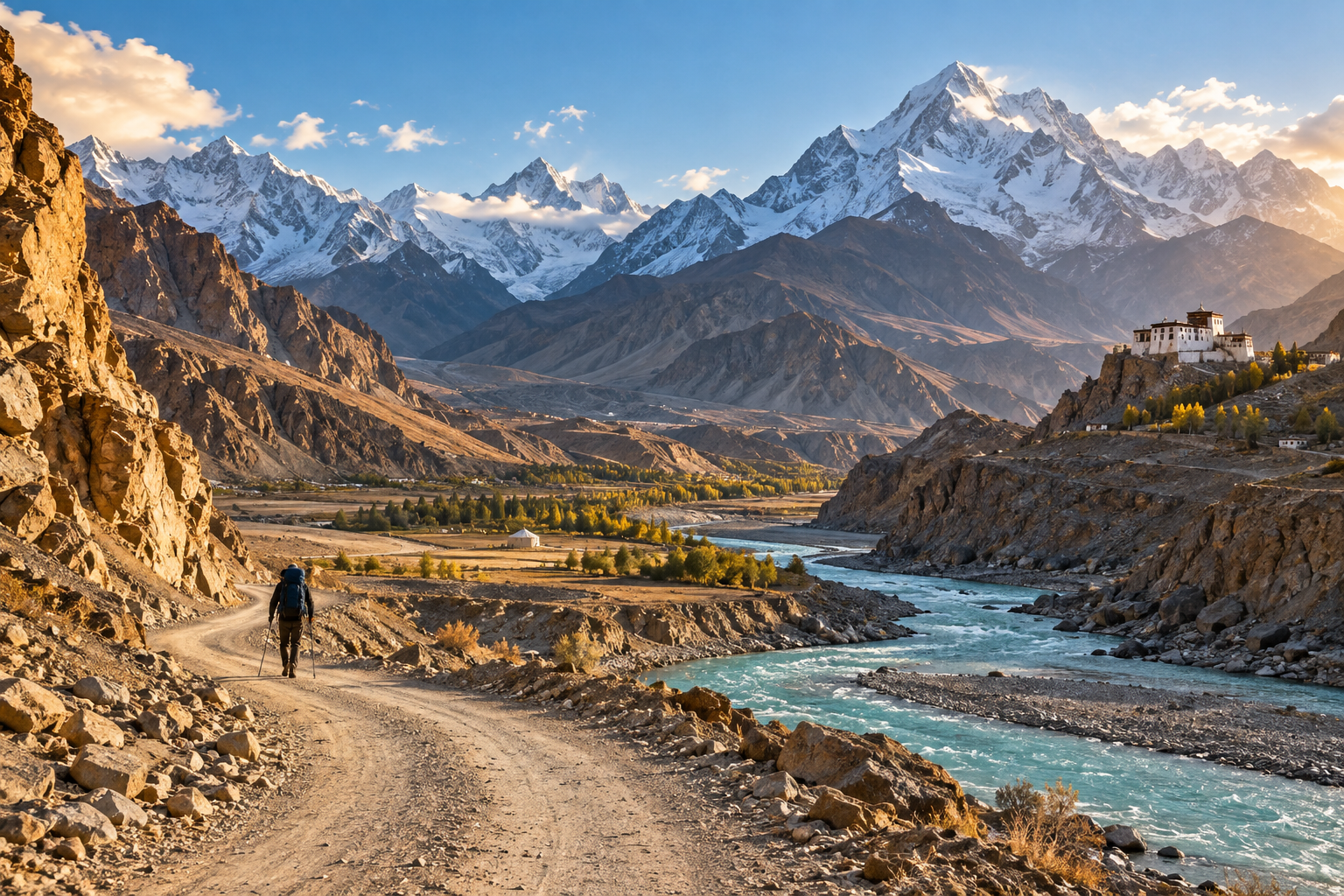
Pakistan’s Hunza Valley offers one of Asia’s most dramatic road-trip settings. Located in Gilgit-Baltistan, the valley is approached through the Karakoram Highway, a remarkable route passing deep gorges, powerful rivers, historic settlements, and enormous mountain walls.
Karimabad is a practical base for exploring Baltit Fort, Altit Fort, Duikar, Ganish, and the surrounding valleys. Farther north, the road continues towards Attabad Lake, Gulmit, Passu, Sost, and Khunjerab Pass. Passu is particularly famous for its jagged cathedral-like peaks and its position beside the Karakoram Highway.
Official Pakistan tourism information describes the highway as connecting Islamabad with Kashgar through locations including Chilas, Gilgit and Hunza, eventually crossing Khunjerab Pass at about 4,733 metres. It also advises travelers that permits for certain regulated treks can require at least 30 days of processing.
Hunza is more accessible than many remote Karakoram regions, but it should not be treated as an ordinary driving holiday. Landslides, roadworks, flooding, snowfall, and border restrictions can alter plans. Travelers should check current government advisories, regional access rules, visa requirements, and insurance conditions before committing to the journey.
India’s Spiti Valley: A High-Altitude Desert
Spiti Valley presents a different face of the Himalayas. Its dry mountains, eroded cliffs, Buddhist monasteries, whitewashed villages, and intensely blue skies give it the atmosphere of a remote Himalayan frontier.
The gradual route from Shimla usually passes through Kinnaur, Nako and Tabo before reaching Kaza. It is often preferred by travelers who want to gain altitude progressively. The Manali approach is shorter but crosses more demanding high-altitude terrain and depends heavily on seasonal access.
Kaza serves as the main base for visiting Key Monastery, Kibber, Langza, Hikkim, Komic, Dhankar, Tabo and Pin Valley. Himachal Pradesh Tourism describes April to October as a generally pleasant period for visiting Spiti, with May and June offering comfortable daytime conditions. Actual road access can still change due to snow, landslides or local restrictions.
Trekkers can explore village trails or attempt demanding routes such as Pin Parvati Pass. Official tourism information classifies the Pin Parvati crossing as very difficult and places the pass at approximately 5,319 metres. This is a serious expedition requiring appropriate fitness, acclimatization, equipment and experienced support.
Foreign visitors should also confirm whether their route enters a regulated border area. Himachal Tourism states that foreign tourists need Inner Line Permits for certain parts of Kinnaur and Spiti adjoining the Tibet-China border.
Altitude, Safety and Responsible Preparation
High altitude is the common challenge across these destinations. Travelers should ascend gradually, remain hydrated, avoid intense exertion immediately after arrival, and recognize symptoms such as persistent headache, nausea, unusual fatigue, dizziness, or breathlessness. Severe or worsening symptoms require descent and medical attention.
A suitable vehicle, experienced local driver, offline maps, spare food, warm layers, water, cash, power banks, and basic repair supplies are valuable on isolated routes. Comprehensive insurance should explicitly cover trekking, high-altitude activities, emergency evacuation, and the countries being visited.
Travelers should verify weather reports, border conditions, permits, visas, and road status immediately before departure. Official guidance for Indian citizens also recommends adequate medical insurance, checking health requirements, retaining copies of essential documents, and registering with the relevant Indian mission when appropriate.
Traveling Without Damaging Fragile Mountain Regions
Remote mountain tourism creates both opportunities and pressure. Homestays, local guides, community camps, and locally operated transport help keep tourism income within mountain communities. Visitors should carry reusable bottles, avoid single-use plastics, take waste back to established disposal points, respect religious sites, and seek permission before photographing residents.
These landscapes reward patience rather than speed. The finest experiences may be sharing tea inside a Kyrgyz yurt, watching evening light reach the Passu peaks, or hearing monastery prayers above a silent Spiti village.
For rugged travelers prepared to accept uncertainty, Asia and the Himalayas provide something increasingly rare: journeys where the road, altitude, culture, and landscape are as important as the final destination.