

 By
By What happens when a Swiss dessert meets Indian halwa? Or when traditional masala chai becomes an ice cream?
These combinations may sound unusual, but they represent one of the most interesting directions in food right now: global dishes being reimagined with distinctly Indian flavours.
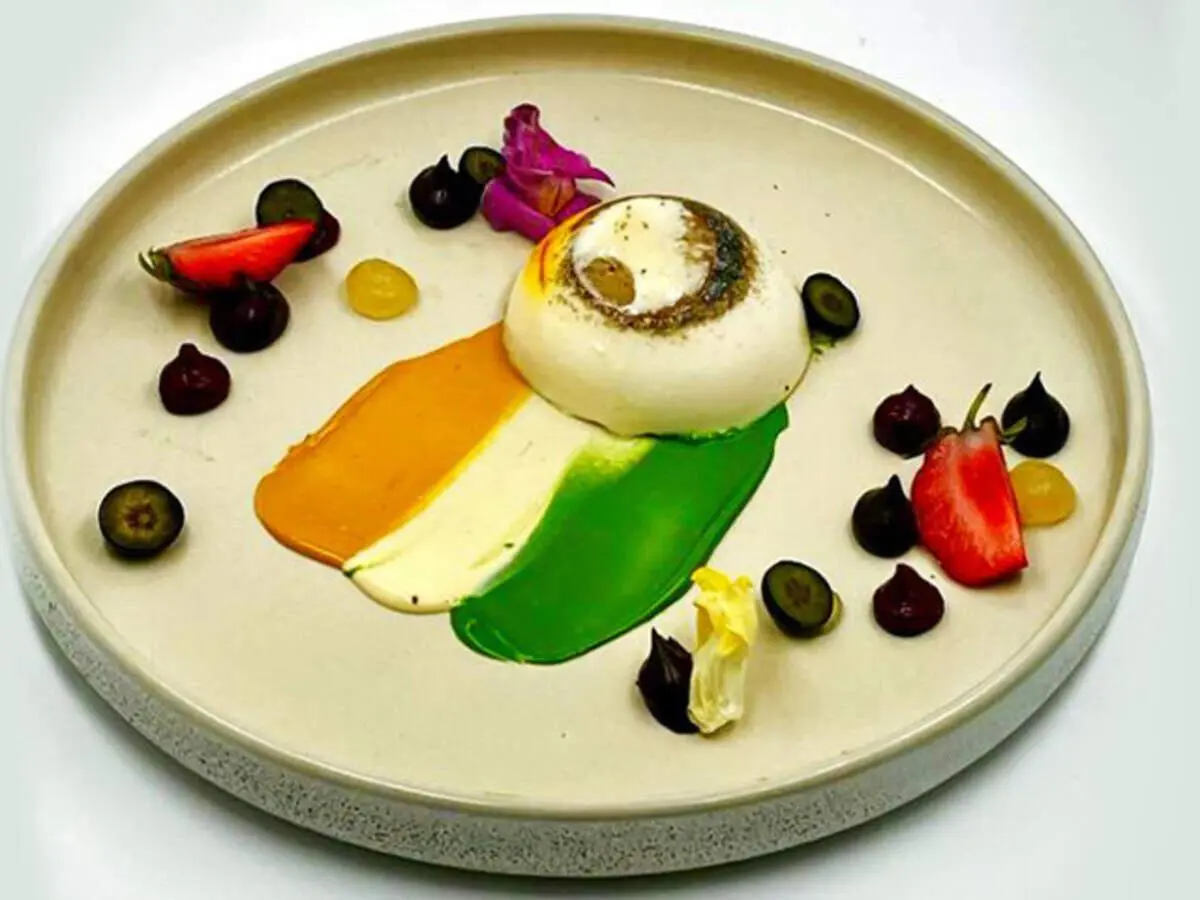
The trend received fresh attention after the October 5, 2026 diplomatic lunch hosted for Swiss President Guy Parmelin at Hyderabad House in New Delhi. The menu combined Swiss ingredients and techniques with Indian flavours, including raclette potatoes with chutney and chaat masala, a Swiss-inspired nusstorte paired with Indian lapsi, and masala chai ice cream.
This is more than a one-day diplomatic menu. It reflects a larger movement in which chefs are asking a new question:
What happens when international food meets India’s enormous flavour vocabulary?
Global Food Is No Longer Being Served “As Is”
Local Flavours Are Becoming the Upgrade
For years, international dishes entering India were often presented in their original form.
Pizza was pizza.
Pasta was pasta.
Cheesecake was cheesecake.
But today’s diners are increasingly interested in dishes that carry a sense of place.
That means an international dessert might get cardamom, jaggery, saffron or chai spices.
A European pastry could be paired with Indian halwa.
A Western ice cream could be built around familiar Indian beverages.
The result isn’t necessarily traditional Indian food or traditional Western food.
It is something in between.
Masala Chai Is Entering the Dessert World
From Cup to Ice Cream
Masala chai has already become one of India’s most recognisable flavours.
Now its flavour profile is moving beyond beverages.
Tea, cardamom, cinnamon, ginger, cloves and other warming spices can be incorporated into desserts, giving chefs a ready-made flavour combination.
The masala chai ice cream served at the recent India-Switzerland lunch is a particularly strong example of this approach. The dessert combined black tea and warming spices with caramelised ice cream.
It works because the flavour is immediately familiar to Indian diners while still feeling unusual in an ice-cream format.
Why Chai Works So Well in Desserts
Chai has several characteristics that make it suitable for sweets.
It can provide:
- Warm spice
- Aroma
- Slight bitterness
- Sweetness
- Tea depth
- A nostalgic Indian flavour
That means it doesn’t need a complicated list of ingredients to create an interesting dessert.
The flavour itself already has a story.
The Indian Dessert Toolbox Is Huge
Jaggery, Halwa and Cardamom Are Going Global
One of the most interesting parts of the recent Swiss-Indian menu was the Lapsi Nusstorte Pie.
It combined Swiss nusstorte-style pastry with Indian roasted cracked-wheat halwa, cardamom, walnuts and ghee.
This is an excellent example of modern fusion because neither cuisine completely disappears.
The Swiss element remains recognisable.
The Indian element remains recognisable.
The combination creates something new.
That approach could inspire restaurants to explore many more pairings.
What Other Indian Flavours Could Become Desserts?
The Possibilities Are Almost Endless
If masala chai can become ice cream, there is no reason chefs have to stop there.
Future menus could explore:
Filter coffee tiramisu
Gulab jamun cheesecake
Kesar-pistachio crème brûlée
Mango lassi panna cotta
Jalebi croissant
Rasmalai tres leches
Nankhatai ice cream sandwiches
Gur and sesame chocolate tart
These aren’t necessarily completely new concepts, but the larger movement is becoming stronger: Indian flavours are being treated as premium flavour profiles rather than simply traditional dessert ingredients.
Why This Trend Works With Younger Diners
Familiarity + Surprise
One reason fusion desserts perform well is that they solve two problems simultaneously.
People want something familiar.
But they also want something they haven’t tried before.
Masala chai provides familiarity.
Ice cream provides familiarity.
Put them together and the diner gets a completely new experience without feeling too adventurous.
This combination of recognition and surprise is extremely useful for restaurants.
Social Media Is Helping the Trend
A Familiar Flavour in an Unexpected Form
Food trends often spread when people can explain them in one sentence.
“Masala chai ice cream.”
“Gulab jamun cheesecake.”
“Raclette with chaat masala.”
These combinations are easy to understand and naturally create curiosity.
They also photograph well.
That matters because restaurants increasingly need dishes that are not only delicious but also memorable enough to be shared online.
India Is Becoming a Source of Global Flavours
The Direction of Fusion Is Changing
Earlier, Indian restaurants often borrowed heavily from Western and East Asian food styles.
Now the flow is becoming more balanced.
International chefs and restaurants are increasingly interested in ingredients and flavours associated with India.
This includes:
- Chai
- Tamarind
- Jaggery
- Cardamom
- Saffron
- Ghee
- Kokum
- Mango
- Curry leaves
- Regional spices
- Indian pickles
The interesting change is that these ingredients are no longer being used only to make something “Indian.”
They are being used as individual flavour-building ingredients.
The Trend Goes Beyond Desserts
Even Savoury Food Is Getting the Same Treatment
The recent Swiss-Indian menu also demonstrated this with raclette potatoes.
Swiss raclette cheese was paired with fire-roasted potatoes, coriander chutney and chaat masala.
That combination shows how Indian flavours can completely change the personality of an international dish without destroying its original identity.
The same concept is already visible in India’s newer restaurant menus, where global dishes are being combined with regional ingredients, spices and cooking techniques.
Restaurants Are Moving Toward “Storytelling Food”
The Dish Needs a Reason to Exist
The strongest fusion dishes aren’t just random combinations.
They tell a story.
A Swiss ingredient meeting an Indian chutney can represent two culinary cultures coming together.
A chai ice cream can transform a familiar Indian daily ritual into a modern dessert.
A nusstorte combined with lapsi can connect two different traditions through texture, nuts, wheat and spice.
That storytelling can make a dish more memorable than simply adding another flavour to a menu.
What Could Be the Next Big Indian Fusion Flavour?
Regional India May Be the Next Source of Inspiration
Chai is already globally recognised.
The next wave could come from lesser-known Indian flavours.
Chefs may increasingly experiment with:
- Kokum
- Jamun
- Gondh
- Bel
- Amla
- Imli
- Nannari
- Sesame
- Makhana
- Regional jaggery varieties
This could create a new generation of desserts that feel global in presentation but unmistakably Indian in flavour.
Conclusion
The rise of masala chai ice cream and Indian-inspired international desserts shows that fusion food is becoming more sophisticated.
The goal is no longer simply to put two cuisines together.
Instead, chefs are looking for specific points of connection—a spice, a texture, a sauce, a dessert tradition or a familiar flavour.
The recent Swiss-Indian diplomatic menu demonstrated exactly how powerful that approach can be, bringing raclette together with chaat flavours and Swiss pastry together with Indian halwa.
For India’s food industry, this could be a major opportunity.
Because the country’s biggest culinary advantage may not be another exotic imported ingredient.
It may be something much more familiar:
chai, cardamom, jaggery, ghee and the thousands of flavours already sitting in Indian kitchens.
The next global dessert trend could therefore have a very Indian flavour.
Follow Us On Instagaram