

 By
By AI-Powered Computers in 2026: How Microsoft and NVIDIA Are Transforming the Future of PCs
Introduction
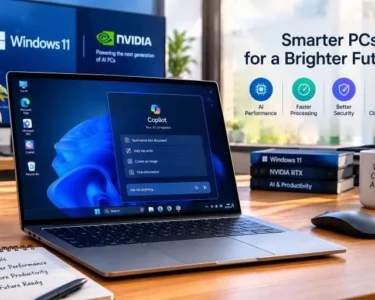
The computer industry is experiencing a major transformation as artificial intelligence becomes an increasingly important part of personal computing. On October 8, 2026, AI-powered computers are among the most exciting technology trends, with Microsoft and NVIDIA attracting attention through their latest developments in Windows PCs and local AI processing.
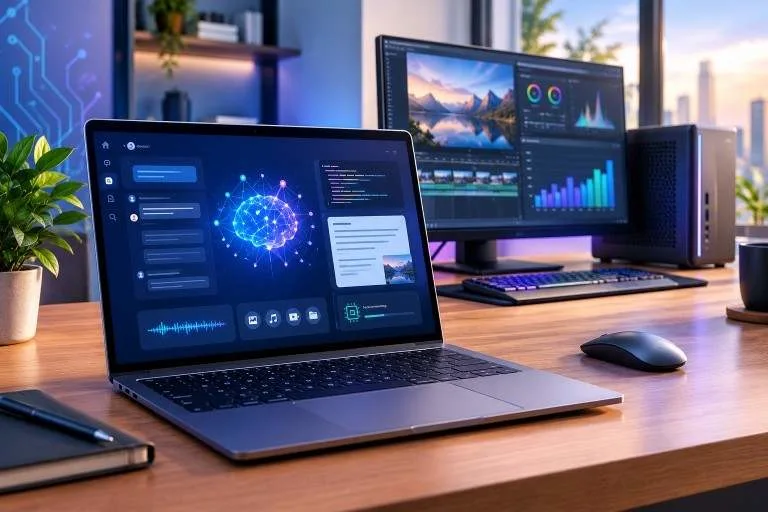
Modern computers are no longer designed only for browsing the internet, creating documents, and playing games. They are increasingly being developed to help users write code, edit videos, analyze information, automate repetitive tasks, and run artificial intelligence models directly on their devices.
These developments could change how students, professionals, businesses, and technology enthusiasts use computers in their everyday lives.
1. Microsoft Introduces a New Vision for AI Computers
Microsoft is pushing toward a future in which Windows computers can perform more tasks with the assistance of AI agents.
Its October 2026 announcements highlight a strategy called hybrid intelligence. This approach combines AI processing on a computer with cloud-based computing when additional resources are needed.
For example, a computer could handle certain AI tasks locally while using cloud services for more demanding operations. This combination could improve responsiveness, reduce dependence on constant internet connectivity for supported features, and give users more flexibility.
AI assistants could eventually help organize files, summarize documents, support research, and complete selected tasks across applications. However, the usefulness of these features will depend on software compatibility, hardware capabilities, and the permissions granted by users.
2. NVIDIA Brings Powerful AI Processing to PCs
NVIDIA is another important player in the changing computer market.
Known for its graphics processors, the company is expanding its role in AI computing through hardware designed to handle demanding workloads. Its collaboration with Microsoft is bringing more attention to computers capable of running AI models locally.
New RTX Spark-powered systems are targeting developers, creative professionals, and users who need substantial computing resources.
These machines are designed for demanding activities such as AI development, advanced content creation, and running large models. Depending on the configuration, they may offer substantial memory capacity and specialized AI processing capabilities.
For software developers, this could make experimenting with AI applications more convenient. For creative professionals, powerful local hardware could support image generation, video workflows, and other resource-intensive projects.
However, these advanced systems are expensive, so ordinary home users may not need this level of performance.
3. How AI Can Improve Everyday Computing
One of the biggest advantages of AI-powered computers is their potential to simplify everyday work.
Students may use AI tools to summarize study materials, organize notes, and understand difficult concepts. Office workers could use intelligent assistants to draft documents, extract information from files, and automate repetitive tasks.
Developers may benefit from coding assistants that explain errors, suggest improvements, and help generate code. Meanwhile, designers and video editors could use AI-powered applications to accelerate creative workflows.
Local processing can also make certain supported tasks faster because information does not always need to travel to a remote server.
Nevertheless, AI tools should be treated as assistants rather than infallible sources of information. Users should verify important results, especially when working with technical, financial, or professional documents.
4. Why Local AI Processing Matters
Traditionally, many AI services have depended on cloud servers to process requests. Local AI computing allows compatible computers to perform some operations using their own processors, graphics hardware, or neural processing units.
This approach offers several potential benefits.
First, local processing may reduce delays for supported tasks. Second, it can reduce reliance on an internet connection for certain features. Third, keeping information on the device may offer privacy advantages when an application genuinely processes the relevant data locally.
However, local AI does not automatically guarantee privacy or security. Some applications still transmit information to online services, so users should review privacy settings and understand how their chosen tools handle data.
Hardware requirements also matter. Running larger AI models can require substantial memory and processing power.
5. What Should Buyers Consider Before Upgrading?
Consumers considering an AI computer should look beyond marketing labels.
Processor performance, RAM, storage capacity, battery life, display quality, and software compatibility remain important purchasing factors. Buyers should also determine whether the AI features they want actually require specialized hardware.
For students and everyday users, a balanced laptop with sufficient memory and good battery life may provide better value than an expensive workstation.
Developers and creative professionals may benefit from stronger graphics performance, more memory, and support for local AI models.
In India, buyers should compare local pricing, warranty coverage, service availability, and the cost of suitable software before purchasing a new device.