 By
By Good health begins with simple everyday habits, and handwashing is one of the most effective ways to reduce the spread of many infectious diseases. Our hands frequently come into contact with surfaces, objects, food, and other people. Without proper cleaning, germs can transfer from our hands to our mouths, eyes, food, and other surfaces.
Global Handwashing Day, observed every year on 15 October, reminds individuals, families, schools, and workplaces about the importance of washing hands with soap and clean water. This awareness day encourages people to make hand hygiene a regular part of daily life.
1. What Is Global Handwashing Day?
Global Handwashing Day is an international awareness initiative that promotes handwashing with soap as a simple and affordable public health practice.
Its main objectives include:
- Raising awareness about the importance of hand hygiene.
- Encouraging proper handwashing at home, school, and work.
- Helping communities understand how infections can spread.
- Promoting access to soap and clean water.
- Building healthy hygiene habits among children and adults.
Handwashing is a small action that can make a meaningful difference when practised consistently.
2. How Germs Spread Through Our Hands
Throughout the day, our hands touch mobile phones, door handles, desks, public transport surfaces, money, and many other objects. Some of these surfaces may carry germs.
Touching the face with unwashed hands or handling food without cleaning them can transfer germs into the body or onto food.
Common situations that require careful hand hygiene include:
- Before preparing or eating food.
- After using the toilet.
- After coughing, sneezing, or blowing your nose.
- After handling rubbish.
- After touching animals or cleaning up after them.
- Before caring for someone who is ill.
- After returning home from public places.
Regular handwashing helps reduce the spread of many germs, although it does not eliminate every possible route of infection.
3. The Correct Way to Wash Your Hands
Washing your hands properly is more effective than briefly rinsing them with water.
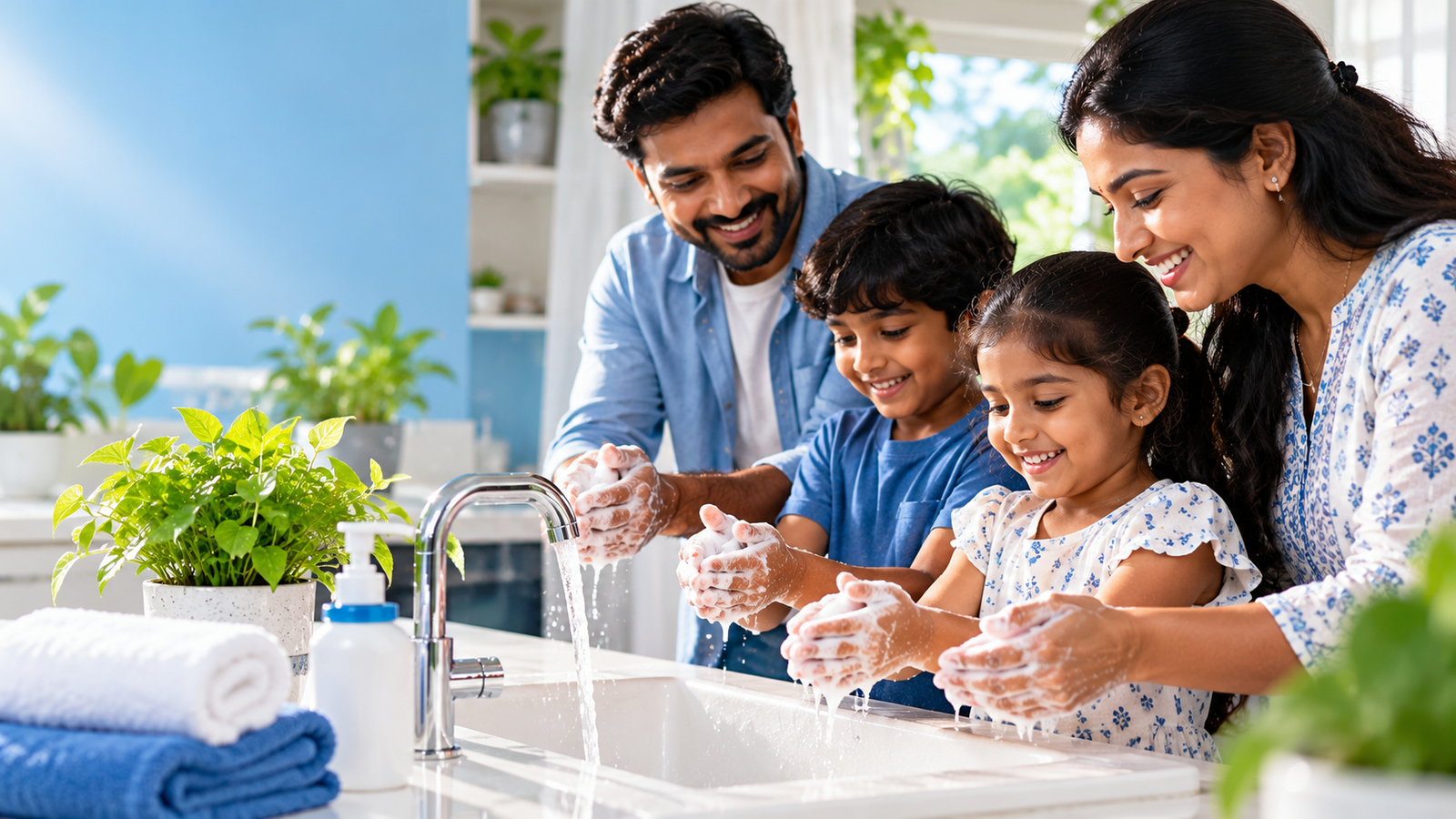
Follow these simple steps:
- Wet your hands with clean running water.
- Apply soap and create a lather.
- Rub your palms together.
- Clean the backs of both hands.
- Rub between your fingers and around your thumbs.
- Clean your fingertips and under your nails.
- Continue rubbing all hand surfaces for at least 20 seconds.
- Rinse thoroughly under clean running water.
- Dry your hands using a clean towel or air dryer.
Pay attention to the areas between your fingers, around your thumbs, and beneath your fingernails, because these areas are sometimes missed.
4. Why Handwashing Matters for Children
Children regularly touch toys, school desks, playground equipment, and shared learning materials. Teaching good hand hygiene early can help them develop healthy habits that continue into adulthood.
Parents and teachers can encourage children to wash their hands before meals, after using the toilet, and after outdoor play.
Useful ways to make handwashing part of a child’s routine include:
- Keeping soap and water easily accessible.
- Demonstrating the correct technique.
- Encouraging handwashing before snacks and lunch.
- Using simple songs or counting to help children wash long enough.
- Praising consistent hygiene habits without creating fear of germs.
Schools can also support hygiene by maintaining clean washrooms and ensuring that soap and water are available.
5. Hand Hygiene at Home and in the Workplace
Hand hygiene is important in homes, offices, restaurants, hospitals, and other shared environments.
At home, keep soap near sinks and clean frequently touched surfaces regularly. In workplaces, provide accessible handwashing facilities and encourage employees to clean their hands before eating and after using shared facilities.
Food handlers should follow proper hygiene practices to reduce the risk of contamination. Healthcare workers must follow the hand hygiene procedures recommended for their clinical setting.
These measures help create cleaner environments and support the wellbeing of everyone in the community.
6. Handwashing and Safe Food Habits
Clean hands are especially important when preparing, serving, or eating food. Germs can transfer from unwashed hands to ingredients, kitchen utensils, and prepared meals.
To maintain better food hygiene:
- Wash your hands before preparing meals.
- Clean your hands after handling raw meat, poultry, or seafood.
- Use clean utensils and kitchen surfaces.
- Wash fruits and vegetables thoroughly.
- Store food at appropriate temperatures.
- Avoid preparing food for others when you are unwell, if possible.
Handwashing should be combined with safe food storage, clean water, and proper cooking to reduce foodborne illness risks.
7. Building a Healthier Community Through Hygiene
Handwashing becomes more effective as a community habit when everyone has access to suitable facilities.
Families can teach good hygiene at home, schools can organise awareness activities, and workplaces can provide soap and clean water. Communities can also support public hygiene by maintaining sanitation facilities and sharing reliable health information.
Access matters: people need convenient places to wash their hands, along with sufficient water and soap, to maintain these habits consistently.
Conclusion: Make Handwashing a Daily Habit
Global Handwashing Day on 15 October is a reminder that protecting our health often starts with simple actions. Washing hands correctly with soap and clean water can reduce the spread of many infections and support healthier homes, schools, and workplaces.
This Global Handwashing Day, encourage your family, friends, colleagues, and community to practise good hand hygiene every day. A few moments spent washing your hands can contribute to a healthier environment for everyone.
Medical disclaimer: This article provides general health education and does not replace professional medical advice.
Follow Us On Instagaram