 By
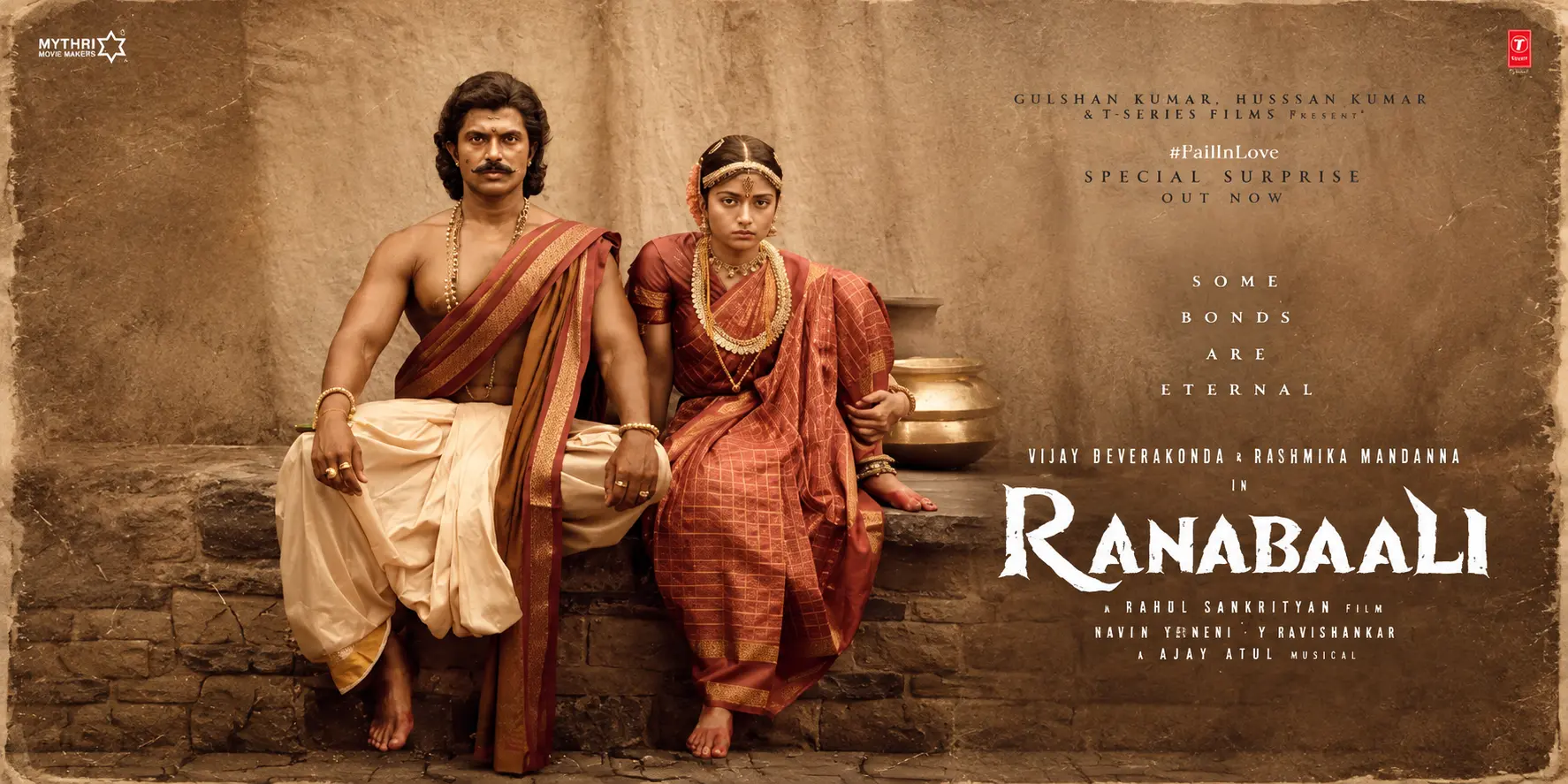
By Ranabaali is a 2026 Telugu period action drama directed by Rahul Sankrityan, starring Vijay Deverakonda as Ranabaali and Rashmika Mandanna as Jayamma, alongside Easwari Rao and Arnold Vosloo. Set during the Great Madras Famine of 1876–78, the film explores colonial exploitation, the suffering of ordinary people and the resistance against British rule. It was released in theatres on October 16, 2026, with a reported runtime of approximately 2 hours 58 minutes.
The early critical response has been mixed. Vijay Deverakonda’s physically intense performance, the lead pair’s chemistry and the film’s attempt to bring a lesser-known historical tragedy to mainstream cinema have drawn attention. However, critics have raised concerns about excessive violence, uneven pacing, generic writing and a lack of emotional depth in the second half.
Story & Concept
Set in the 1870s, Ranabaali follows Singanamala Bobbili Ranabaali, a fierce man whose life becomes intertwined with the suffering of his people under British colonial rule. When British officials prioritise extracting grain and resources despite widespread starvation, Ranabaali begins fighting back against the system.
His relationship with Jayamma forms the emotional foundation of the story, while a prophecy and growing colonial oppression push him toward a larger confrontation.
The premise is ambitious because it combines a historical tragedy with a mass-action narrative. However, the film sometimes prioritises revenge, violence and hero elevation over exploring the human suffering at the centre of its story.
Performance
Vijay Deverakonda delivers a physically demanding performance as Ranabaali. His intense screen presence, aggressive body language and commitment to the character suit the film’s larger-than-life tone. However, the character’s constant anger and shouting can become repetitive, limiting the emotional range of the performance.
Rashmika Mandanna is one of the film’s emotional strengths as Jayamma. Her character brings warmth and humanity to a story dominated by violence, and her scenes with Vijay provide some of the film’s more affecting moments.
Easwari Rao adds emotional weight as Ranabaali’s mother, while Arnold Vosloo plays the British antagonist. The supporting cast contributes to the historical setting, although several characters lack enough development to leave a lasting impression.
Screenplay & Direction
Rahul Sankrityan deserves credit for attempting to bring a painful chapter of colonial history to a mainstream Telugu audience. The scale of the subject offers opportunities for powerful drama, political conflict and emotionally engaging storytelling.
Unfortunately, the screenplay does not always make the most of that potential. The narrative relies heavily on familiar mass-film conventions, loud confrontations and violent set pieces. The historical context is significant, but the characters do not consistently receive the depth required to make their struggles feel personal.
The film has ambition, but its execution does not fully match the importance of its subject.
Action & Mass Elements
Action is a major part of Ranabaali. Vijay Deverakonda’s confrontations with colonial forces are staged with intensity, and several scenes are designed to create a powerful theatrical response.
The violence communicates the brutality of the period, but its repeated use eventually reduces its impact. Rather than allowing every major confrontation to develop through tension and emotion, the film frequently returns to the same aggressive tone.
Fans looking for intense action and powerful hero moments may appreciate this approach, while viewers expecting a more restrained historical drama may find it excessive.
Romance & Emotional Elements
Ranabaali and Jayamma’s relationship provides an important counterbalance to the film’s brutality. Their chemistry is one of its more appealing aspects, and Rashmika’s performance gives the story moments of tenderness.
However, the romance does not always receive enough space to develop naturally. The film moves repeatedly between personal relationships, political conflict and violent confrontations, making the emotional transitions feel uneven.
Jayamma often brings the human perspective that the larger narrative needs, but the screenplay could have used her character more effectively to deepen the film’s emotional impact.
Historical & Social Elements
The Great Madras Famine of 1876–78 provides the historical backdrop for the film. The famine devastated large parts of southern India, and colonial policies and relief failures remain important subjects in discussions of the disaster.
Ranabaali attempts to portray the exploitation and suffering associated with that period. Its willingness to bring this history to a mainstream audience is one of its most significant strengths.
However, historical suffering requires more than graphic violence to create a lasting impact. More time spent on ordinary people’s lives, their losses and their struggle to survive could have made the film’s message more powerful.
Music & Technical Aspects
The film’s period setting and action sequences give the technical team considerable scope to create a grand visual experience. The production aims for a rugged, violent atmosphere that reflects the harshness of the era.
However, the music and background score have received a mixed response, with some viewers finding them less effective than expected. The technical presentation supports the film’s scale, but it cannot always compensate for the screenplay’s lack of emotional continuity.
Pacing & Runtime
At approximately 178 minutes, Ranabaali is a lengthy watch. The historical setting and gradual establishment of the characters require some time, but the narration becomes repetitive in places.
The frequent shouting, confrontations and violent sequences begin to feel similar, while the second half struggles to maintain narrative momentum. A tighter edit could have made the film more focused without sacrificing its historical scope.
Second Half & Climax
The second half intensifies the conflict between Ranabaali and the colonial forces. The stakes are higher, and the film attempts to bring its themes of resistance, exploitation and sacrifice together.
However, the narrative increasingly depends on violence and mass moments instead of building a strong emotional payoff. The antagonist also lacks some of the complexity needed to make the central conflict truly compelling.
The climax has scale and intensity, but the film’s emotional impact is less powerful than its subject deserves.
What Works
- Vijay Deverakonda’s physically committed performance
- Rashmika Mandanna brings warmth and emotion as Jayamma
- Ambitious historical backdrop
- Attempts to highlight a tragic chapter of Indian history
- Strong screen presence from the lead pair
- Several intense action sequences
- Period setting gives the story scale
- Jayamma’s character provides a welcome emotional counterbalance
What Doesn’t Work
- Excessive violence overshadows emotional storytelling
- Repetitive shouting and confrontational scenes
- Predictable screenplay and familiar mass-film elements
- Historical characters need more depth
- The second half loses momentum
- British antagonist lacks sufficient complexity
- Music and background score feel underwhelming in places
- Long runtime affects the pace
- The climax prioritises spectacle over emotional payoff
Final Verdict
Ranabaali is an ambitious period action drama that attempts to bring the suffering of the Great Madras Famine and resistance to British colonial exploitation to mainstream Telugu cinema. Vijay Deverakonda commits himself to the title role, while Rashmika Mandanna provides some of the film’s most effective emotional moments.
However, the film repeatedly chooses violence and mass elevations over nuanced character development. Its important historical subject deserved a more focused screenplay and stronger emotional storytelling. Despite the lead pair’s chemistry and the scale of the concept, Ranabaali remains an uneven cinematic experience.
Overall Rating: 2.5/5
Story: ⭐⭐⭐
Screenplay: ⭐⭐
Performances: ⭐⭐⭐½
Direction: ⭐⭐½
Action: ⭐⭐⭐½
Romance: ⭐⭐⭐
Emotional Impact: ⭐⭐½
Music: ⭐⭐½
Cinematography: ⭐⭐⭐
Pacing: ⭐⭐
Climax: ⭐⭐½
Overall: ⭐⭐½
Verdict: Ranabaali is a fierce and ambitious historical action drama with committed performances from Vijay Deverakonda and Rashmika Mandanna, but excessive violence, uneven pacing and limited emotional depth prevent it from reaching its full potential.