

 By
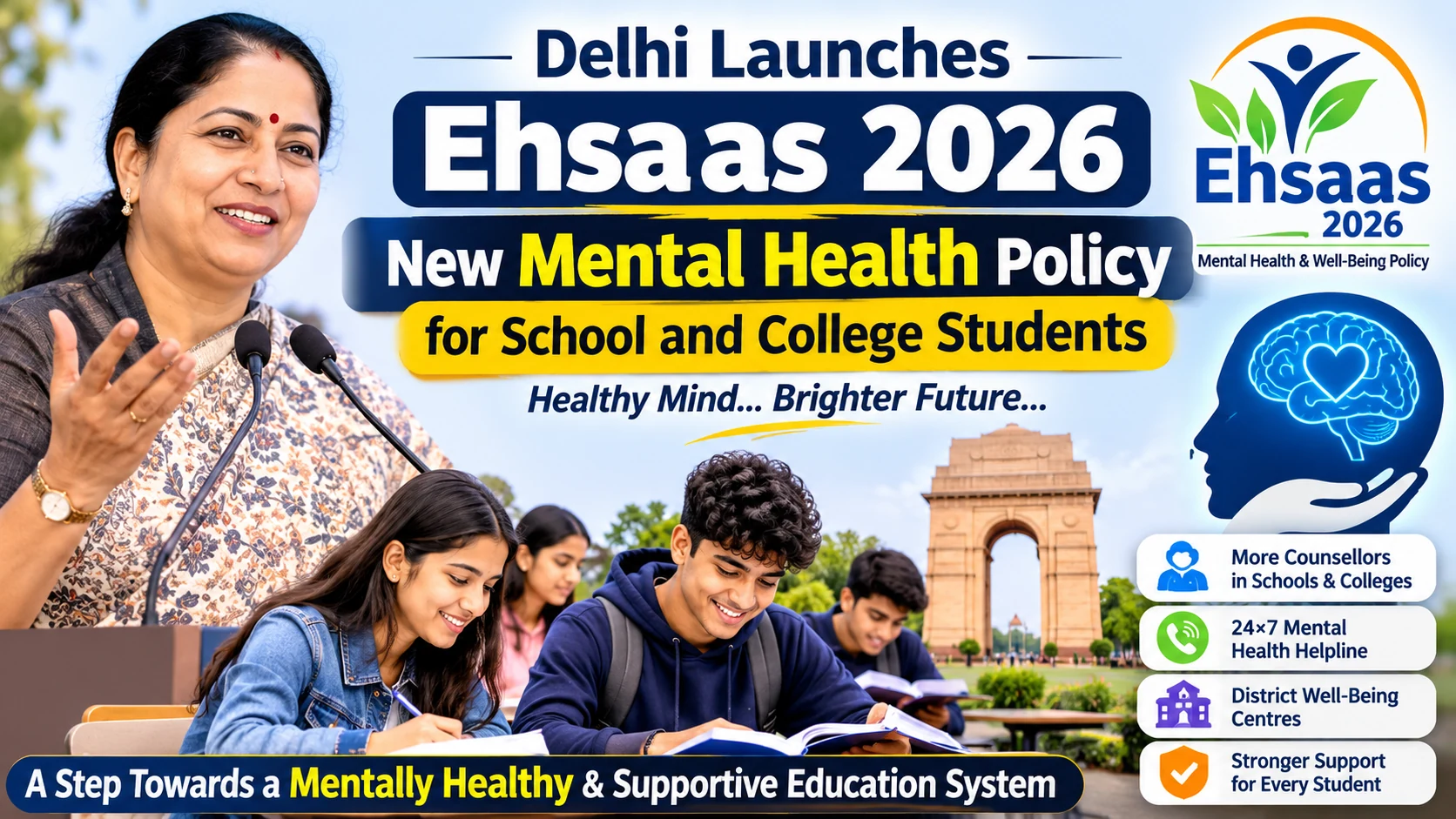
Delhi, November 20, 2026: The Delhi government has launched a major initiative to improve the mental health and emotional well-being of students across schools and colleges. The new policy, titled ‘Ehsaas 2026 – Mental Health and Well-Being Policy’, aims to make emotional support an essential part of the education system rather than focusing only on academic performance and examination results.
The policy was launched on November 19, 2026, at the Indira Gandhi Indoor Stadium in New Delhi. Lieutenant Governor Taranjit Singh Sandhu, Chief Minister Rekha Gupta and Art of Living founder Sri Sri Ravi Shankar participated in the launch event.
The initiative focuses on addressing increasing concerns related to examination pressure, anxiety, depression, bullying, cyberbullying and other emotional challenges faced by students. Through professional counselling, awareness programmes and structured support systems, the government aims to create safer and more supportive educational environments.
1. What Is Ehsaas 2026?
Ehsaas 2026 is a comprehensive mental health and well-being framework introduced by the Delhi Education Department. Its primary objective is to ensure that students receive emotional and psychological support throughout their educational journey.
The policy recognises that academic achievements alone cannot determine a student’s overall development. Students also need confidence, emotional stability, a supportive environment and access to professional guidance.
The framework covers government schools, government-aided schools, CM SHRI schools, recognised private schools and higher educational institutions under the Delhi government’s jurisdiction.
It also considers the needs of Children with Special Needs and young people up to 29 years of age, including those outside the formal education system.
2. One Counsellor for Every 500 School Students
One of the most important announcements under Ehsaas 2026 is the provision of qualified mental health counsellors in schools.
According to the policy, schools should have at least one qualified counsellor for every 500 students. Higher educational institutions will also have dedicated mental health professionals, with a proposed ratio of one professional for every 100 students in smaller institutions.
These counsellors will help students manage emotional difficulties, examination stress, personal challenges and other psychological concerns.
The policy also provides for separate and private counselling rooms where students can discuss their problems comfortably. Counsellors should not be assigned unrelated administrative or disciplinary responsibilities, allowing them to focus on student well-being.
3. Mental Health Support in Colleges
Mental health support will not be limited to school students. Colleges and other higher educational institutions will also have dedicated Mental Health and Well-Being Centres.
These centres are expected to provide:
- Individual and group counselling sessions.
- Emotional and psychological support.
- Academic and career guidance.
- Preventive mental health programmes.
- Professional referrals when specialised treatment is required.
- Peer-support and awareness activities.
The policy also provides for 24-hour mental health helplines in covered colleges. Helpline information must be displayed on student identity cards, hostel notice boards and institutional websites so students can access support when required.
4. Focus on Examination Stress and Student Anxiety
Examination pressure is one of the major concerns affecting school and college students.
Many students experience stress because of academic competition, parental expectations, entrance examinations and uncertainty about their future careers. Some students also struggle with anxiety, low confidence and fear of failure.
Ehsaas 2026 aims to address these concerns through early identification and professional support.
Schools will encourage students to communicate their feelings without fear of embarrassment or discrimination. Teachers and counsellors will work together to identify students who may need additional attention.
The objective is to ensure that students understand that seeking mental health support is normal and should not be considered a weakness.
5. Teachers and Parents Will Receive Special Training
The policy recognises that teachers and parents play an important role in identifying emotional difficulties among children.
Under the initiative, teachers, principals, parents and other school employees will receive specialised training to recognise early signs of emotional distress.
These signs may include:
- Sudden changes in behaviour.
- Social isolation or withdrawal.
- Frequent mood changes.
- Declining academic performance.
- Fear of attending school.
- Signs of bullying or cyberbullying.
- Difficulty managing emotions.
Non-teaching staff, transport personnel and other employees who regularly interact with students will also be included in the support system.
The aim is to create an educational environment where every responsible adult understands how to respond sensitively when a student needs help.
6. Six-Level Emergency Support System
Another important feature of Ehsaas 2026 is its structured six-tier escalation mechanism.
This system is designed to ensure that students experiencing serious mental health difficulties receive appropriate assistance.
Depending on the seriousness of the situation, the support process may involve:
- Class teacher or initial responder.
- School counsellor or mental health professional.
- School principal or wellness team.
- District Well-Being Centre.
- Hospital or emergency mental health services.
- Relevant statutory agencies, wherever necessary.
This mechanism is particularly important in cases involving severe emotional distress, abuse, bullying or the risk of self-harm.
The framework aims to ensure that serious concerns are not ignored and that students receive timely professional assistance.
7. District Well-Being Centres and Monitoring
Ehsaas 2026 also proposes District Well-Being Centres to strengthen mental health services across Delhi.
These centres are expected to provide psychological assessments, therapeutic interventions and psychiatric consultations. Students requiring specialised care can be referred to appropriate healthcare facilities.
The policy also introduces monitoring mechanisms to evaluate how educational institutions implement mental health services.
Schools will be expected to conduct quarterly assessments of their wellness arrangements. A digital monitoring system and School Wellness Services Index will help track counselling facilities, staff training, safety measures and referral procedures.
Student privacy and confidentiality are also important considerations. Personal counselling information must be protected and handled responsibly.
8. Why Is This Policy Important for Indian Education?
The launch of Ehsaas 2026 highlights the growing importance of mental health in India’s education system.
For many years, educational success has been measured mainly through examination results, grades and placements. However, students also face emotional challenges that can affect their learning, relationships and personal development.
A supportive educational environment can help students develop confidence, communication skills, resilience and the ability to manage difficult situations.
The policy also encourages schools and colleges to treat mental well-being as a shared responsibility involving students, parents, teachers, counsellors and administrators.
Although the initiative currently focuses on Delhi, its implementation could offer useful lessons for other states considering stronger student mental health programmes.
Conclusion
Delhi’s Ehsaas 2026 Mental Health and Well-Being Policy represents an important step towards creating a student-friendly education system. By introducing professional counselling, college mental health centres, staff training, district-level support and emergency response mechanisms, the government aims to make educational institutions safer and more supportive.
The success of this initiative will depend on effective implementation, sufficient qualified counsellors, regular monitoring and active participation from parents and educational institutions.
Ultimately, education should prepare students not only for examinations and careers but also for life. Ehsaas 2026 aims to promote that broader vision by recognising that every student’s emotional well-being deserves attention and support.
Follow Us On Instagram.