 By
By AI PCs Enter a New Era in October 2026: What’s Changing in Computers
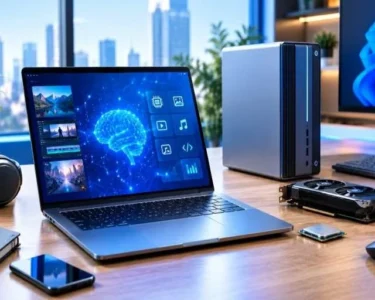
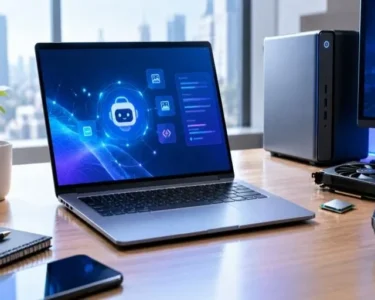
The computer industry is entering another major phase of change as artificial intelligence moves deeper into laptops, desktops and mini PCs. In October 2026, AI is no longer simply a software feature added to a traditional computer. New processors and dedicated AI hardware are being designed specifically to run increasingly demanding workloads locally.
One of the developments attracting attention this month is NVIDIA’s RTX Spark platform. NVIDIA introduced RTX Spark as a new class of computer platform designed for personal AI agents, content creation and gaming. The company says the platform combines its computing technologies to enable powerful AI capabilities in compact Windows computers.
RTX Spark Brings AI Closer to the PC
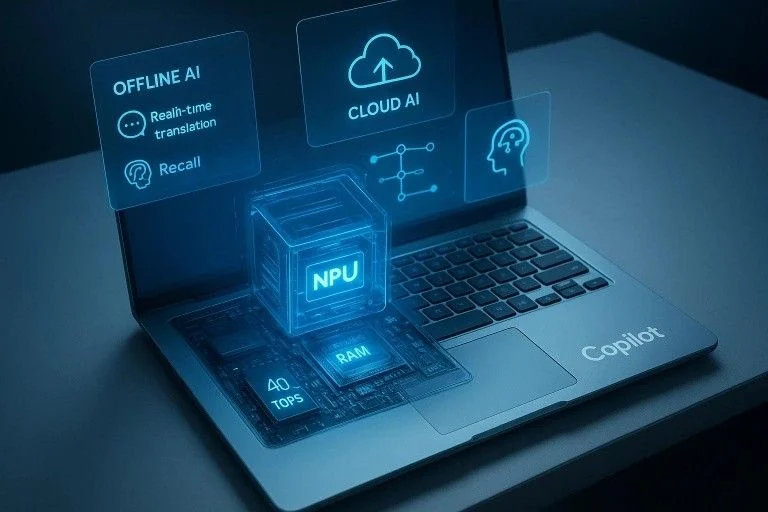
Traditional AI services often depend heavily on cloud data centers. RTX Spark represents a different approach by putting substantial AI computing capability closer to the user.
Local processing can be useful for tasks such as AI-assisted content creation, coding, image generation and other applications that benefit from dedicated acceleration. NVIDIA is positioning RTX Spark around the idea of personal AI, where the computer can perform more intelligent tasks directly rather than relying entirely on remote servers.
This trend could change how consumers evaluate computers. In the past, buyers generally focused on CPU speed, GPU performance, RAM, storage and battery life. AI performance is now becoming another important specification.
The Rise of AI Hardware
Modern AI PCs increasingly include specialized hardware such as NPUs or dedicated GPU acceleration. These components are designed to handle AI calculations efficiently while allowing the CPU to concentrate on conventional computing tasks.
This approach can benefit laptops in particular. Efficient AI processing can help computers perform supported AI tasks without constantly sending information to cloud services.
The broader industry is already moving in this direction. Reuters reported earlier this year that PC manufacturers are increasing their focus on AI PCs as consumers use generative AI for activities ranging from communication to planning and productivity.
Memory Is Becoming a Bigger Story
While AI is pushing computer performance forward, the industry is also facing a significant challenge: memory supply.
Recent reporting on Micron’s outlook indicates that demand for memory could continue exceeding supply through 2028, with AI infrastructure contributing to strong demand. This has implications for computer manufacturers because AI applications can require substantial memory capacity.
RAM prices have already been under pressure. Tom’s Hardware’s 2026 price tracking shows significant increases across DDR5 memory, while DDR4 prices have also risen.
For consumers, this could mean that memory capacity becomes an even more important consideration when buying a new laptop or desktop.
October Is Also Important for PC Buyers
October is traditionally an active month for electronics shopping, and 2026 is no exception. Major retailers are promoting seasonal computer discounts, while new hardware platforms are entering the market.
Amazon’s October Prime Day is scheduled for October 6–7, with PC-related promotions covering laptops, desktops, graphics cards, monitors, storage and accessories.
This creates an interesting situation for consumers. Some buyers may find discounts on existing-generation hardware, while others may prefer newer AI-focused computers with the latest processors and acceleration capabilities.
Laptops Are Becoming More AI-Centric
AI capabilities are also appearing across a wide range of laptops. Current Indian computer listings include models built around Intel Core Ultra, AMD Ryzen AI and Qualcomm Snapdragon platforms, with manufacturers emphasizing AI processing, battery efficiency and performance.
This means the AI PC category is no longer limited to expensive experimental hardware. AI-focused processors are increasingly appearing across premium, professional and mainstream laptop segments.
For students and office users, AI features can assist with productivity, communication and creative tasks. For developers and creators, stronger local AI hardware can provide additional options for running demanding workloads.
What About Traditional Desktops?
Desktop computers are also benefiting from this transition. A desktop can combine powerful CPUs, GPUs and large amounts of RAM, making it particularly suitable for AI development, gaming, video production and other intensive workloads.
Compact desktop systems are another growing category. Manufacturers are attempting to deliver powerful computing hardware in smaller designs, giving users more performance without requiring a large traditional tower.
The result is a broader range of computer formats, from thin AI laptops to compact desktops and high-performance workstation systems.
What Should Buyers Look For?
Anyone planning to purchase a computer in late 2026 should look beyond the processor’s headline speed. RAM capacity, GPU capability, AI acceleration, battery efficiency, storage and software compatibility can all influence the experience.
For everyday users, a balanced system with sufficient RAM and strong battery life may be more useful than extreme performance. Gamers and creators may prioritize GPU power, while AI developers could place greater emphasis on memory capacity and dedicated AI acceleration.
The Future of Computing
The biggest computer trend in October 2026 is the convergence of AI and personal computing. Computers are evolving from devices that simply run applications into systems capable of performing increasingly sophisticated AI workloads locally.
NVIDIA’s RTX Spark push, the growth of AI-focused processors and the continuing demand for memory all point toward a rapidly changing PC market.
As October progresses, consumers will have more choices between traditional performance-focused computers and systems designed around AI from the beginning. The next generation of PCs is not just about being faster—it is about making computers more capable, intelligent and adaptable to the way people work, create and play.