

 By
By AI PCs Enter a New Era: NVIDIA RTX Spark and the Future of Windows Computers
The personal computer market is entering another major transformation, and artificial intelligence is at the center of it. As October 2026 begins, one of the biggest developments to watch is the arrival of Windows computers powered by NVIDIA’s new RTX Spark platform. NVIDIA has announced that Lenovo and Acer will launch the first RTX Spark-based Windows PCs in October, bringing more powerful local AI capabilities to laptops and desktop computers.
Unlike traditional computers that often depend heavily on cloud-based AI services, the new generation of AI PCs is designed to perform more AI processing directly on the device. This could change how people use computers for productivity, content creation, software development and other demanding tasks.
What Makes RTX Spark Different?
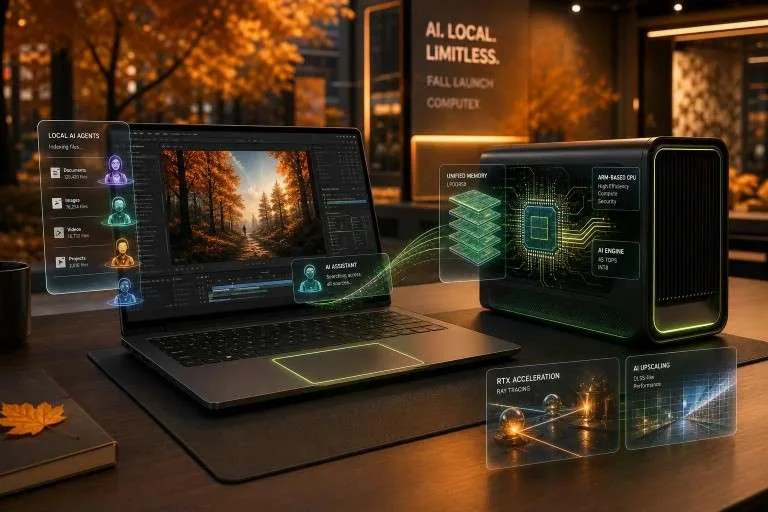
NVIDIA describes RTX Spark as a new class of Windows computing hardware designed for personal AI agents, creators and developers. The platform combines CPU and GPU technologies with NVIDIA’s AI software ecosystem, including CUDA and RTX technologies.
The reported RTX Spark N1X configurations are particularly notable. Upcoming systems are expected to combine NVIDIA’s Arm-based architecture with Blackwell-generation graphics technology, with configurations offering thousands of CUDA cores and up to 128GB of unified memory.
Unified memory is important because the CPU and GPU can access a shared pool of memory rather than relying on completely separate memory systems. For AI workloads, this can provide a useful architecture for handling large models and data-intensive applications on compact computers.
Local AI Could Become the New PC Standard
One of the most important trends in computing this year is the movement of AI processing from the cloud toward the device itself.
Local AI can offer several potential advantages. Processing information on a computer can reduce dependence on an internet connection for certain tasks, potentially improve response times and provide greater control over sensitive information. Developers can also experiment with AI models directly on their own hardware.
This trend is not limited to NVIDIA. Qualcomm’s Snapdragon X2 platform is also targeting what it calls the “agentic AI PC,” with new computers designed to run increasingly sophisticated AI experiences locally. Qualcomm recently highlighted new Surface devices using Snapdragon X2 Plus processors, alongside a broader ecosystem of AI PCs.
Microsoft Is Also Changing Its PC Strategy
Microsoft is preparing for the next stage of AI-powered Windows computing. The company has announced an October 7 event focused on local AI and the future of Windows PCs. At the same time, Microsoft has moved away from using the “Copilot+ PC” branding on its latest Surface hardware, even though some of the new devices meet the original hardware requirements.
This shift suggests that AI capabilities are becoming increasingly integrated into mainstream computers rather than being treated as a separate category.
Microsoft has also continued expanding Copilot with more advanced capabilities, including coding and agentic AI features. The company announced new tools that can help users create software, dashboards and other content through natural-language instructions.
What This Means for Laptop and Desktop Users
For everyday users, the next generation of AI PCs could make computers more capable of handling tasks that previously required specialized software or cloud services.
Students could use local AI tools for research and productivity. Creators could benefit from faster AI-assisted image, video and audio workflows. Developers could run AI models locally for testing and experimentation. Businesses may also benefit from AI systems that can perform selected tasks without constantly sending information to remote servers.
However, buyers should still look beyond the word “AI” when choosing a computer. Processor performance, RAM, storage, graphics capabilities, battery life, software compatibility and upgrade options remain important.
October Could Be a Major Month for PC Technology
The arrival of RTX Spark systems from Lenovo and Acer makes October 2026 an interesting month for the computer industry. Meanwhile, Qualcomm is expanding its Snapdragon-powered AI PC ecosystem, and Microsoft is preparing to discuss the future of local AI in Windows.
The bigger story is that the PC is evolving from a device that simply runs applications into a platform capable of running increasingly sophisticated AI tools locally.
For consumers, the coming generation of computers could therefore bring a significant change in how we interact with technology. Instead of simply clicking through applications, users may increasingly describe what they want and let the computer’s local AI capabilities help accomplish the task.