 By
By AI PCs Take Center Stage: How Local AI Is Changing Computers in 2026
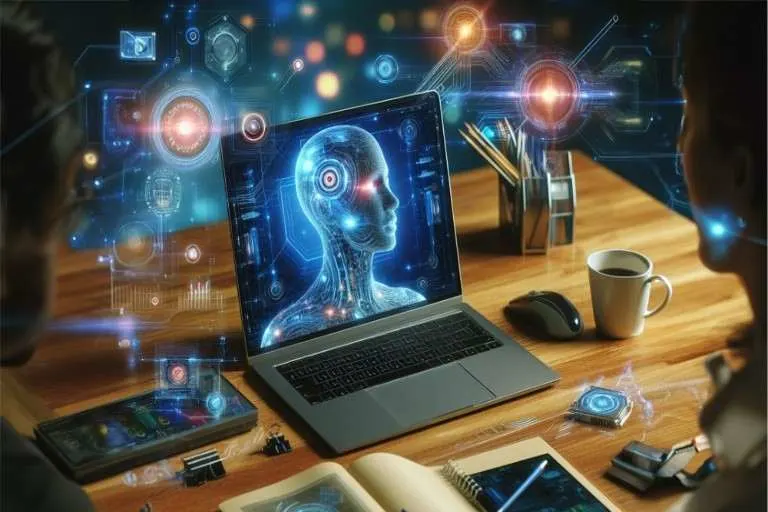
The computer industry is entering a new phase in October 2026 as artificial intelligence moves from cloud services directly into personal computers. Instead of sending every AI request to a remote data center, the latest generation of PCs is being designed to process increasingly demanding AI workloads locally.
This shift is one of the biggest computer trends today, with Microsoft and NVIDIA putting local AI computing in the spotlight. Microsoft is holding a Windows and Surface event on October 7, where NVIDIA RTX Spark technology and new AI-powered PC experiences are among the major areas of focus.
Local AI Becomes the New PC Experience
For years, consumers primarily judged computers by processor speed, graphics performance, storage and battery life. AI is now becoming another major factor.
Modern AI PCs include dedicated hardware designed to accelerate artificial-intelligence workloads. This can include neural processing units, powerful GPUs and software optimized for on-device AI.
The biggest advantage of local AI is that some tasks can be performed directly on the computer instead of relying completely on cloud servers. This can potentially improve responsiveness and provide additional privacy because certain information can remain on the user’s device.
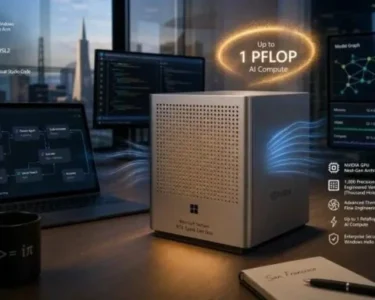
NVIDIA is taking this concept further with its RTX Spark platform. The company says RTX Spark combines a Blackwell RTX GPU with a 20-core Grace CPU and up to 128GB of unified memory, creating a platform designed for AI, content creation and gaming.
Powerful AI Models on Personal Computers
One of the most interesting developments is the ability to run increasingly large AI models locally.
NVIDIA says RTX Spark systems are designed to run models with more than 120 billion parameters locally, while also supporting demanding creative applications and gaming.
This could be particularly useful for software developers, researchers, designers and content creators. Instead of constantly depending on an online AI service, professionals could run certain models and workflows directly on their own computers.
For everyday users, this technology could eventually make AI assistants more responsive. Imagine a computer that can understand documents, organize information, assist with coding, edit content and perform repetitive tasks without always needing to send information to the cloud.
Microsoft Is Bringing AI Agents to Windows
Another important development is the growing focus on AI agents.
Rather than simply answering questions, AI agents are designed to perform multi-step tasks. A future computer could potentially organize files, summarize information, prepare documents or interact with applications after receiving a natural-language instruction.
Microsoft and NVIDIA are working on Windows experiences that support local AI agents, with security features designed to help keep these processes under user control.
The October 7 Microsoft event is expected to demonstrate how Windows can take advantage of this new class of hardware and on-device AI capabilities.
Competition Between AI PC Makers Is Growing
NVIDIA is not alone in developing AI-focused computing platforms. Intel launched its Core Ultra Series 3 processors earlier this year, with the company positioning the platform around AI performance, graphics and power efficiency. Intel says the processors are being used across more than 200 PC designs.
AMD is also competing aggressively in local AI computing. Recent October reporting highlights AMD’s efforts to demonstrate the capabilities of its upcoming Gorgon Halo platform for local AI workloads.
This competition is good news for consumers. As manufacturers compete on AI performance, battery life, graphics and efficiency, buyers should have a wider selection of computers for different budgets and workloads.
What This Means for Future Computers
The biggest change is that the computer is becoming more than a tool for running applications. It is gradually becoming an intelligent assistant capable of understanding instructions and helping users complete tasks.
Students could use local AI for research and learning. Developers could run coding models directly on their machines. Designers and video editors could benefit from faster AI-powered creative tools. Gamers could combine advanced graphics with AI-enhanced experiences.
However, AI performance should not be the only consideration when purchasing a computer. Battery life, software compatibility, memory, storage, display quality, repairability and price will remain important.