

 By
AI-Powered Computers in 2026: The Next Big Shift in Personal Computing
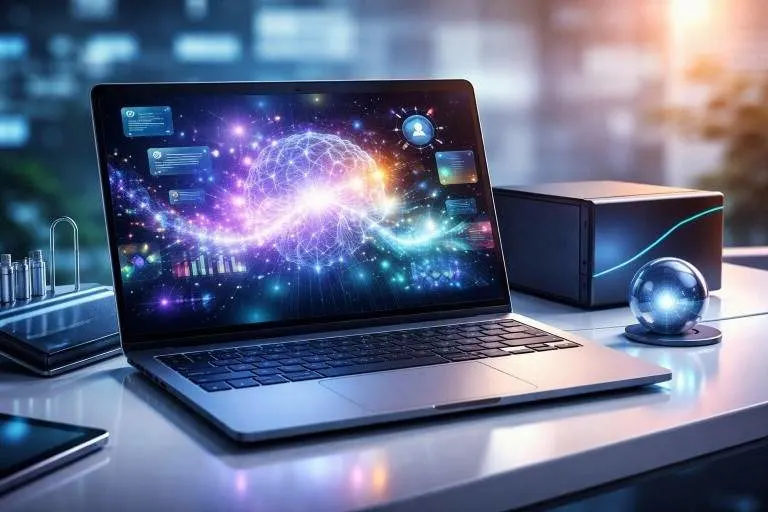
Computers are evolving rapidly, and artificial intelligence (AI) is becoming one of the biggest forces shaping the technology industry in 2026. Modern PCs are no longer designed only for browsing the internet, creating documents, or playing games. Manufacturers are increasingly developing computers that can run AI tools, assist with creative work, analyze information, and help users complete everyday tasks more efficiently.
One important development this month is the launch of NVIDIA RTX Spark laptops, announced as available on October 16, 2026, through manufacturers including ASUS, Dell, HP, Lenovo, Microsoft, and MSI. These systems bring advanced graphics and AI computing capabilities to portable Windows computers.
1. AI PCs Are Becoming More Powerful
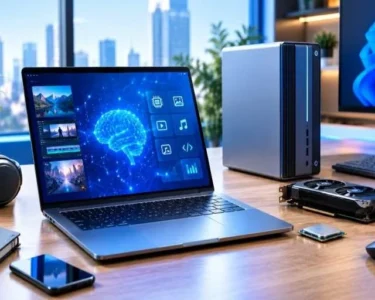
AI-powered computers are designed to handle certain artificial intelligence tasks directly on the device. Depending on the model, they may use a neural processing unit (NPU), a graphics processing unit (GPU), or other specialized hardware to accelerate AI workloads.
These capabilities can help users summarize documents, edit images, transcribe audio, write and debug code, and organize information. Instead of relying entirely on remote servers, some AI tasks can run locally on the computer.
NVIDIA’s latest RTX Spark systems combine its Blackwell graphics technology with a Grace CPU and offer configurations with up to 128GB of unified memory. The company positions these computers for developers, creative professionals, and users who want to experiment with AI applications locally.
2. Local AI Could Change Everyday Work
One of the most interesting computer trends is the move toward local AI assistants and software agents. These tools can help users perform multi-step tasks, generate content, write code, and work across compatible applications.
Running AI locally can offer benefits such as lower dependence on cloud services, quicker responses for supported tasks, and more control over where certain data is processed. However, local processing does not automatically guarantee privacy or security; users still need trusted software, suitable permissions, and regular updates.
For students, local AI tools may help explain complex subjects or organize study notes. For office workers, they can support document preparation and research. Developers and designers may benefit from computers capable of handling demanding AI and graphics workloads.
3. Better Graphics for Gaming and Creative Projects
Graphics performance remains another important reason people upgrade their computers. Modern GPUs support realistic gaming visuals, high-resolution video editing, 3D design, animation, and AI-assisted creative applications.
The latest AI-focused PC platforms aim to combine these capabilities in portable devices, making it easier for professionals to work away from a desktop workstation. Gamers may also benefit from technologies that improve image quality and frame rates, although performance depends on the game, software support, power limits, and hardware configuration.
Before purchasing a computer for gaming or creative work, buyers should compare real-world performance reviews rather than relying only on headline specifications.
4. Rising Costs Make Smart Buying More Important
Despite these advances, buying a new computer may be more expensive in 2026. Industry reporting points to pressure from memory-chip shortages and higher component costs, which have affected PC makers and market forecasts. IDC-related analysis reported by Computerworld also warned that PC prices could remain elevated into the end of 2027.
This makes it important to choose a computer based on actual needs. Students and everyday users may be well served by a reliable laptop with sufficient memory and storage, while video editors, developers, and AI enthusiasts may need more powerful processors and graphics hardware.
Buyers should compare warranty coverage, battery life, upgrade options, repairability, and software compatibility alongside performance and price.
5. What Should Buyers Look for in a Computer?
When choosing a computer in 2026, consider these essentials:
- Processor: Select a modern CPU suitable for your everyday workload.
- Memory: Choose enough RAM for multitasking and the applications you use.
- Storage: An SSD helps applications load quickly and improves general responsiveness.
- Graphics: Dedicated graphics may be worthwhile for gaming, 3D work, and demanding AI tasks.
- Battery life and portability: Important for students and people who work while travelling.
- AI features and security: Check which features are actually supported, where data is processed, and how long the device will receive updates.
A higher-priced AI PC is not automatically the best choice for everyone. A well-balanced computer that meets your needs may offer better value than a premium model with capabilities you rarely use.