

 By
Apple’s Foldable iPhone and the Future of Smart Devices: What to Expect in 2026
Apple continues to attract attention in the electronics industry with its latest iPhone lineup and growing focus on advanced smartphone technology. In October 2026, the company introduced its first foldable smartphone, the iPhone Duo, alongside the iPhone 18 Pro. The foldable model became available on October 23, bringing a new design to Apple’s popular smartphone family.
As consumers look for devices that combine portability, productivity, photography, and artificial intelligence, Apple’s latest developments offer an interesting look at the future of mobile technology.
1. The iPhone Duo Introduces a New Design
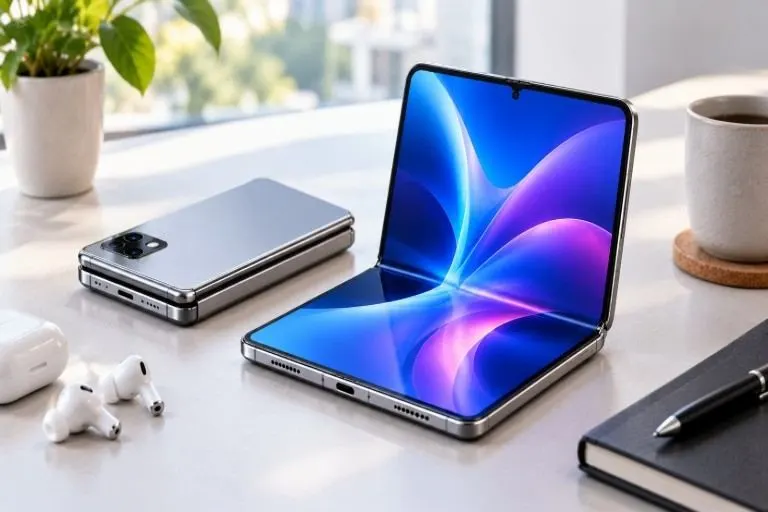
The most noticeable feature of the iPhone Duo is its foldable display. When closed, the smartphone has a 5.4-inch outer screen, while opening it reveals a 7.6-inch inner display.
This design gives users the convenience of a traditional smartphone alongside a larger viewing area for entertainment and work. Reading articles, browsing websites, reviewing documents, and watching videos can become more comfortable on the expanded screen.
Apple has also highlighted its precision-engineered hinge and titanium construction. These design elements aim to balance portability, durability, and a premium appearance.
For consumers, the biggest question is whether a foldable design offers enough everyday value to justify upgrading from a conventional smartphone.
2. A Larger Display for Multitasking
A larger screen can make a smartphone more useful for productivity. The iPhone Duo supports Split View multitasking, allowing users to work with compatible applications side by side.
For example, a student could review notes while reading a document, while a professional might check email and refer to a presentation at the same time.
The redesigned iOS experience also adapts to the folding device, helping content transition between the inner and outer displays.
However, the benefits depend on application support. Developers will need to optimize their software to take full advantage of the additional screen space.
3. Artificial Intelligence Becomes More Important
Artificial intelligence is becoming a major part of Apple’s product strategy. Apple Intelligence and the newer Siri AI experience are designed to help users interact with their devices more naturally.
Supported features can assist with writing, understanding onscreen information, and completing selected tasks. On the larger foldable display, users can keep Siri visible alongside another application while working.
Apple says Siri AI is rolling out in beta in English with iOS 27, although availability varies by region and supported device settings. Consumers should check the latest software requirements before expecting every feature to work on their device.
4. Camera Technology Continues to Evolve
Photography remains an important consideration when choosing a premium smartphone. Apple’s latest iPhone lineup includes advances in camera technology, with the iPhone 18 Pro featuring a variable-aperture camera system.
Apple announced a new manufacturing partnership with Qnity Electronics to produce technology for this camera system. The company also announced that Perryman Company would supply titanium for products including the iPhone Duo.
These developments demonstrate that smartphone innovation involves more than processors and displays. Materials science, optical engineering, and precision manufacturing also influence how future devices are designed.
For users, improved camera hardware can provide more flexibility when taking photographs in different lighting conditions, although results depend on the complete camera system and software.
5. What About Battery Life and Durability?
Foldable smartphones must fit a larger display and a mechanical hinge into a compact body. This makes battery management, thermal control, and long-term durability particularly important.
Apple says the iPhone Duo uses a dual-battery architecture and an advanced thermal management system designed to support performance and all-day battery life. It also carries an IP68 rating for splash, water, and dust resistance under specified laboratory conditions.
As with any smartphone, resistance can decrease through normal wear, and water resistance does not mean the device is indestructible. Buyers should consider protection plans and potential repair costs before purchasing a premium foldable phone.
6. What This Means for the Electronics Industry
Apple’s entry into the foldable smartphone market is likely to increase attention on flexible displays, hinge engineering, AI software, and advanced materials.
Competition can encourage manufacturers to develop more practical designs and improve application compatibility. It may also push the industry to find ways to make foldable technology more affordable.
Nevertheless, conventional smartphones will remain suitable for many people. A buyer who mainly uses messaging, social media, photography, and video streaming may not need a foldable device.