 By
By Cloud Security in 2026: Protecting Data and Applications in the Digital Sky
Cloud computing has transformed the way businesses store data, deploy applications, and deliver digital services. Organizations across industries are moving to the cloud to benefit from scalability, flexibility, and cost efficiency. However, as cloud adoption grows, so do cybersecurity risks.
Cloud security focuses on protecting data, applications, and services hosted on cloud platforms from cyber threats, unauthorized access, and security breaches. In 2026, cloud security is one of the most critical areas of cybersecurity as businesses increasingly rely on cloud infrastructure for daily operations.
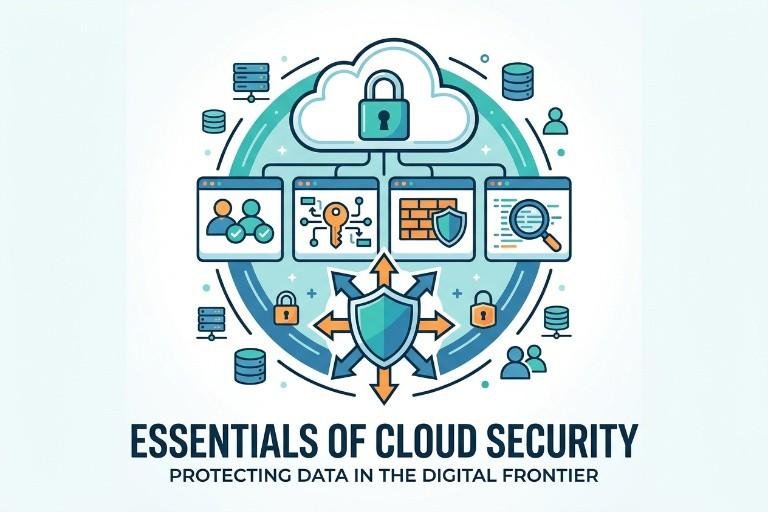
From cloud encryption and Identity and Access Management (IAM) to continuous infrastructure monitoring, organizations are investing heavily in securing cloud environments and protecting sensitive information.
Why Cloud Security Matters
Cloud platforms allow businesses to access resources from anywhere, support remote work, and scale operations quickly. While these advantages improve productivity and innovation, they also create new security challenges.
Unlike traditional on-premise environments, cloud systems operate through shared infrastructure and internet connectivity. Misconfigured settings, weak access controls, or unprotected data can expose organizations to cyberattacks.
A cloud security failure may result in:
- Data breaches
- Financial losses
- Service disruptions
- Compliance violations
- Reputation damage
As businesses handle growing amounts of customer and operational data in the cloud, maintaining strong security controls has become essential.
Cloud security helps organizations protect digital assets while maintaining trust, reliability, and regulatory compliance.
Common Cloud Security Threats
Cloud environments face multiple security risks that continue to evolve alongside technology.
1. Data Breaches
Sensitive information stored in cloud databases can become exposed due to weak access controls or compromised credentials.
Misconfigured Cloud Settings
Misconfigurations remain one of the most common causes of cloud security incidents. Publicly accessible storage buckets or poorly configured services can unintentionally expose data.
3. Account Hijacking
Cybercriminals may steal login credentials and gain unauthorized access to cloud accounts, allowing them to manipulate or steal resources.
4. Insider Threats
Employees or contractors with excessive permissions may intentionally or accidentally compromise cloud systems.
5. Malware and Ransomware
Cloud-connected systems can become infected with malicious software that disrupts operations or encrypts business data.
Organizations must proactively identify and manage these threats to maintain secure cloud operations.
Cloud Encryption: Securing Sensitive Data
Encryption is one of the strongest defenses in cloud security. It converts data into unreadable code that can only be accessed using authorized encryption keys.
Cloud encryption protects data in:
Data at Rest
Information stored in databases, cloud storage, or backup systems.
Data in Transit
Information moving between users, devices, and cloud services.
Encryption ensures that even if attackers gain access to data, they cannot easily read or misuse it.
In 2026, advanced encryption methods and automated key management systems are becoming standard features across cloud environments.
Identity and Access Management (IAM)
Identity and Access Management (IAM) plays a central role in cloud security by controlling who can access cloud resources and what actions they are allowed to perform.
IAM systems help organizations:
Manage user identities
Define access permissions
Enforce security policies
Monitor login activities
Reduce unauthorized access
Modern IAM solutions often include:
- Multi-factor authentication (MFA)
- Role-based access control (RBAC)
- Single sign-on (SSO)
- Conditional access policies
The principle of least privilege is a key IAM practice, ensuring users only receive the permissions necessary for their responsibilities.
Strong IAM reduces security risks while improving operational control.
Monitoring Cloud Infrastructure for Threats
Cloud environments are dynamic and constantly changing. As workloads scale and services evolve, continuous monitoring becomes essential.
Cloud security monitoring involves observing infrastructure, applications, and network activity to identify suspicious behavior and potential breaches.
Security teams use monitoring tools to:
- Detect unusual activity
- Track configuration changes
- Identify unauthorized access attempts
- Analyze security logs
- Respond to incidents quickly
Artificial Intelligence and Machine Learning are increasingly supporting cloud monitoring by identifying anomalies and reducing detection time.
In 2026, Security Information and Event Management (SIEM) systems and automated threat detection platforms are widely used to strengthen cloud visibility and incident response.
Shared Responsibility in Cloud Security
One important concept in cloud security is the shared responsibility model.
Cloud service providers secure the underlying infrastructure, including physical servers and networking. However, customers remain responsible for securing:
- User accounts
- Application configurations
- Stored data
- Access permissions
- Security policies
Misunderstanding this model can lead to security gaps and vulnerabilities.
Organizations must work closely with cloud providers while maintaining strong internal security practices.
Future Trends in Cloud Security
Cloud security continues to evolve as cyber threats become more advanced. Several trends are shaping the future of cloud protection in 2026:
Container and Kubernetes security
AI-powered threat detection
Zero-trust cloud architecture
Cloud-native security platforms
Automated compliance monitoring
Secure multi-cloud environments
Businesses are increasingly adopting integrated security solutions that provide centralized visibility and faster threat response across cloud ecosystems.