 By
By Physical Security in 2026: Building Strong Defenses Beyond Cybersecurity
When people think about security, they often focus on protecting digital systems from cyberattacks. However, physical security remains one of the most critical components of any organization’s overall security strategy. No matter how advanced cybersecurity defenses become, a physical breach can expose sensitive information, damage assets, disrupt operations, and compromise safety.
Physical security refers to the measures, technologies, and personnel used to protect people, facilities, equipment, and valuable assets from unauthorized access, theft, vandalism, natural disasters, and other threats. In 2026, organizations are increasingly integrating traditional physical security methods with smart technologies to create more resilient and intelligent security environments.
Why Physical Security Matters More Than Ever
Modern businesses depend on physical infrastructure such as offices, data centers, warehouses, manufacturing facilities, hospitals, and government buildings. These locations often contain valuable equipment, confidential information, and critical operational systems.
A security incident involving physical access can have severe consequences, including:
- Theft of valuable assets.
- Unauthorized access to sensitive information.
- Workplace safety risks.
- Business disruptions.
- Damage to property and infrastructure.
As threats continue to evolve, organizations must implement comprehensive physical security programs that combine prevention, detection, and response capabilities.
Access Control: The First Line of Defense
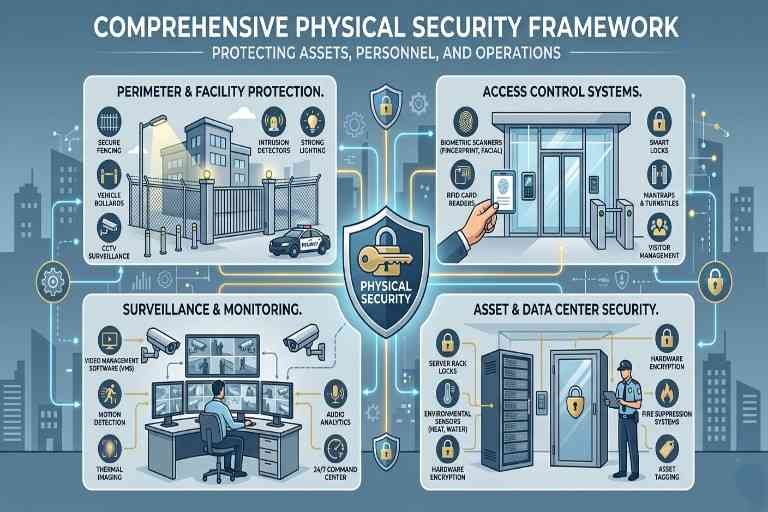
One of the most fundamental aspects of physical security is controlling who can enter a facility or restricted area. Traditional locks and keys are still widely used, but modern organizations are increasingly adopting advanced access control systems.
Popular access control solutions include:
- Electronic key cards and smart badges.
- PIN-based entry systems.
- Mobile credential access.
- Biometric authentication systems.
Biometric technologies such as fingerprint scanning, facial recognition, and iris recognition have become more reliable and secure in recent years. These solutions help ensure that only authorized individuals can access sensitive areas while reducing the risk of stolen or duplicated credentials.
CCTV Surveillance and Smart Monitoring
Closed-Circuit Television (CCTV) cameras remain one of the most effective tools for monitoring facilities and deterring criminal activity. Modern surveillance systems offer capabilities far beyond simple video recording.
In 2026, smart CCTV systems often include:
- Artificial intelligence-powered video analytics.
- Facial recognition technology.
- Motion detection alerts.
- License plate recognition.
- Real-time remote monitoring.
AI-driven surveillance can automatically identify suspicious behavior, unauthorized access attempts, and unusual activity, allowing security teams to respond more quickly and effectively.
Beyond security, surveillance footage can also assist with investigations, compliance requirements, and operational monitoring.
The Role of Security Guards
While technology plays a significant role in physical security, trained security personnel remain essential. Security guards provide a human presence that technology alone cannot replace.
Security professionals are responsible for:
- Monitoring facilities and entrances.
- Verifying visitor identities.
- Responding to emergencies.
- Conducting security patrols.
- Supporting evacuation procedures.
Organizations increasingly combine human expertise with advanced security technologies to create a layered security approach that improves overall protection.
Fire Safety and Emergency Preparedness
Physical security is not limited to preventing unauthorized access. It also includes protecting people and property from environmental hazards and emergencies.
Fire alarms, smoke detectors, sprinkler systems, and emergency notification systems are critical components of facility protection. Early detection and rapid response can significantly reduce damage and save lives during emergencies.
Organizations should regularly conduct:
- Fire drills and evacuation exercises.
- Emergency response training.
- Equipment inspections and maintenance.
- Risk assessments for potential hazards.
Preparedness ensures that employees and visitors know how to respond effectively during emergencies.
Perimeter Security: Protecting the Outer Boundary
Strong perimeter security helps prevent threats from reaching sensitive areas in the first place. Organizations use various physical barriers and monitoring solutions to secure facility boundaries.
Common perimeter security measures include:
- Security fencing and barriers.
- Controlled entry gates.
- Motion sensors.
- Security lighting.
- Intrusion detection systems.
Modern perimeter security systems are often integrated with surveillance cameras and access control platforms to provide comprehensive situational awareness.
Emerging Physical Security Trends in 2026
Several technological advancements are reshaping physical security strategies worldwide.
AI-Powered Security Systems
Artificial intelligence is enhancing threat detection by analyzing video feeds, identifying anomalies, and reducing false alarms.
Cloud-Based Security Management
Organizations are increasingly managing surveillance, access control, and security operations through cloud-based platforms that offer centralized visibility and remote access.
Integrated Security Ecosystems
Physical security and cybersecurity teams are working more closely together to protect both physical and digital assets from increasingly interconnected threats.
Touchless Authentication
Demand for convenience and hygiene has accelerated the adoption of touchless biometric systems, including facial recognition and mobile access solutions.