 By
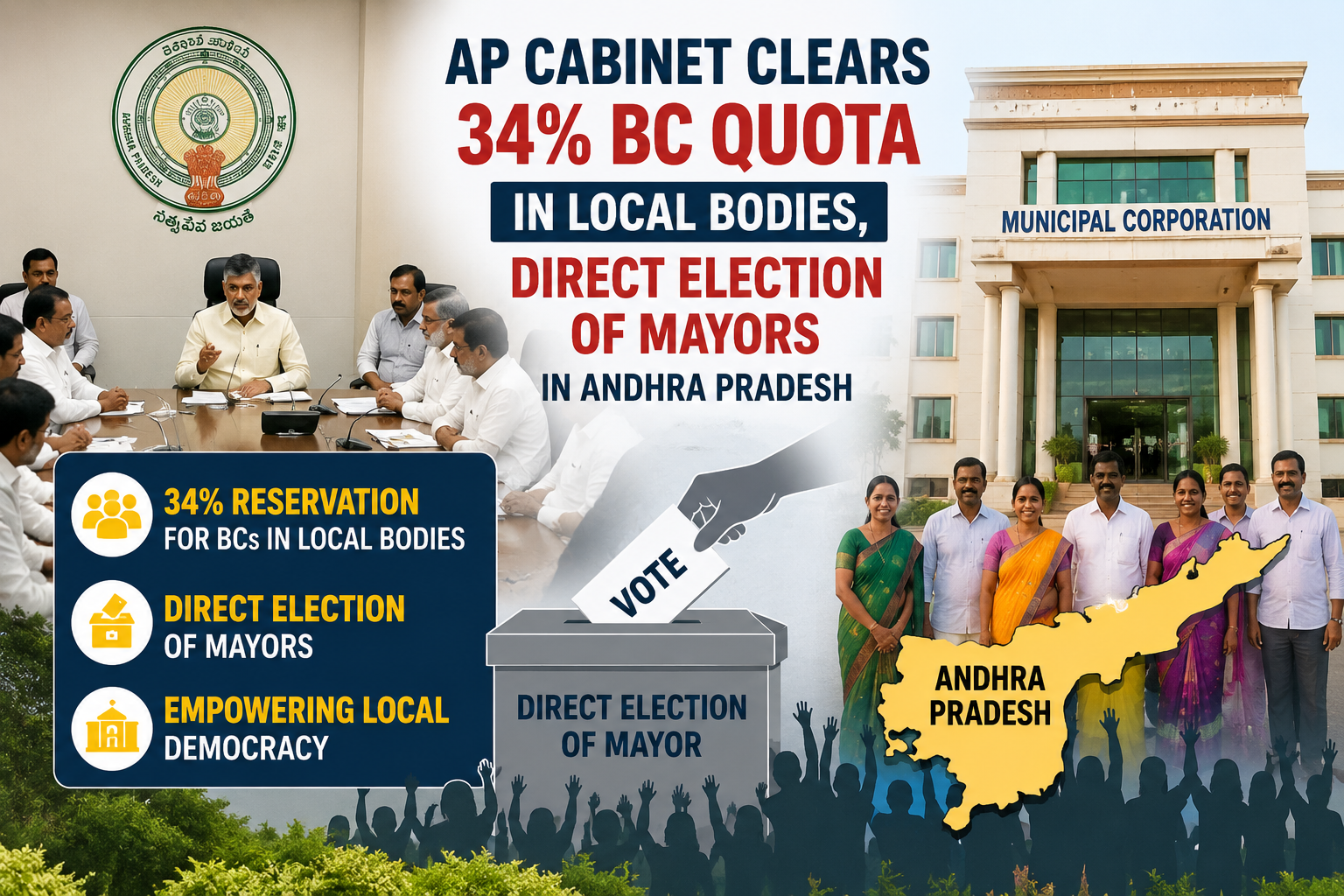
By The Andhra Pradesh 34% BC quota decision has emerged as a major development in the state’s local governance system. The Andhra Pradesh government has moved to restore 34% reservation for Backward Classes (BCs) in rural local bodies, a decision expected to have a significant impact on upcoming local body elections. The government is also considering changes to the system of electing Mayors, with direct election of Mayors emerging as an important proposed reform. These developments could increase political representation for BC communities and give urban voters a more direct role in choosing city leadership.
Andhra Pradesh 34% BC Quota: What Has Changed?
The Andhra Pradesh 34% BC quota is aimed at increasing political representation for Backward Classes in local government institutions. Local bodies play an important role in grassroots administration, covering areas such as village development, sanitation, roads, water supply and other civic services.
The reservation issue has been under discussion for some time, with the government working through a dedicated process to establish the basis for BC political reservations. The latest move is therefore important for communities seeking greater representation in elected local institutions.
Reservation in local bodies can provide BC candidates with opportunities to participate directly in decision-making at the village and local administrative levels.
Why BC Representation Matters
BC communities form a significant section of Andhra Pradesh’s population. Political representation at the grassroots level can influence local development priorities and ensure that different social groups have a stronger voice in governance.
The reservation is also politically significant because local elections can help create a new generation of grassroots leaders who may later play larger roles in state politics.
Direct Election of Mayors Could Change Urban Politics
Alongside the BC reservation decision, the proposed direct election of Mayors could bring a major change to municipal politics in Andhra Pradesh.
Under the existing system, voters directly elect corporators in municipal corporations, while the Mayor is chosen indirectly by elected representatives. A direct election would allow citizens to vote directly for their preferred mayoral candidate.
This could make the Mayor’s position more visible and potentially strengthen the political mandate of the person elected.
How Direct Mayoral Elections May Work
If the proposed system is implemented, voters in a municipal corporation could cast separate votes for their ward corporator and the Mayor.
A mayoral candidate would therefore need to appeal to residents across the entire city rather than focusing only on an individual ward.
This could make issues such as urban infrastructure, traffic management, public transport, sanitation, drinking water and waste management more important during election campaigns.
What Does the New System Mean for Voters?
For voters, the proposed changes could make local elections more politically important.
Under a direct mayoral system, citizens would have a clearer opportunity to choose the person they believe should lead their city. Candidates could be required to present city-wide development plans rather than concentrating only on individual wards.
The system could also increase public attention on the performance and promises of mayoral candidates.
However, the exact powers and responsibilities of a directly elected Mayor would be important. The relationship between the Mayor, municipal council and municipal commissioner would need to be clearly defined.
Local Body Elections in Andhra Pradesh
The Andhra Pradesh 34% BC quota comes at an important time as preparations continue for local body elections.
Election-related preparations can involve voter-list updates, ward delimitation, reservation notifications and other administrative procedures. The final election schedule will depend on the completion of these statutory requirements.
The reservation process has also attracted legal attention in the past. Any final reservation structure will therefore need to comply with applicable constitutional provisions, court directions and election laws.
This makes the coming months important for political parties and potential candidates preparing for local elections.
Political Impact of the BC Quota
The Andhra Pradesh 34% BC quota could significantly influence the political strategies of major parties.
Political organisations are likely to focus on identifying strong BC candidates and building support at the grassroots level. Local elections are often closely connected to community networks, local development concerns and personal relationships between candidates and voters.
Greater reservation could also increase the number of BC representatives in village and local institutions.
Opportunities for New Political Leaders
One of the most important long-term effects could be the emergence of new grassroots leaders.
Local government provides an entry point into politics for many first-time candidates. Reserved positions can give people from communities that have historically had less representation an opportunity to gain political experience.
Some of these leaders could eventually move into larger municipal, state or national political roles.
Public and Political Discussion
The BC reservation decision is likely to generate considerable discussion among political parties, community organisations and voters.
Supporters are expected to view the move as an important step towards political empowerment and greater representation. At the same time, questions around the implementation process, reservation calculations and legal requirements are likely to remain part of the public debate.
The proposed direct election of Mayors may generate a separate discussion about whether stronger city-wide leadership can improve municipal governance.
Impact on Andhra Pradesh’s Urban Governance
Directly elected Mayors could potentially change how cities are governed.
A Mayor elected directly by residents could have a strong public mandate and could be expected to take greater responsibility for city-wide issues.
Key Areas That Could Gain Attention
- Roads and infrastructure
- Drinking water supply
- Public transportation
- Waste management
- Drainage and sanitation
- Urban development
- Traffic management
- Digital civic services
The success of such a system would ultimately depend on the legal powers given to the Mayor and the coordination between elected representatives and municipal officials.
Why These Decisions Matter
The combination of the Andhra Pradesh 34% BC quota and proposed direct mayoral elections could represent an important shift in local democracy.
The BC reservation focuses on representation, while direct mayoral elections focus on how urban leadership is selected. Together, they could influence both the social composition of local government and the political structure of municipalities.
The developments are therefore likely to remain important topics as Andhra Pradesh moves closer to its next local body elections.
Conclusion
The Andhra Pradesh 34% BC quota and the proposed direct election of Mayors could have a lasting impact on local politics in the state. The BC reservation is intended to strengthen political representation for Backward Classes, while direct mayoral elections could give urban voters a more direct voice in choosing their city’s leadership.
The next stage will be implementation. Reservation notifications, ward-level arrangements, election rules and legal procedures will determine how these decisions are ultimately put into practice.
For voters, the upcoming local elections could therefore be more significant than usual. They may not only decide who represents individual wards and villages but could also shape the future leadership and political direction of Andhra Pradesh’s local institutions.