


 By
By Cloud Security in 2026: Protecting Data, Applications, and Digital Infrastructure
As businesses continue shifting operations to cloud platforms, cloud security has become one of the most important priorities in the digital world. Organizations today rely heavily on cloud computing for storing data, running applications, managing customer information, and supporting remote work environments. While cloud technology offers flexibility, scalability, and cost savings, it also introduces new cybersecurity challenges.
In 2026, cyberattacks targeting cloud infrastructure are increasing rapidly. From data breaches to ransomware attacks, organizations face serious risks if their cloud environments are not properly protected. Cloud security plays a vital role in safeguarding sensitive information, applications, and services hosted on platforms like AWS, Microsoft Azure, and Google Cloud.
What is Cloud Security?
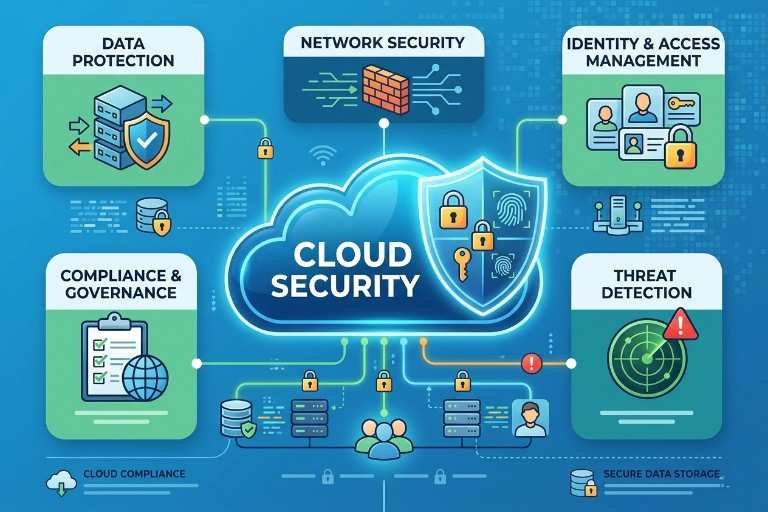
Cloud security refers to the technologies, policies, tools, and practices designed to protect cloud-based systems, data, and infrastructure from cyber threats. It ensures that only authorized users can access resources while preventing data theft, unauthorized access, and system vulnerabilities.
Cloud security includes several important components such as:
Data encryption
Identity and Access Management (IAM)
Network security
Threat detection and monitoring
Backup and disaster recovery
Compliance and governance
These security measures help organizations maintain confidentiality, integrity, and availability of their digital assets.
Importance of Cloud Security
As companies move critical workloads to the cloud, attackers are increasingly targeting cloud environments. Misconfigured servers, weak passwords, insecure APIs, and lack of monitoring can expose sensitive business data.
A strong cloud security strategy helps organizations:
Build customer trust
Prevent unauthorized access
Protect customer and financial data
Reduce downtime from cyberattacks
Maintain regulatory compliance
Secure remote work environments
Without proper cloud security, businesses risk financial losses, legal penalties, and damage to their reputation.
Cloud Encryption: Securing Sensitive Data
Encryption is one of the most effective cloud security techniques. It converts data into unreadable code that can only be accessed using a decryption key. Even if hackers steal encrypted data, they cannot easily understand or misuse it.
There are two major types of cloud encryption:
1. Data at Rest Encryption
This protects stored data in databases, storage buckets, and backup systems.
2. Data in Transit Encryption
This secures data while it moves between users, applications, and cloud servers.
Modern cloud providers offer advanced encryption services that help organizations secure confidential information such as customer records, payment details, and business documents.
Identity and Access Management (IAM)
Identity and Access Management (IAM) is another essential component of cloud security. IAM controls who can access cloud resources and what actions they are allowed to perform.
Organizations use IAM to:
- Create user roles and permissions
- Enable multi-factor authentication (MFA)
- Restrict unauthorized access
- Monitor login activity
- Implement least-privilege access policies
For example, a company’s finance department may have access to billing systems, while developers only access application servers. This reduces the risk of accidental or malicious misuse.
In 2026, Zero Trust Security models are becoming more common, where every user and device must continuously verify their identity before accessing cloud resources.
Monitoring Cloud Infrastructure for Breaches
Continuous monitoring is critical for detecting suspicious activity in cloud environments. Cybercriminals often attempt unauthorized access through stolen credentials, malware, or vulnerable applications.
Cloud monitoring tools help organizations:
Detect unusual login attempts
Identify malware infections
Monitor server performance
Track user activity
Generate security alerts in real time
Security Information and Event Management (SIEM) systems and AI-powered monitoring tools are now widely used to identify threats faster and reduce response times.
Automated threat detection allows security teams to quickly isolate compromised systems before attacks spread across the infrastructure.
Emerging Trends in Cloud Security
Cloud security is evolving rapidly as technology advances. Some major trends in 2026 include:
AI-Powered Threat Detection
Artificial intelligence helps identify abnormal behavior and predict cyberattacks before they occur.
Multi-Cloud Security
Organizations using multiple cloud providers require centralized security management across platforms.
Zero Trust Architecture
Every access request is verified regardless of whether the user is inside or outside the organization’s network.
Cloud-Native Security
Security is now integrated directly into cloud applications during development using DevSecOps practices.
Automated Compliance Monitoring
Businesses use automated tools to ensure compliance with regulations such as GDPR, HIPAA, and ISO standards.