 By
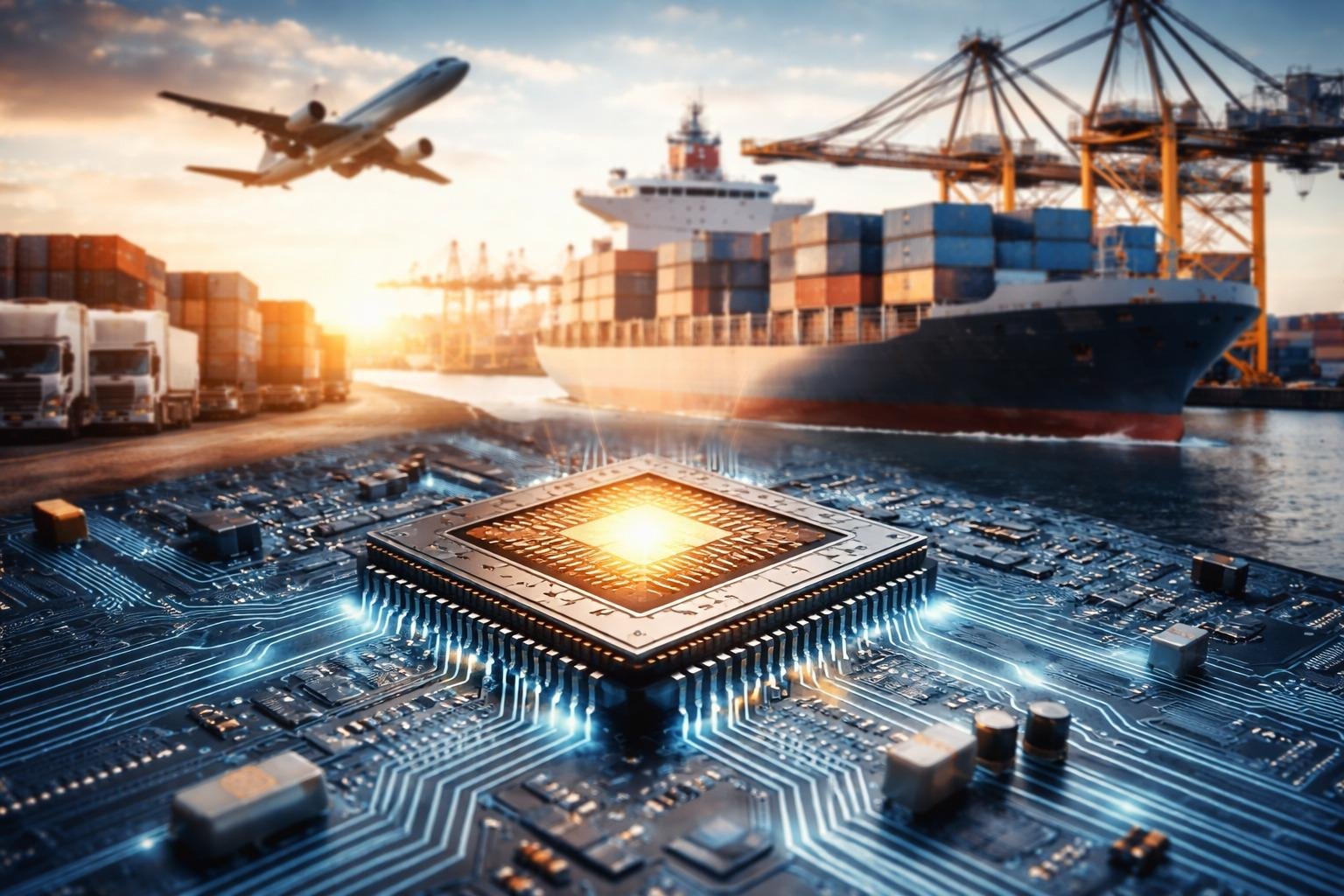
By Global business is undergoing a major transformation as artificial intelligence (AI), international trade, and geopolitical developments influence how countries produce goods and services. One of the latest developments is the growing demand for AI-related products, including computer chips, servers, and data-center equipment. According to the World Trade Organization (WTO), global merchandise trade is now projected to grow by 3.9% in 2026, supported partly by strong investment in AI infrastructure.
This trend is creating new opportunities for technology companies, manufacturers, exporters, and developing economies. However, rising energy costs and disruptions to international transport are also creating challenges for businesses worldwide.
1. Artificial Intelligence Is Driving Global Trade
AI is becoming a major force in the global economy. Companies are investing in advanced computer systems, AI software, cloud computing, and data centers to improve productivity and develop new products.
The WTO reported that trade in AI-enabling goods, such as semiconductors and servers, increased by 67% year over year in the first half of 2026. This highlights how demand for AI technology is influencing international supply chains.
World Trade Organization
2. Asian Economies Are Gaining New Opportunities
Countries across Asia are playing an important role in manufacturing, technology supply chains, and international exports. Growing demand for electronics and AI infrastructure is creating opportunities for manufacturers and technology suppliers.
India and other Asian economies can benefit by developing electronics manufacturing, software services, semiconductor capabilities, and digital infrastructure. However, businesses must also manage competition, production costs, and changing international trade policies.
3. Global Economic Growth Faces Challenges
Despite stronger merchandise trade forecasts, the worldwide economic outlook remains uncertain. The United Nations Conference on Trade and Development (UNCTAD) projected global economic growth of 2.6% for 2026 in its report released on 9 October. It also highlighted the uneven distribution of technological opportunities between economies.
UN Trade and Development (UNCTAD)
Businesses must therefore balance expansion plans with careful financial management, flexible supply chains, and changing consumer demand.
4. Energy and Transport Costs Affect Companies
International disruptions can increase the cost of shipping goods, operating factories, and transporting products between countries. Higher fuel prices can also affect airlines, logistics companies, and manufacturers.
As a result, many businesses need to consider alternative suppliers, efficient transportation routes, and better inventory planning to reduce the impact of unexpected disruptions.
5. The Future of Global Business
The next phase of global business will likely be shaped by AI adoption, digital services, advanced manufacturing, and more resilient supply chains. Companies that combine technological innovation with responsible financial planning may be better positioned to compete internationally.
Small businesses can also participate in this transformation through e-commerce, automation, digital marketing, and AI-powered customer services.
Conclusion
The latest global business trend shows how AI investment is influencing international trade and economic competition. While technology creates opportunities for innovation and growth, economic uncertainty and rising operating costs remain important challenges. Countries and companies that invest in skills, technology, and resilient supply chains will be better prepared for the changing global economy.