

 By
By India Health News | August 26, 2026
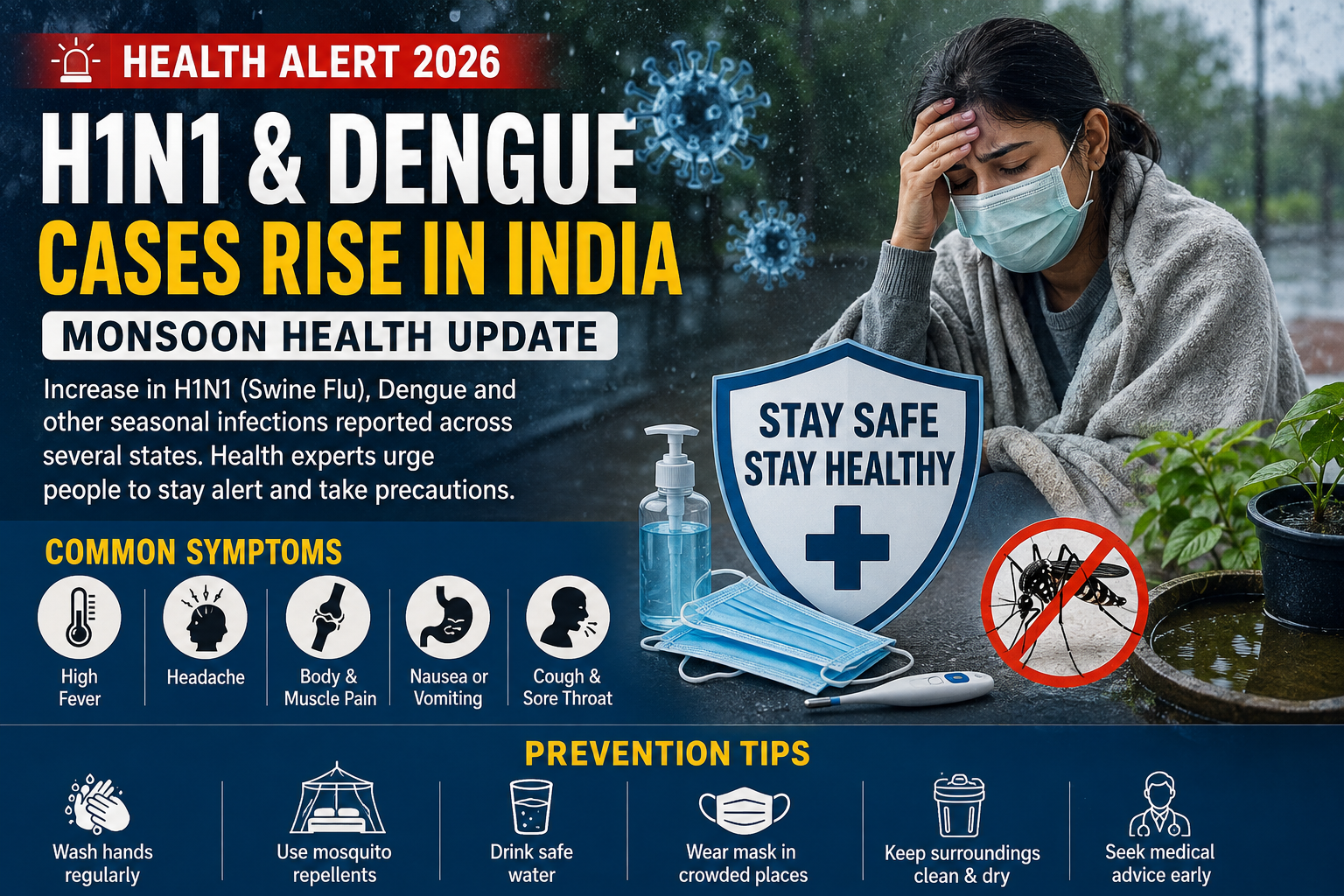
India is experiencing increased seasonal infections during the ongoing monsoon, with H1N1 influenza, dengue, malaria and other viral illnesses being reported across several parts of the country. Health experts are advising people to remain alert, maintain good hygiene and seek medical attention when symptoms become persistent or severe.
Recent reports indicate that H1N1 cases have increased significantly in several Indian cities. Delhi-NCR has reported a noticeable rise in H1N1 and other influenza infections, while Maharashtra has also recorded a substantial increase. Hospitals in Pune are currently dealing with increased pressure from severe influenza and dengue cases.
H1N1 Cases Increasing Across India
H1N1, commonly known as swine flu, is a strain of influenza A. Although the recent increase in cases has attracted public attention, the Indian Council of Medical Research (ICMR) has clarified that there is no newly emerged H1N1 strain behind the current rise.
According to ICMR, the circulating H1N1 virus is a known seasonal influenza virus and there is currently no need for public panic. However, people should continue following basic respiratory hygiene and monitor flu-like symptoms carefully.
Dengue Cases Also Remain a Concern
Dengue is another major health concern during India’s monsoon season. Mosquitoes can breed rapidly in stagnant water collected around homes, offices, construction sites and public areas.
India’s National Center for Vector Borne Diseases Control (NCVBDC) is monitoring dengue cases across states. The latest available government data shows dengue activity continuing in multiple parts of the country, including Andhra Pradesh.
Symptoms of dengue can include:
- High fever
- Severe headache
- Pain behind the eyes
- Muscle and joint pain
- Nausea or vomiting
- Skin rash
- Extreme tiredness
People experiencing persistent fever should consult a healthcare professional rather than assuming that the illness is simply a common viral fever.
Why Monsoon Increases Health Risks
The monsoon creates favorable conditions for several infectious diseases. Rainwater can accumulate in open containers and other areas, creating breeding sites for mosquitoes. Flooding and contaminated water can also increase the risk of water-borne illnesses.
At the same time, humid weather and crowded indoor environments can contribute to the spread of respiratory infections such as influenza.
Health experts are therefore recommending greater awareness during the rainy season, particularly among children, older adults and people with underlying health vulnerabilities.
H1N1 Symptoms You Should Not Ignore
Common H1N1 or seasonal influenza symptoms may include fever, cough, sore throat, headache, body aches, tiredness and chills.
Some people may recover without major complications, but severe illness can occur in vulnerable individuals. Difficulty breathing, persistent or worsening fever, unusual weakness, dehydration or other serious symptoms should receive prompt medical attention.
Do not rely only on symptoms to determine whether an infection is H1N1, dengue or another illness because several diseases can produce similar symptoms.
How to Stay Safe During Monsoon
Following simple preventive measures can reduce the risk of infection.
Prevent mosquito breeding: Remove stagnant water from containers, flowerpots, tyres and other areas around your home.
Use mosquito protection: Apply mosquito repellent and consider full-sleeved clothing and window screens.
Practice respiratory hygiene: Cover your mouth and nose when coughing or sneezing and wash your hands regularly.
Drink safe water: Use clean drinking water and maintain good food hygiene, especially during periods of heavy rainfall.
Avoid self-medication: Persistent fever should not be ignored or treated casually without appropriate medical advice.
Stay home when sick: People with respiratory symptoms should reduce close contact with others where possible to help prevent transmission.
Is There a Need to Panic?
Health authorities have emphasized that the increase in H1N1 cases does not indicate a new dangerous H1N1 strain. The current situation is being monitored, and the most important steps for the public are awareness, prevention and timely medical care.
The rise in dengue and influenza cases is nevertheless a reminder that monsoon health precautions should not be ignored. Recent reports from Pune show that severe dengue and influenza cases are putting additional pressure on hospital intensive-care facilities.
Final Takeaway
The latest India health news in August 2026 highlights the importance of staying cautious during the monsoon season. With H1N1, dengue and other seasonal infections being reported, people should pay attention to symptoms, maintain hygiene, prevent mosquito breeding and seek professional medical advice when necessary.
Stay informed, stay alert and take simple precautions to protect your health this monsoon.
Disclaimer: This article is intended for general health awareness and does not replace professional medical advice. If you experience severe, persistent or worsening symptoms, consult a qualified healthcare professional.